


7 competitive advantages of smart warehouse investment
16-09-2021 101
Warehouses today deploy solutions such as collaborative mobile robots, automated picking solutions, warehouse analytics, and warehouse management systems to increase efficiency and meetdemand.
Mục lục
Competitive advantage refers to the attributes that give a company an advantage, enabling it to outperform its competitors in the market. These attributes can help reduce the cost of a good or service, cause consumers to choose one product over another, or create barriers to entry for competitors.
Logistics is a key area that can help companies gain a significant competitive advantage. Today, more and more consumers are buying online. E-commerce is growing at a rate of nearly 20% annually. Along with the COVID-19 pandemic, the growth of e-commerce has put enormous pressure on warehouse and supply chain operations.
Warehouses today deploy solutions such as collaborative mobile robots, automated picking solutions, warehouse analytics, and warehouse management systems to increase efficiency and meet demand. A smart warehouse gives companies significant competitive advantages. Let's take a look at the competitive advantages that come with moving to a smart warehouse.
Logistics is a key area that can help companies gain a significant competitive advantage. Today, more and more consumers are buying online. E-commerce is growing at a rate of nearly 20% annually. Along with the COVID-19 pandemic, the growth of e-commerce has put enormous pressure on warehouse and supply chain operations.
Warehouses today deploy solutions such as collaborative mobile robots, automated picking solutions, warehouse analytics, and warehouse management systems to increase efficiency and meet demand. A smart warehouse gives companies significant competitive advantages. Let's take a look at the competitive advantages that come with moving to a smart warehouse.
Competitive advantages include:
1. Lower costs lead to lower prices
Average labor costs account for nearly two-thirds of warehouse operating costs, and average wages in the warehousing industry have increased over the years. Smart warehouses reduce the need for human labor and optimize the performance of warehouse workers, contributing to lower operating costs. These cost savings can lead to lower prices of goods and services for consumers. The price of a product is a key attribute by which customers base their purchasing decisions, and the ability to offer lower prices for comparable products is a significant competitive advantage.
2. Faster Shipping
In a traditional warehouse, order processing takes up a large amount of time. Affiliate companies often spend considerable time moving around the floor selecting products and filling orders. In addition, picking errors cause further delays in order processing, sorting and packaging. It is estimated that the typical warehouse has a picking error rate of 1% to 3%.
Smart warehouse solutions can reduce picking error rates to near zero. Collaborating mobile robots and automated picking solutions reduce the time needed to pick orders and eliminate long lead times for warehouse workers. These factors contribute to faster order shipping. Shipping time is an important purchasing consideration for e-commerce consumers, second only to the price of the product. Faster shipping is a valuable competitive advantage to have in today's emerging e-commerce era.
3. Fewer errors
As mentioned, a traditional warehouse has a picking error rate of 1% to 3%. Regardless of how experienced your staff is, the manual picking process can be caused by human error, and picking errors are inevitable. Smart warehouse greatly reduces picking errors and thus helps to reduce returns.
Increased order accuracy leads to improved customer satisfaction and contributes to customer loyalty. Smart warehouses allow companies to process those earnings at a faster rate than traditional warehouses. Smartautomation solutions such as Collaborative Mobile Robots can significantly increase the accuracy of picking. Increased order accuracy also reduces the cost of checking and redoing orders internally.
4. Increasing use of warehouse space
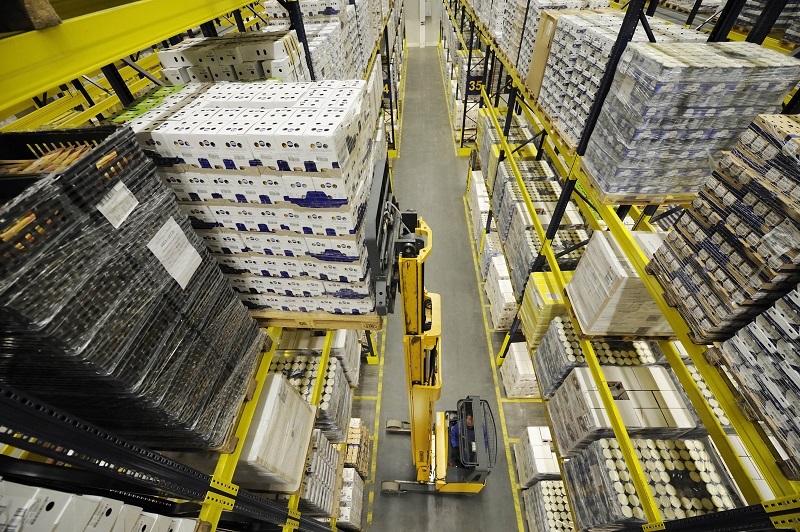
Smart warehouses can also increase warehouse space utilization. Mobile sorting and automated picking solutions can allow for taller racks and narrower aisles because of reduced traffic and aisle congestion compared to traditional warehouses, increasing the amount of goods that can be loaded stored in the same space.
Increased use of warehouse space helps reduce overall costs per unit sold. This cost savings can translate into lower prices for the end consumer or higher profit margins for the operator.
5. Predicted order processing
Smart warehouses use advanced analytics and artificial intelligence to better understand the orders processed by them. Supply chain planning and order analysis can help estimate future orders. This predictability can be used to optimize warehouse operations and plan for spikes or drops in demand. In warehouse layout, automated picking robots and employees are tailored to the predictive model, which leads to faster order processing and shipping.
6. Customer Satisfaction
Today, customers often do not interact directly with products in the store; so, delivery, logistics and larger supply chain infrastructure play a key role in delivering customer satisfaction. All the benefits of a smart warehouse are for customer satisfaction. Faster shipping, lower prices, and avoidance of returns are all characteristics that every customer wants. Smart warehouses help meet consumer expectations and ensure customer satisfaction.
7. Warehouse optimization
Today, enterprise software, analytical tools, and algorithms are widely accessible. Smart warehouses leverage these technologies to enhance their operations. Perfection is an elusive goal, and in warehouse operations, incremental improvement is much more beneficial. The tools and technologies used in smart warehouses help continuously identify suboptimal components and processes, and provide insights to inform improvements.
Smart warehouse solutions like advanced warehouse analytics enable warehouse operators to track key performance indicators (KPIs) and make data-driven decisions to improve those metrics. Continuous warehouse optimization and improvement can be achieved by switching to a smart warehouse.
If you have any questions about smart warehouse system, please contact Intech Group immediately via our Hotline 0983 11 33 87
Related articles:
- Benefits of warehouse automation
- Modula Lift automatic storage for high performance
- Market forecast of Global Smart Manufacturing to 2025
