

-

Pop-Up sorting system
Designed for moving and sorting large packages and weighing up to 35kg with independent operation, stability, energy saving, and low maintenance costs;
-

Vertical Crossbelt Sorting System
The highlight of the vertical crossbelt sorting system is that it saves space.Only 2.5 m wide space is enough to install this type of Crossbelt sorting system.
-
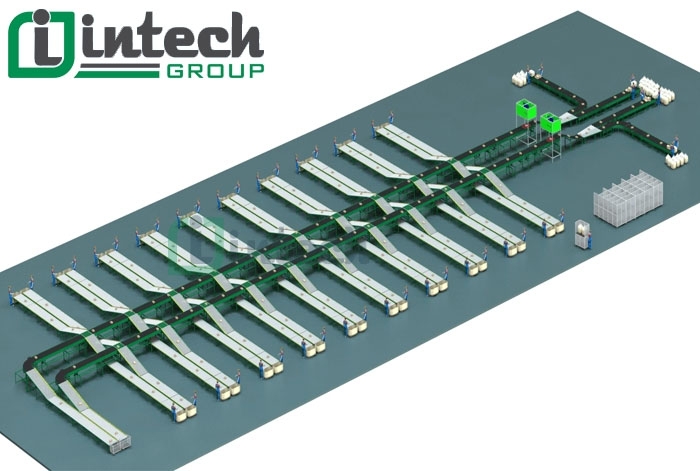
Wave-Sorter sorting system
The Wave-sorter sorting system is a very popular module nowadays, widely applied in the commodity classification industry, it has the ability to classify up to 10,000 products/hour.
-

Cross belt - Sorter sorting system
Cross belt - Sortersorting system is a very popular module today, widely used in the goods sorting industry, with the ability to sort at high speed up to 25,000 products/hour.
What is Logistics?
Logistics is the process of moving your product from the supplier to the customer. The terms 'Logistics' and 'Supply Chain' are sometimes used interchangeably; however, logistics is a part of the overall supply chain. Logistics refers to the process of transporting goods from one location to another, from the point of origin to the final consumption point, including two main functions: transportation and warehousing. The primary goal of logistics is to meet customer demands in the most efficient and economical way.
What activities does logistics include?
-
Survival Logistics
This is the basic foundation of logistics activities in general. Survival logistics aims to meet the needs of life. In simple terms, survival logistics is the process of transporting goods and products to the hands of the final consumers. This is the fundamental nature of logistics services in general.
-
Operational Logistics
Business logistics operations are often linked to the production systems of partners. It involves activities related to transportation, warehousing, order management, and processing information for incoming and outgoing raw materials. Then, products are distributed to distribution channels such as retail systems, agents, supermarkets, shopping centers, distribution centers, etc.
-
System Logistics
This is the key factor that enables a logistics service company to operate stably and continuously. It includes infrastructure, machinery, equipment, factories, technology, and human resources. Lacking any of these factors, a business will have difficulty in providing logistics services.
-
Importance of Logistics
Logistics often focuses on the movement of goods, but its impact does not stop there. Good logistics in a business helps increase efficiency, lower costs, better inventory control, optimize warehouse space, and enhance customer satisfaction. There are seven factors that ensure effective logistics:
-
Sourcing Raw Materials: Sourcing raw materials involves finding suppliers with the lowest costs for the raw materials used, including calculating and managing costs such as order delays, additional service costs, distance, storage costs, and competitive prioritization. Identifying suitable raw material sources requires a good understanding and management of all the aforementioned factors.
-
Transportation: The core of logistics is the movement of goods from one point to another. First, a company needs to choose the best and most suitable mode of transport (air, road, or water); select the best carrier based on speed, cost, and distance. In the case of broad global logistics, shippers need to stay updated promptly about customs, tariffs, and compliance with related regulations.
-
Order Fulfillment: To complete a transaction, items must go through a certain process, starting with being "picked" from the warehouse according to the order, packing, labeling, and shipping to customers.
-
Warehousing: Both short-term and long-term storage are common parts of logistics operations. Warehouse management software will be integrated to allow detailed logistics planning (considering the availability of warehouse space, special cold storage requirements, etc.). Typically, goods with early shipping schedules will be placed at the front of the warehouse, while items with lower demand will be stored at the back. Perishable goods are usually rotated more frequently.
-
Demand Forecasting: Logistics primarily relies on information and data to forecast inventory demand, ensuring that a business never runs out of core or high-demand products while avoiding unnecessary capital being tied up in slow-selling stock.
-
Inventory Management: By using inventory management software to plan for increased demand for trend or seasonally related products, businesses can achieve higher profitability and faster stock turnover. Conversely, by paying attention to inventory, the company can offer discounted prices or promotional programs at various times to quickly clear goods for reinvestment into items with higher demand.
-
Supply Chain Management: Logistics is an essential link in supply chain management, facilitating the movement of goods from suppliers to distributors and ultimately to buyers.
Features of automatic sorting line in logistics industry
By putting automatic sorting lines into use, businesses can maximize the sorting process, create a professional working environment, and enhance competitive advantages.
-
Design Solutions: The automated sorting system includes devices that collect data on weight, size, barcode information, etc., from products and a system that distributes products to specific addresses according to pre-programmed requirements tailored to each customer.
-
Optimized Design: Depending on criteria such as output, factory area, and installation space, businesses can choose an appropriate automated sorting line.
-
Long-term Benefits: In the current era of Industry 4.0, the adoption of automated sorting solutions is a necessary trend for survival and development. These solutions provide long-term benefits over time, such as freeing up labor, increasing productivity, and improving precision.
Some Common Product Sorting Lines Today
-
Barcode Sorting Line: Automatic sorting by barcode is one of the most popular systems used today. This line is used to sort products, mail, and parcels that have been neatly packed in bags or cardboard boxes and labeled with barcode or QR codes.
-
Weight Sorting Line: This is an automatic product sorting system that is applied across a diverse range of industries and product types. It operates based on the principle of checking the required weight and sorting according to previously established parameters.
-
Color Sorting Line: The sorting line incorporates vision technology for automatic image processing and inspection cameras to quickly and accurately sort products by color.
-
Size Sorting Line: This is an automatic sorting system based on the size of products and goods. It is also fully controlled and stable, suitable for many different types of products, providing high accuracy.
Project Implementation Process for the Logistics Industry
Implementing a logistics project requires a systematic and scientific process to ensure the project is carried out effectively and meets its objectives. This process typically includes the following steps:
-
Identify Needs and Objectives: The first step in the logistics project implementation process is to clearly identify the needs and objectives of the project. Businesses need to evaluate the issues that need to be addressed, the desired benefits, and the criteria for assessing the project's effectiveness. Clearly defining objectives will help businesses have a specific direction in planning and executing the project, thereby minimizing risks and enhancing the likelihood of project success.
-
Project Planning: The next step is to develop a detailed plan for the project. This plan should include the project scope, implementation timeline, necessary resources, responsibilities of each member, and potential risks. When planning, businesses need to consider factors such as budget, labor resources, and time. A good plan will help ensure that everything runs smoothly and on schedule.
-
System Design: Designing the logistics system includes selecting transportation methods, handling processes, information systems, infrastructure, and necessary resources. The system design must be based on factors such as the type of goods, transport locations, and customer requirements.
-
Project Execution: Carrying out the activities according to the approved plan is the final step in the implementation process. Businesses need to construct infrastructure, procure equipment, train staff, and implement the system. During the execution phase, businesses should closely monitor to ensure that all activities occur according to the plan.
-
Testing and Evaluation: Testing and evaluating the operational efficiency of the logistics system is an indispensable step. Businesses need to monitor performance indicators such as transportation costs, delivery times, damage rates, and customer satisfaction levels. Based on evaluation results, businesses will be able to make necessary adjustments to improve the effectiveness of the logistics system.
-
Maintenance and Upgrading: Finally, conducting regular maintenance for the logistics system and upgrading the system according to business needs and market changes is essential. Regular maintenance helps ensure that the system operates stably and efficiently. At the same time, upgrading the system keeps businesses up to date with new technology trends and better meets customer demands.

