


Barcode solutions in warehouse management: Optimizing inventory processes and product traceability
11-10-2025 117
Using barcodes in warehouse management not only helps optimize inventory but also improves the accuracy of product management and traceability. By using barcodes, businesses can easily track the quantity, status, and history of each product in the warehouse, thereby minimizing errors and improving work efficiency.
How to label products with barcodes in warehouse management
To ensure accurate tracking and inventory, there are two options for barcoding products, depending on management requirements and usage purposes:
Option 1: Each product/product package has a separate barcode
In this option, each product, or product package is given a unique barcode. This barcode is classified in detail according to factors such as batch, product type and serial number of each product.
Each type of product in the warehouse will be marked with a separate barcode, and each product in a type will have a serial number numbered in ascending order.
This option provides maximum accuracy in tracing the origin of products, because each product has a unique barcode. When needed, managers can easily look up information about the origin, batch, and status of specific products.
Because each product has a separate barcode, the number of barcodes that need to be managed will be very large, which requires the warehouse management system to be powerful and capable of processing information quickly and accurately.
Option 2: Products of the same type in a batch have the same barcode
According to this option, products of the same type and batch will use the same barcode. The barcode will be distinguished by product type and batch.
All products in a batch and of the same type will be labeled with the same barcode, simplifying the process of barcode management in the warehouse.
This option helps to reduce the number of barcodes that need to be managed, and is easily applied to products with high uniformity. In addition, barcode management is also simpler because there is no need to handle many separate barcodes for each product.
Although this option helps to quickly check the batch, it cannot distinguish products in the same batch when they are shipped to different customers. If a part of the batch is not shipped completely or is divided among different customers, it will be difficult to trace the specific origin of each product.
In summary, the choice of barcode labeling method depends on the specific requirements of the business, the size of the warehouse and the type of products to be managed. Option 1 provides high accuracy in tracing the origin of products, but requires the management of a large number of barcodes. Meanwhile, option 2 simplifies the barcode management process but may limit the ability to distinguish products in complex warehouse situations.
Barcode labeling process for products
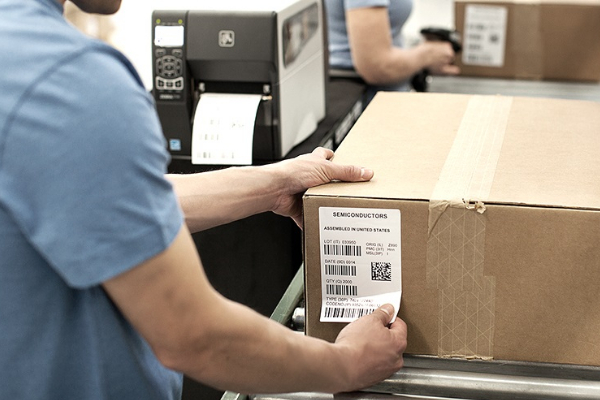
After the product has been assigned a barcode, the next step is to print barcodes for each product. To perform this step, businesses can use a specialized barcode printer. Choosing the right printer will depend on the usage needs, costs and volume of products to be printed. Barcodes are usually printed on decal paper, then removed and pasted on the product.
Barcodes will be pasted on products at one of two main times:
- When the product leaves the factory to be put into the finished product warehouse.
- When the product is completed and waiting to be shipped, before being sent to the warehouse or delivered to the customer.
Warehouse Entry Process
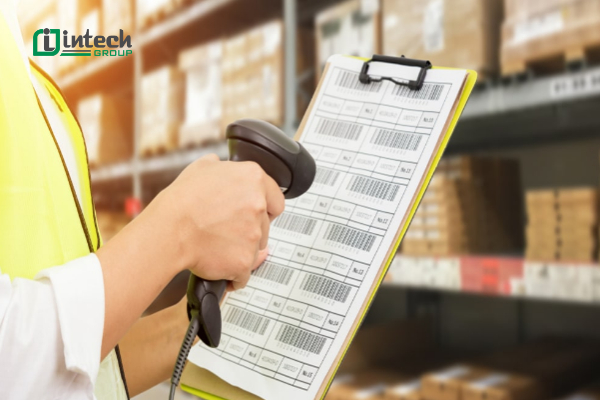
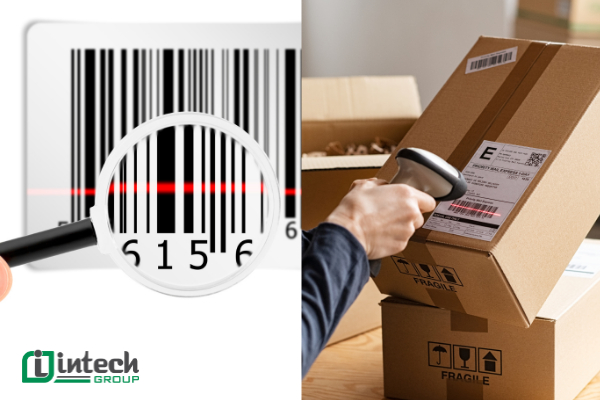
The warehouse entry process begins when the warehouse staff uses a barcode scanner to scan the barcodes on the imported shipment. Information from these barcodes will be transmitted to the computer system to create a warehouse entry slip. This warehouse entry slip contains detailed information about the shipment, such as quantity, product type, date of entry, and other management information. From this point on, the products in the warehouse will be managed through barcodes, making it easy to track and check throughout the warehousing process.
Warehouse Exit Process
Similar to the warehouse entry process, the warehouse exit process is performed by using a barcode reader to scan the barcodes on the products in the exported shipment. The staff will create a warehouse exit slip from the information on the warehouse entry slip, recording necessary information such as the date of exit, the receiving partner, the order code, and other information into the computer system. This helps to trace the origin of the product later when needed, ensuring transparency and easy control of the export process.
Inventory process
In the inventory process, employees use a mobile barcode reader to scan the barcodes of all products in the warehouse. After scanning, the data collected from the device will be downloaded to the computer, helping to process and compare with current management data. After downloading the data, the software will generate a report on the actual quantity of products in the warehouse and compare it with the data stored in the system. If there is a difference, the actual data will be updated, ensuring accuracy in warehouse management.
The process of pasting barcodes, warehousing, warehousing and inventory all have a close combination between barcodes and the electronic warehouse management system, helping businesses optimize management work, minimize errors and improve efficiency in the operation process.
Benefits of applying barcodes in warehouse management
Applying barcodes in warehouse management brings many significant benefits, helping businesses optimize operating processes and improve business efficiency. Here are the outstanding benefits:
Reduce operating costs and increase profits
Barcodes help reduce errors in warehouse management, thereby saving time and operating costs. Businesses can better control costs related to warehousing and personnel, thereby increasing profits.
Increase competitiveness in the market
With the ability to quickly respond to customer requests and reduce product costs, businesses can create a clear competitive advantage. Barcodes help speed up order processing and improve customer service.
Proactive capital thanks to low inventory
Applying barcodes helps businesses accurately track the status of goods in the warehouse, minimizing long-term inventory storage. This helps reduce storage costs and proactively manage capital flows.
Speed up management and loan-back operations
Barcodes quickly identify product codes and other codes, helping to speed up operations such as product shelving and loan-back, thereby optimizing the warehouse management process.
Reduce errors through automation
With tight integration in the management system, barcodes help reduce manual data entry, limit errors in business operations and increase accuracy.
Hopefully, the information shared in the above article will help businesses know how to create barcodes for products quickly and successfully. Thanks to that, businesses can control products conveniently and do business smoothly in the future. In addition, when selling on e-commerce sites, in addition to paying attention to creating barcodes to manage products more effectively, businesses should not forget to pay attention to the meticulous delivery process to create the best shopping experience for customers.
