

Breakthrough quality management solutions in today’s production lines
23-09-2025 48
In modern manufacturing environments, quality management solutions in the production line play a key role in helping businesses control risks, ensure product stability and optimize operating costs.
An effective quality management system helps detect product errors early in the early stages, contributing to improving productivity, reducing the rate of damaged goods and improving customer confidence.
In this article, Intech Group will help you learn about quality management solutions being applied in current production lines.
What is a quality management solution in the production line?
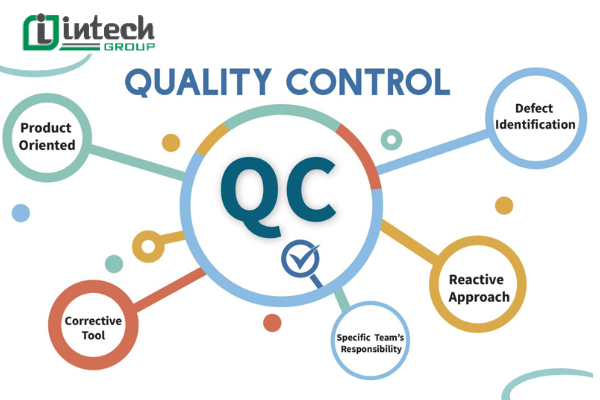
A quality management solution in the production line (Abbreviation: Quality Control - QC) is a system of monitoring and inspection activities to ensure that the output product meets the correct technical standards from input materials to the final product. The goal of this solution is to detect and eliminate errors in each stage, helping to minimize risks, avoid losses and maintain brand reputation in the market.
Especially in large-scale factories, when each line operates continuously and produces thousands of products per day, quality control is a vital factor. Just a small error from the equipment can create a series of substandard products, causing great damage in terms of cost, time and reputation in the market. Deploying a comprehensive quality management solution is the way to help businesses ensure production efficiency and maintain long-term competitive advantage.
.jpg)
Key components in a quality management solution in the production line
To have an effective and professional quality management solution in the production line, businesses need to synchronously deploy many key components to comprehensively control the entire production process. Below are the key components needed:
-
Production planning: Clearly identify production needs, thereby building a reasonable production schedule and allocating resources optimally.
-
Material management: Ensure that input raw materials are always stable in quantity and meet quality standards.
-
Production process monitoring: Closely monitor each stage in the chain to ensure that the product is produced on schedule, according to the right technique and minimize errors.
-
Quality control: Implement methods of measuring, evaluating and testing products to detect errors early, minimizing defective products reaching customers.
-
Equipment maintenance and repair: Maintain stable and efficient operation of machinery, prevent production interruptions that affect product quality.
Benefits of quality management solutions in the production line
Applying quality management solutions in the production line is a mandatory requirement in the modern production environment, it brings many practical benefits to help businesses improve their position and operational efficiency:
- Retain loyal customers
Currently, counterfeit and substandard products are increasing in number, so users are increasingly demanding about product quality. Maintaining consistent quality throughout the production process helps businesses build trust and retain customers, helping them return again and again. This is an important foundation for sustainable development.
- Expanding potential customer base
Prestigious, high-quality products not only satisfy current customers but also act as a natural marketing tool through word of mouth. Loyal customers will be willing to recommend the product to their relatives and friends, helping businesses expand their market share effectively.
- Minimizing legal risks
A defective product can lead to serious consequences, including costly lawsuits or recalls. Quality control helps businesses demonstrate rigorous testing procedures, thereby minimizing unwanted legal liabilities.
- Increasing safety
Quality control solutions help detect product defects early in the production process, minimizing the risk of releasing unsafe products to the market. This is a key factor in protecting consumers and maintaining brand image.
- Building brand reputation
A product that meets quality standards will create trust in the hearts of consumers. Businesses demonstrate a clear commitment to putting quality first, thereby strengthening their reputation and brand value in the market.
- Minimizing losses due to product recalls
Early detection and elimination of product defects helps minimize product recalls, which are costly and seriously affect the reputation of the business.
Popular quality control support methods in production lines
To improve the effectiveness of quality management solutions in production lines, many businesses today apply the following quality control methods at the same time:
Statistical Process Control (SPC)
SPC (Statistical Process Control) is a statistical process control method that uses data for monitoring. By analyzing trends from real data, managers can detect deviations and handle them promptly before defective products are shipped.
Six Sigma method
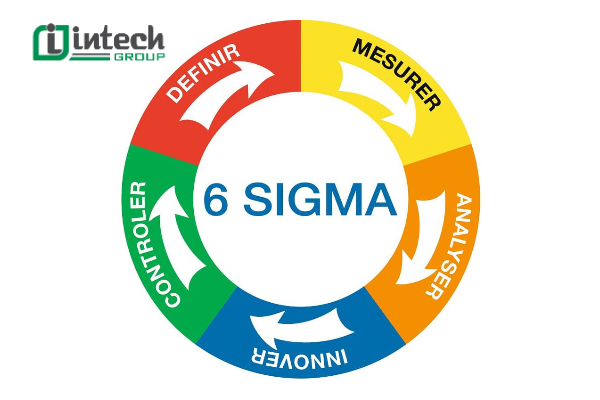
Six Sigma is a proactive business process improvement method system that focuses on reducing errors and improving quality through 5 main steps: Identify - Measure - Analyze - Improve - Control (DMAIC method). This method helps ensure that products meet customer expectations with extremely low defect rates.
5S Method
5S is the name of a workplace management and arrangement method that is an abbreviation of 5 Japanese words: Seiri (Sort), Seiton (Sort), Seiso (Clean), Seiketsu (Standardize) and Shitsuke (Sustain). This method helps the working environment to be tidy, increases productivity and ensures output quality.
Kaizen Method
Kaizen is a systematic plan for continuous improvement, focusing on eliminating waste and improving product quality at each production step. Employees at all levels are encouraged to contribute improvement ideas, thereby optimizing the efficiency of the production line.
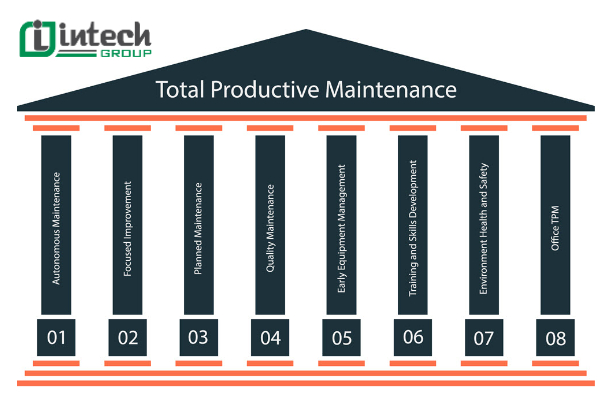
Total Productive Maintenance (TPM)
-
Quality Inspection
This is the activity of measuring, reviewing, testing and evaluating products based on pre-established quality standards. Quality inspection helps eliminate unsatisfactory goods before they are released to the market, minimizing brand risks and recall costs.
-
Quality Assurance (QA)
QA is an important part of the quality management solution in the production line. This method focuses on establishing specific standards and processes to ensure that products or services always meet the quality requirements. Instead of just checking the output, QA focuses on preventing errors right from the beginning of the process.
-
Manufacturing Quality Assurance (MQA) model
MQA is a process or system that controls the entire quality in the production process. This process includes:
-
Input material inspection
-
Monitoring each step in the production line
-
Finished product quality inspection
-
Final inspection before packaging and shipping
Applying MQA helps businesses minimize production errors, improve product reliability and ensure that products meet standards before reaching customers.
-
Total Quality Control (TQC)
TQC is an effective system to unify the development and quality improvement efforts of different groups within an organization. This is a method of quality control from the research, design, production to distribution and after-sales service stages. This method creates a closed control ecosystem in which every department participates in ensuring quality, increasing customer satisfaction and enhancing brand value.
-
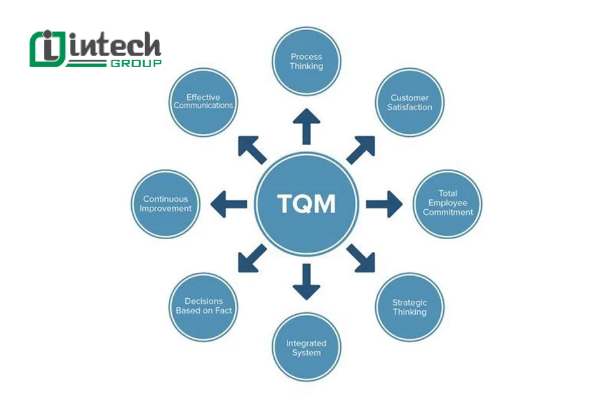
Total Quality Management (TQM)
TQM is a strategic quality management solution in the production line, focusing on continuous improvement. TQM not only focuses on product quality but also focuses on optimizing all processes, improving productivity, reducing costs and creating sustainable competitive advantages. All levels of personnel in the enterprise have a role in maintaining and improving quality.
When supported by lean manufacturing technologies such as Total Productive Maintenance (TPM), 5S - Kaizen, most product defect problems are detected and eliminated quickly and promptly.
What problems does a Quality Management solution in the production line help to solve?
One of the most important goals of a Quality Management solution in the production line is to detect and handle problems that may occur during operation early, instead of just checking the final product. Here are some common problems in production that quality control can effectively solve:
1. Unstable output
When market demand changes, the production line may experience oversupply or shortage. Quality control helps to closely monitor the process and adjust the output accordingly, minimizing inventory or shortages.
2. Lack of real-time information
Modern production processes are fast and complex, which can easily lead to a lack of real-time updated data. Quality management solutions in the production line help to integrate data, providing accurate information for timely decision making.
3. Uneven Workload
Using unbalanced machinery and equipment can lead to overloading at some stages, while other stages are not exploited effectively. Quality control helps to re-coordinate the process, ensuring optimal productivity.
4. Unsynchronized production speed
When the production speed is not controlled, businesses are prone to falling behind schedule or deviating from the delivery schedule. Quality solutions help balance and synchronize production stages according to the plan.
5. Incidents when switching assembly lines
Switching between assembly lines can cause errors, wasting time and resources. Quality control helps detect and handle inconsistencies, minimizing risks when switching.
Applying quality management solutions in the production line not only helps businesses effectively solve the above problems, but also lays the foundation for building a sustainable production system, saving costs and improving customer satisfaction. If your business wants to move towards professionalism, safety and automation, contact Intech Group today for support and in-depth advice on management solutions as well as widely applied automatic lines today.
