


Explore the current automatic cooking oil production line
23-09-2025 154
Edible oil production line is a system designed to refine and package vegetable oils such as soybean oil, sunflower oil, palm oil or sesame oil...
With a closed process from pressing, filtering, refining to bottling, this line not only helps to increase productivity but also ensures food hygiene and safety. Join Intech Group to learn more about the cooking oil production line through the following article:
Main raw materials in the cooking oil production line
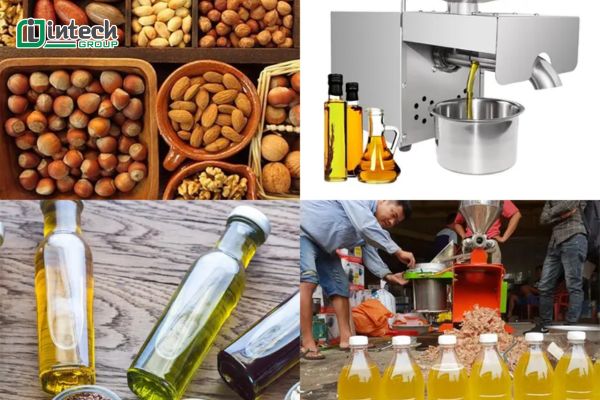
Common raw materials are usually seeds with high oil content such as: soybeans, sunflower seeds, peanuts, palm kernels, olives, corn.... These seeds are carefully selected from a stable supply, ensuring cleanliness, standard humidity and no impurities.
Before being pressed for oil, the raw materials will go through preliminary processing steps such as cleaning, shelling, drying to optimize extraction efficiency and minimize loss.
Popular cooking oils today
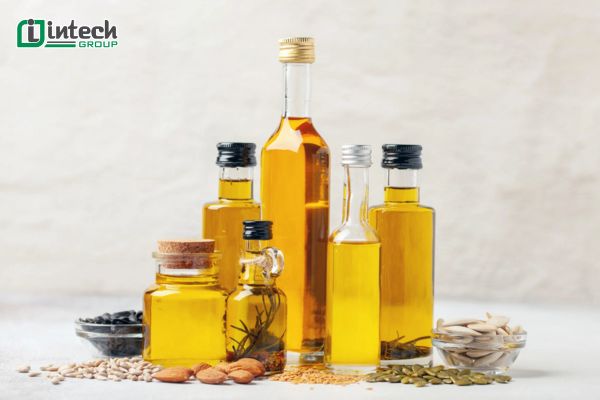
Currently, users are increasingly demanding on product quality, cooking oils are not only used as raw materials for processing but also must bring health benefits. Here are some commonly used cooking oils:
-
Soybean oil: Contains a lot of unsaturated fat, rich in omega-3, omega-6, supports the cardiovascular system, anti-aging, good for eyes, skin and boosts immunity
-
Almond oil: Good for people with high blood pressure, helps reduce the risk of atherosclerosis, stroke. Suitable for salads and dishes that do not require high heat.
-
Avocado oil: Rich in potassium and magnesium, helps improve memory, reduce stress, can be used for frying, salad dressing and skin care.
-
Canola oil: Low saturated fat content, helps prevent obesity, protects the cardiovascular system, supports skin beauty and effective anti-oxidation.
-
Coconut oil: Supports beauty and antibacterial, but contains a lot of saturated fat so should be used in reasonable doses.
-
Oil from nuts (walnuts, pumpkin, chia seeds): Rich in beneficial fatty acids, good for the heart, but high price so not popular.
- Flaxseed oil and wheat oil: Rich in omega-3, omega-6, helps reduce arthritis, improve cardiovascular health. Suitable for use in salads or sauces.
Steps in the cooking oil production process
Step 1: Selection and preparation of raw materials
First, it is necessary to select raw materials from popular seeds such as soybeans, sunflowers, rapeseeds and olives that meet quality requirements. Then, the raw materials are cleaned, removing shells, dirt and impurities. Next, the raw materials will be crushed to increase the contact area, creating favorable conditions for the oil extraction stage.
Step 2: Extracting oil and using solvents
In this step, the oil is separated from the raw materials through mechanical pressing or solvent extraction. If using solvents such as hexane, the process will help optimize the amount of oil recovered. After that, the oil and solvent solution are treated to completely remove the solvent, ensuring safety for consumers' health.
Step 3: Oil filtration
The crude oil after extraction will go through many filtration steps to remove impurities and excess residue:
- Primary filtration: remove large solid particles and residue.
- Main filtration: remove small impurities with ultra-fine filter membranes.
- Final filtration: ensure the oil is clear and meets hygiene standards. The oil after filtration is quality tested to meet food safety standards.
Step 4: Oil refining
Refining is an important step to remove unwanted components:
- Decolorization with activated carbon or clay.
- Deodorization by distillation or vacuum.
- Neutralization of free fatty acids to extend the shelf life.
At the end of this step, the oil is re-tested to ensure purity, safety and suitability for consumption.
Step 5: Filling and bottling
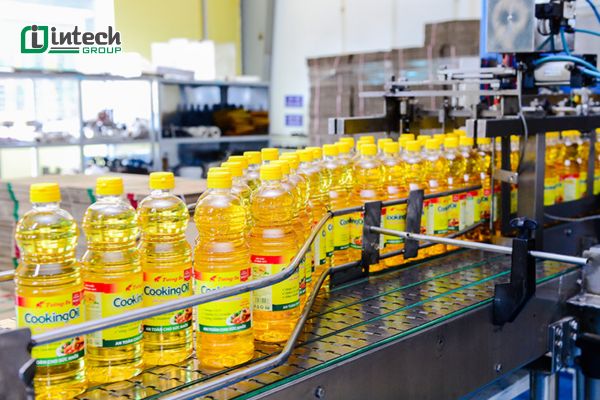
The refined oil will be filled into plastic, glass or large cans. The entire process is automated and takes place in a sterile environment. After filling, the oil is sealed, labeled and checked for factors such as weight, tightness, and production batch code to ensure consistent quality.
Step 6: Packaging and storage
When bottled, the cooking oil will go through a packaging system in cartons or large packages for easy transportation. The product is then stored in a warehouse that meets standards for temperature, humidity, and light, helping to maintain its quality for a long time and ensuring quality when it reaches consumers.
Machinery in modern cooking oil production line
In the cooking oil production line, each stage is supported by a specialized machinery system to ensure high efficiency, product quality and food safety. Below are the main types of machinery commonly used:
-
Raw material cleaning and processing machine
- Impurity separator: Removes impurities such as sand, gravel, seed shells to ensure clean raw materials before pressing.
- Raw material dryer: Reduces the moisture content of oil seeds to improve extraction efficiency.
- Seed crusher or miller: Crushes or flattens raw materials to increase contact area, helping to press oil more effectively.
-
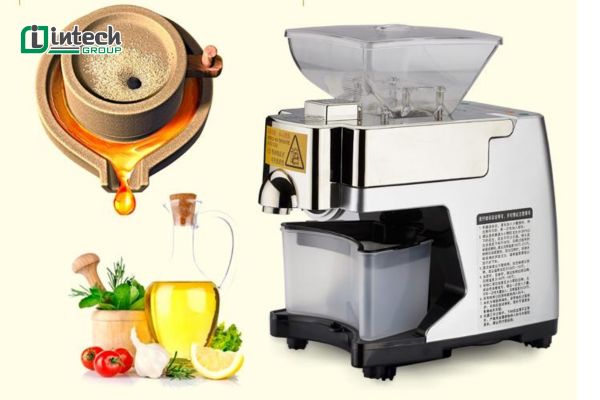
Oil press
- Screw press: Uses continuous mechanical force to press oil from raw materials.
- Hydraulic press: Creates high pressure to extract oil from oil-rich seeds.
- Cold press: Retains maximum nutrient content by pressing at low temperatures.
- Pre-press machine: Suitable for large factories, can extract about 70% of oil, capacity from 10-200 tons/day. Usually used for sunflower seeds, peanuts, rapeseeds..
-
Solvent oil extractor
- Applied in industrial scale production, to maximize the amount of oil obtained from the pre-press cake.
- Oil extraction equipment: Use solvent (commonly hexane) to dissolve the remaining oil in the raw material.
- Solvent evaporator: Remove solvent from the oil mixture after extraction.
- Solvent recovery system: Helps reuse solvent, reduce costs and ensure environmental safety.
-
Crude oil filter
- Plate filter or frame filter: Filter out large impurities and residues in crude oil.
- Centrifugal filter: Removes small impurities by centrifugal force, making the oil clearer.
-
Oil Refining Machine
This is an important stage to improve the quality and safety of edible oil.
- Degumming equipment: Removes phospholipids that cause oil turbidity.
- Neutralizing equipment: Uses alkaline solutions to remove free fatty acids.
- Decolorizing machine: Uses activated carbon or clay to absorb unwanted pigments.
- Deodorizing equipment: Vacuum distillation to remove compounds that cause unpleasant odors.
- Wax and fractionation equipment: Helps edible oil to be more stable and durable during storage.
-
Packaging and preservation machine
- Oil filling machine: Automatically fills oil into bottles according to the exact quantity.
- Capping machine: Ensures that the oil bottle is sealed tightly and prevents leakage.
- Labeling machine: Prints and labels clearly to serve traceability and provide product information.
- Carton packing machine: Edible oil bottles are transported on an automatic conveyor system, then go through the packaging system to be put into cartons or packages for convenience in the transportation process.
Price of edible oil production line
The price of an edible oil production line depends on factors such as scale, level of automation, integrated technology, equipment origin and the customization requirements of the business. Depending on these factors, the price can vary greatly from several hundred thousand USD to millions of USD. Factors affecting the price of an edible oil production line:
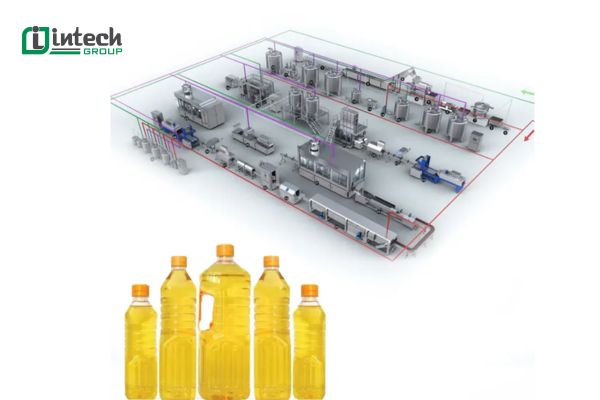
-
Production scale
Small capacity lines (5 - 10 tons/day) have lower prices, often suitable for small and medium enterprises.
Large industrial lines (from 50 - 200 tons/day) have higher costs but optimize performance and production costs according to scale.
-
Level of automation and integrated technology
Semi-automatic systems are cheaper, but require more manual labor.
Fully automated systems use PLCs, sensors, monitoring software, etc. to increase accuracy and reduce labor, but the initial investment cost is high.
-
Customized according to requirements
Lines that are specifically designed according to input materials or safety standards of each export market will cost more.
-
Origin of equipment and manufacturer
Equipment imported from Europe, Japan, and Korea is often expensive but has superior quality and durability.
-
Material quality and durability
Lines using 304 or 316 stainless steel in tanks, cold storage, and machinery have high corrosion resistance, ensuring food hygiene and safety, but the cost will also be higher.
-
Notes when choosing a cooking oil production line
Clearly determine the required capacity and input materials.
Prioritize choosing equipment from suppliers with clear warranties, after-sales technical support and actual implementation projects.
Compare initial investment costs with long-term production efficiency, avoid just looking at low prices.
Understanding each production stage helps businesses improve operational efficiency and helps consumers choose quality products that are safer for their health. Intech Group provides a cooking oil production line system that meets food safety and hygiene standards, with a modern chain system that helps businesses optimize the production process, improve quality and work efficiency. Contact Intech now for support today!
