


Explore the industrial wine production line
30-09-2025 46
The wine production line is an automated equipment system designed to optimize the process of cooking, fermenting, distilling and bottling wine according to food safety and hygiene standards.
Applying modern production lines not only helps businesses control output quality, but also saves labor costs, improves productivity and increases revenue. In the article below, let's learn in detail about the production process and key equipment in the modern industrial alcohol production line with Intech Group.
What is industrial alcohol?
Industrial alcohol is a solution containing alcohol (ethanol) produced by a modern alcohol production line, applying closed distillation and fermentation technology. This process ensures safety standards, uniform quality and high production efficiency.
Industrial alcohol has the main ingredient C₂H₅OH (ethanol). This type of alcohol is also known by many different names such as ethyl alcohol, ethanol, industrial alcohol or grain alcohol.
After going through all the stages of production and packaging in the wine production line, the product can be used for many purposes: blending other types of wine, making solvents in industry, preserving food, blending flavors or using in the food processing industry.
Industrial wine production on a modern chain not only helps to optimize the process, but also ensures consistency in quality and safety for users in each specific application.
Common ingredients in wine production lines
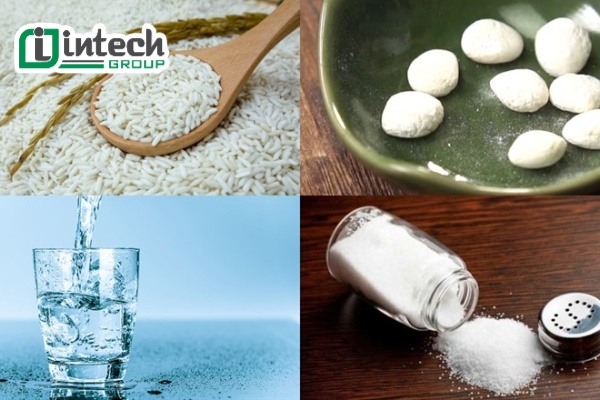
To ensure the quality of the finished product, the wine production line needs to use standard ingredients, carefully selected and processed before being put into the fermentation and distillation process. Below are three main types of ingredients:
- Rice: Glutinous rice is a popular choice thanks to its stickiness, large grains and suitable moisture content, helping the process of converting starch into sugar to take place more effectively. High-quality rice will contribute to creating a characteristic flavor for wine.
- Water: As the major component of the final product, the water used in the wine production line must be clean, unpolluted, and free of sediment. In addition, parameters such as pH and water hardness must be strictly checked to ensure that the wine is not affected by impurities during the fermentation process.
- Yeast: An important factor in the effective fermentation process. Yeast can be natural in the environment or cultured from specific yeast strains. Choosing the right yeast will determine the flavor, color, and alcohol content of the wine.
Operation process of industrial wine production line
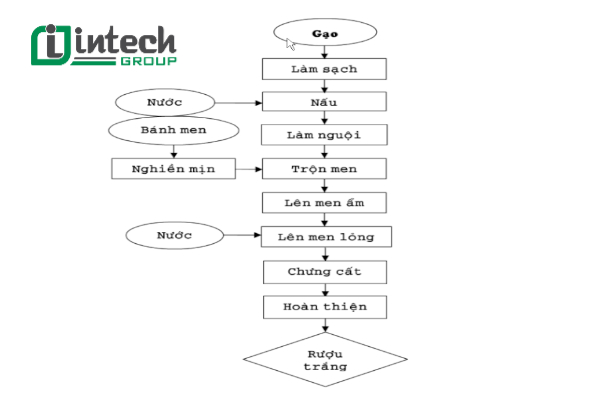
Modern wine production line follows a closed process with many strictly controlled stages, to ensure the quality, safety and characteristic flavor of the wine product. Below are the basic steps in the wine production process:
Step 1: Prepare raw materials
The main ingredients include rice and yeast. The rice is selected as sticky rice or rice with the husk intact to retain nutrients and increase aroma during fermentation. The yeast is carefully selected according to the recipe and fermentation purpose, which determines the flavor of the wine.
Step 2: Cook rice
Rice is cooked in a high-capacity industrial rice cooker to ensure uniform quality, sticky rice, fragrant and quick cooking.
Step 3: Mix yeast
After the rice has cooled to about 30 - 32°C, sprinkle yeast evenly on the surface. The temperature at this time must be suitable, not too cold or too hot for the yeast to work best.
Step 4: Fermentation and incubation of rice
The rice mixed with yeast is incubated in a cold storage at a temperature of 20 - 25°C. This is the most important stage in the wine production line, affecting the quality of the finished wine. Factors such as yeast type, rice ratio, temperature, rice maturity... all need to be strictly controlled.
Step 5: Distillation of wine
After the fermentation process is complete, the wine is distilled. The distilled wine will be divided into three parts:
- First part: Original wine, with high alcohol concentration (55-56 degrees), not safe to use.
- Middle part: Finished wine with concentration of 35-45 degrees, used as the main product.
- Last part: Wine has a sour smell, low quality, do not use.
Step 6: Detoxification and aging of wine
After distillation, the wine continues to be processed through a filter and a distillation tower to remove impurities, while separating toxins such as methanol, aldehyde, etc. This helps ensure that the wine is safe for health and increases its value.
What equipment and machinery does the wine production line include?
In a modern wine production line, investing in specialized equipment and machinery is a key factor in ensuring productivity, wine quality and hygiene. Below are the important types of machinery needed:
1. Rice steamer
Compared to traditional cookers, the rice steamer helps cook rice in large quantities while still ensuring that the rice is soft, not burnt or scorched. The cabinet has a smart timer mode, operates automatically and maintains a stable temperature, helping the wine production process to take place efficiently and save time.
2. Wine fermentation equipment
After the rice is mixed with yeast, the fermentation process must take place in a hygienic environment, with stable temperature and humidity. Wine fermentation equipment can be earthenware jars, food-grade plastic containers or specialized electric fermentation tanks. Good control of fermentation temperature will help the yeast work optimally, determining the flavor of the wine.
3. Alcohol cooking pot set
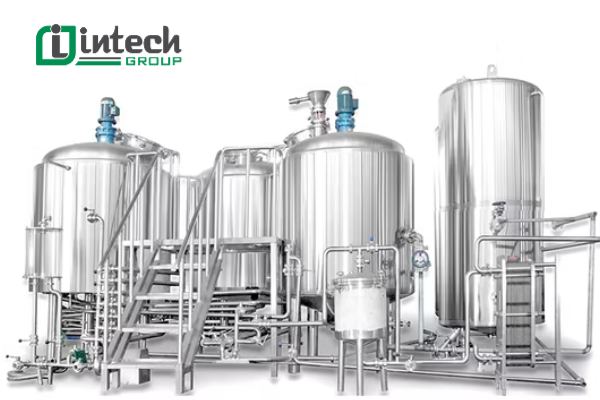
This is the central equipment of the alcohol production line, consisting of 3 main parts: distillation pot, steam pipe and condensation tank. Modern alcohol cooking pot sets are often designed with stainless steel 304, which is resistant to burning rice, retains heat well and effectively separates alcohol vapor. The closed system helps to preserve the flavor of the alcohol, ensuring hygiene and safety for consumers.
4. Alcohol filtering equipment
After distillation, raw alcohol still contains many impurities and toxins such as methanol, aldehyde, which need to be treated with specialized alcohol filtering equipment. Modern alcohol filtering machines help to completely remove toxic substances, clarify the alcohol and shorten the waiting time for filtering. Depending on the production scale, the equipment has many different capacities to suit the needs of each facility.
5. Bottle filling and capping machine
For large-scale wine production facilities, using an automatic filling and capping machine combined with a flexible conveyor belt will help save time, increase productivity and ensure uniformity for each product. This system can fill hundreds to thousands of bottles per hour, suitable for industrial production models.
6. Product packaging machine
In the final step, the packaging machine system and shrink wrapping machine will help package the product quickly and professionally. After filling, the wine bottles will be wrapped in shrink film and packed into batches, convenient for storage, transportation and distribution to the market.
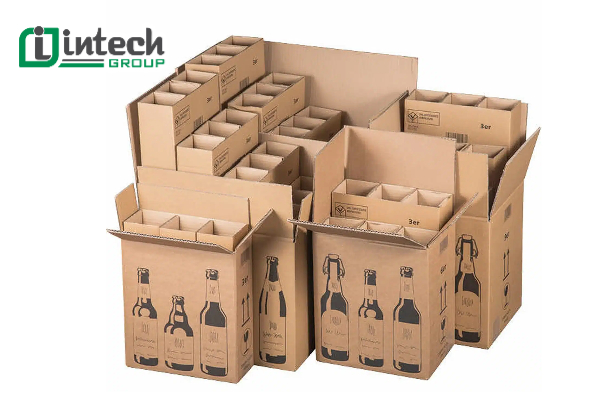
The wine production line not only helps optimize the production process but also improves quality, ensuring hygiene and safety for consumers. With the application of increasingly modern technology and machinery, the wine industry promises to continue to develop sustainably and meet increasingly demanding consumer trends.
