


Explore the standard Lithium-ion battery manufacturing process for electric cars
04-10-2025 282
Hiện nay, trong số các loại pin được sử dụng cho xe ô tô điện, pin Lithium-ion nổi bật là công nghệ phổ biến và tiên tiến nhất nhờ khả năng lưu trữ năng lượng vượt trội, hiệu suất cao và tuổi thọ bền bỉ.
Lithium-ion batteries have the advantages of being light, high energy density, fast charging ability and less battery deterioration over time. Thanks to that, they help modern electric vehicles operate stably, save energy and be more environmentally friendly.
To better understand the potential and quality of this type of battery, let's explore the standard Lithium-ion battery production process in the following article of INTECH.
1. History of Lithium-ion battery manufacturing
Lithium-ion (Li-ion) batteries are one of the most popular and widely used rechargeable battery technologies today, especially in the field of electric car manufacturing. With a structure consisting of an electrolyte (a mixture of LiPF6 and organic solvents) that helps conduct Li ions between the cathode and anode during the charging/discharging process, this type of battery provides high energy efficiency and outstanding durability.
In 1970, British chemist M. Stanley Whittingham was the first to lay the foundation for modern Lithium battery technology. He used titanium sulfide (TiS₂) combined with lithium metal to create an important electrode component in the battery. However, this technology encountered many limitations such as high manufacturing costs and unstable chemical properties.
During the production process, compounds such as titanium disulfide easily react with air, causing oxidation-reduction phenomena, creating hydrogen sulfide gas (H₂S) with an unpleasant and toxic odor.
In 1980, American physicist John B. Goodenough made a new step forward by replacing titanium sulfide with Lithium Cobalt Oxide (LiCoO₂), a compound with higher stability and better performance. This is the foundation for Li ions to move effectively between the two electrodes, creating the characteristic operating principle of Lithium-ion batteries.
In 1983, Japanese scientist Akira Yoshino developed the first version of the Lithium-ion battery that did not contain metallic lithium at the positive electrode. Instead, he used polyacetylene combined with Lithium Cobalt Oxide, allowing Li ions to move safely and stably between the electrodes. This was the prototype of the modern Lithium-ion battery.

The important milestone took place in 1991, when Sony Energytec officially launched the first commercial Lithium-ion battery with 4 geometric forms:
- Small cylindrical battery
- Large cylindrical battery
- Flat battery (pouch)
- Prismatic battery
2. Popular types of Lithium-ion batteries today
Currently, Lithium-ion battery technology is divided into many different lines, suitable for each purpose of use:
- Lithium-Cobalt Oxide (LiCoO₂): Used for phones, laptops
- Lithium-Titanate (LTO): Used in electric cars, electric bicycles, scooters and motorcycles
- Lithium-Nickel Manganese Cobalt Oxide (NMC): Suitable for electric vehicles, energy storage devices
- Lithium-Manganese Oxide (LMO): Used in industrial equipment and consumer electronics
3. Lithium-ion battery production process achieved standards for electric cars
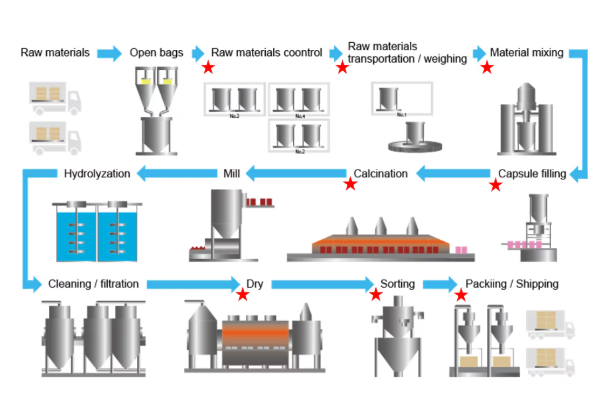
The structure of Lithium batteries can vary in shape and size, but they basically consist of 4 main components: positive electrode, negative electrode, electrolyte and insulating membrane. To produce a standard Lithium-ion battery, manufacturers will follow a 3-step process as follows:
Step 1: Prepare and form the electrodes
The first process in Lithium battery production is to prepare the electrode slurry, including: Active material (AM), conductor, adhesive. These materials are mixed evenly with specialized equipment, forming a homogeneous slurry with solvent.
This mixture is evenly coated on aluminum foil (+ pole) and copper foil (- pole) through a groove mold, then put into a drying oven to evaporate the solvent quickly. Thanks to the properties of water-based materials, the evaporation process does not produce toxic emissions, contributing to making Lithium battery technology environmentally friendly, part of the green energy trend.
Finally, the electrodes are transferred to a vacuum furnace to completely remove excess moisture. The humidity level will be strictly checked to avoid side reactions and corrosion, helping to increase the battery's lifespan and performance.
Step 2: Assembling Lithium-ion Battery Cells
Once the electrodes have been prepared, they are rolled up in layers or stacked in a certain structure, with a separator placed in between to ensure insulation.
Next, the cathode and anode are connected by ultrasonic welding or resistance welding to ensure stable current contact. Depending on the design of each manufacturer, the cells will be mounted in casings (cylindrical, bag-shaped, prismatic...) and then pumped with liquid electrolyte inside.
At the end of this step, the battery will be sealed airtight to protect the internal structure. This is the premise for the next important stage - electrochemical activation.
Step 3: Electrochemical Activation of Lithium Batteries
In this step, the battery cells will undergo a low-rate charge/discharge process (C/20) to form a solid electrolyte interface (SEI) layer - an ultra-thin barrier that protects the cathode. The SEI layer helps prevent side reactions, limits lithium spikes and increases safety during fast charging.
For the SEI to form stably, the cells need to be soaked with electrolyte for a certain period of time before increasing the charging speed. After the charge/discharge cycle is completed, the generated gases will be removed through a degassing step to ensure safety.
Finally, the cells are stored on aging racks for several weeks, allowing the electrolyte to fully penetrate and stabilize the SEI layer. Aging time may vary depending on the manufacturing process and temperature conditions of each factory.
4. Lithium-ion battery testing and inspection methods
In the process of manufacturing Lithium-ion batteries, testing and inspection play a very important role in ensuring the quality, durability and safety of users. Below are the most common Lithium-ion battery testing methods today:
Check the insulation strength of Lithium-ion batteries
Ensure that the internal components of the battery such as the positive electrode (cathode), negative electrode (anode) and battery case are completely insulated from each other.
If the insulation is not maintained properly (low insulation resistance), the current may leak, causing the risk of short circuit, explosion or fire accident.
Check the quality of the solder joints of the battery components
The solder points connecting the battery tab, current collector and other conductive components must be secure and even. If the weld is not of good quality, the resistance will increase at the contact points, causing: Energy loss, battery overheating, reduced life or risk of explosion
Visual, ultrasonic or on-site resistance testing methods help to accurately assess the quality of the weld.
Voltage and temperature monitoring during charging/discharging
During the performance test phase, Lithium-ion batteries will be charged and discharged in cycles. At this time, the system will continuously record voltage and temperature parameters to:
- Analyze battery stability
- Detect potential defects early
- Classify and evaluate battery quality
Abnormal changes in voltage or temperature can be a sign of technical failure or poor quality batteries.
Check the internal resistance
Internal resistance (IR) is a parameter that indicates the level of resistance to current flow in the battery. When the battery is new, IR is usually low; However, IR will increase over time or when the battery is degraded.
Batteries with high internal resistance will easily heat up when charging/discharging, reducing performance and potentially causing safety risks. Therefore, measuring internal resistance is an important indicator to evaluate battery life and quality.
Check the Open Circuit Voltage (OCV)
OCV is the voltage value measured when the battery is not connected to any load. OCV reflects the state of charge and state of health (SoH) of the battery.
When the battery has internal problems, the self-discharge phenomenon occurs more strongly, causing the open circuit voltage to drop rapidly. Therefore, monitoring OCV helps detect internal errors in Lithium-ion batteries early.
Laboratory Safety Testing
After mass production, Lithium-ion batteries will undergo a series of tests simulating harsh conditions to ensure maximum safety, including:
- Altitude simulation test
- Fire resistance, heat resistance
- Compression, vibration, impact test
- Overcharge reaction test
These tests are performed in specialized laboratories to ensure that Lithium-ion batteries do not pose risks during use, especially in areas such as electric cars, medical equipment and aviation.
5. The future of Lithium battery production technology
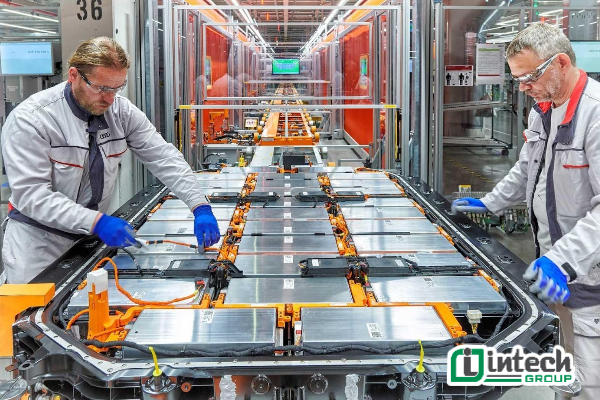
Lithium battery production technology is constantly evolving to meet the increasing demand for energy in the digital age. From consumer electronics to transportation, medical, military or aviation, space, Lithium-ion batteries have been and are playing a key role in the transition to green and sustainable energy sources.
Lithium-ion battery technology development trends
Today, scientists and engineers around the world are focusing on improving Lithium-ion batteries to bring higher efficiency in terms of: Greater energy density, longer life, high durability, and optimized usage costs
At the same time, many new materials are being researched to replace the traditional Li-ion battery version. Some typical advanced technologies include: Lithium-Sulfur (Li/S) batteries, Sodium-ion (Na) batteries, Magnesium (Mg) batteries, Lithium Cobalt Oxide (LiCoO2), Lithium Titanate (LTO)
These batteries promise to improve performance, reduce weight, and increase safety. However, most of them are still in the testing phase or have limited applications, not yet qualified to completely replace Li-ion batteries in large-scale production.
Breakthrough in Lithium Battery Materials and Manufacturing Processes
To shorten the gap from research to production practice, technology experts are focusing on developing:
-
Solid materials to replace liquid electrolytes, such as polymers, ceramics or glass, to minimize the use of toxic solvents.
-
Solid-State Battery technology with outstanding safety, limiting leakage and explosion.
-
Optimized and environmentally friendly production process, helping to create more sustainable Lithium battery generations in the future.
This innovation is an essential part of meeting the demand for "clean", efficient and environmentally friendly energy in the green industrial era.
A prominent trend today is the use of Lithium-ion batteries in solar and wind energy storage systems. This is a solution to help stabilize power sources and reduce CO₂ emissions, contributing to environmental protection and developing a green economy.
6. Intech Group and the application of Lithium batteries to AGVs
In the field of factory automation, Intech Group has pioneered the application of Lithium batteries to AGVs (Automated Guided Vehicles). This is a breakthrough that helps transport goods continuously, accurately and safely. AGVs automatically return to the charging station when the battery is low, increasing operating efficiency, shortening charging time and extending usage time.
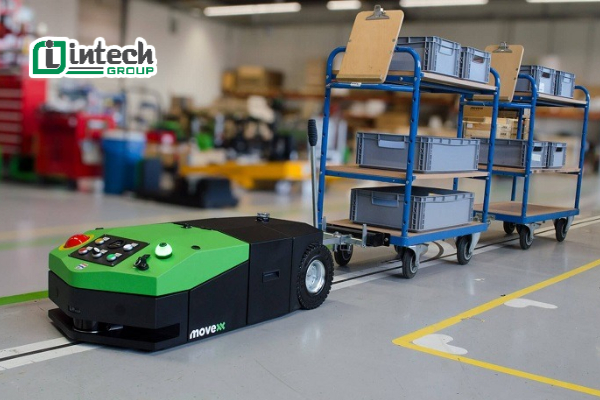
The strong development of AGV vehicles has led to the need to use Lithium batteries with high capacity, fast charging, and long life, in line with the trend of modernizing and automating smart factories in the digital transformation period.
The future of Lithium battery manufacturing technology is opening up many breakthrough development opportunities. From improving materials, optimizing processes to expanding applications in renewable energy and automation systems, Lithium-ion batteries will continue to be the heart of many industries in the next decade.
Enterprises like Intech Group with pioneering technological vision are contributing to reshaping the way we store and use energy in a more sustainable, intelligent and environmentally friendly direction.
