


How to optimize warehouse storage capacity
09-09-2021 455
On average, labor costs account for more than 65% of the cost of a warehouse. To review your warehouse operations before proceeding with full automation, because the layout of the warehouse greatly affects the performance.
Mục lục
On average, labor costs account for more than 65% of the cost of a warehouse. To review your warehouse operations before proceeding with full automation, because the layout of the warehouse greatly affects the performance.
Benefits of optimizing your warehouse layout and implementing an effective inventory management strategy
Optimizing the warehouse layout makes it easier for businesses to manage their inventories:
- Improving warehouse organization
- Improving order picking accuracy
- Saving time and money
- Improving efficiency and productivity
- Ensuring customer satisfaction

Warehouses come in many sizes and shapes, and many facilities serve specific functions. For example, a cold store specializes in temperature-controlled storage of perishable products, so processes and systems may differ from those of a warehouse specific to a retail organization. specifically, electronic goods-only warehouses or general archives. Therefore, there is no single standard warehouse layout optimization solution. However, there are some common steps in the process and best practices to rely on.
Conducting a spatial assessment:
The primary purpose of a warehouse is to provide space for inventory, and that is why assessing available space should be one of the first steps taken in optimizing a warehouse layout. It is best to have a custom space built for the specific use case of the warehouse. But various constraints such as time limits and cost considerations mean that some companies decide to use an existing warehouse or repurpose another location for storage. Before any inventory is placed inside, companies should assess the location and surrounding space. The surrounding area needs to be surveyed to match the company's requirements.
- Evaluating your storage space:
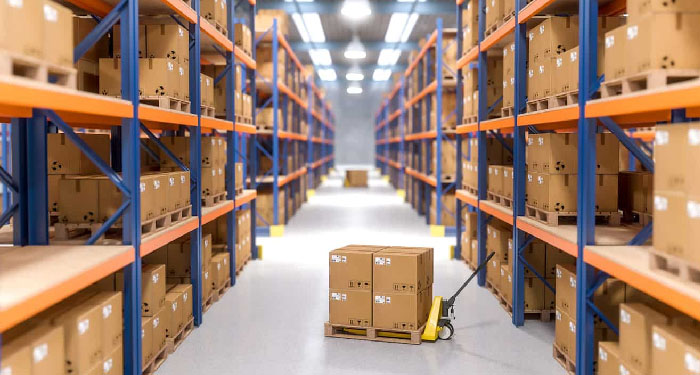
Once you have identified the right facility, the next step of optimizing a warehouse layout is to conduct a comprehensive inventory check to identify specific storage requirements, such as items required specialized racks or racks, goods requiring low humidity or other climatic factors.
After checking the storage space, you can start setting up areas or departments based on your storage requirements to establish the appropriate storage location for each type of storage space.
After checking the storage space, you can start setting up areas or departments based on your storage requirements to establish the appropriate storage location for each type of storage space.
- Allocating and labelling storage locations:
An endlessarray of shelves, racks and bins that workers can find difficult to move efficiently without optimized layout, organization and proper signage. Dividing an inventory into levels or sections is a useful starting point. Depending on the size of the warehouse and the number of aisles, subdivide each area into a set of aisles, compartments, racks, rows, and crates.
Some areas may have different types of racks or storage to hold certain types of inventory. For example, drive-loaded pallet racking areas that can accommodate forklifts should be designated to store pallets. Consult your inventory auditor to divide the warehouse into sized areas. the right size and with the right climate for your inventory.
Now the divided space needs to be labeled. It is common convention to provide a number or character identifier for floors, aisles, compartments, shelves, rows, and crates. It provides more clarity if each subdivision is labeled alternatively with alphanumeric characters.
- Estimated product flows:
In a warehouse, products are not moved at the same speed, some items will have higher sales than others. If these high-speed products are located far from sorting or packing stations, warehouse workers will have to walk longer distances to pick items from these locations. Storing rapid transit inventory near sorting, packing, and shipping stations eases travel, significantly saving time and effort.
Similarly, estimating sales for all products in warehouse allows you to allocate space to products by velocity and optimize the time it takes to pick items. Don't rely solely on inventory and supply chain data to estimate future product demand; Marketing and sales data are important pieces of the demand planning puzzle.
Integrating data from multiple sources provides meaningful insights and supports more accurate demand forecasting. This data can be leveraged to strategically allocate space for storage space to reduce total walking distance and the time it takes to pick an order.
- Deploying inventory management software:
Manually managing inventory of a large warehouse with significant volumes is imprecise and inefficient due to human errors. Most warehouses today use some type of inventory management software. With the right software solution, you can map the physical locations in the warehouse and the storage space to which each location is assigned. This will help optimize order and replenishment inventory processes to ensure front-pick locations have enough inventory to meet demand.
Analytics can be used to determine if the current layout of the product is optimal by taking into account the distance traveled and how often the product is ordered. The results of the analysis can be leveraged to change the layout to improve efficiency. This helps increase productivity, reduces the time it takes to fulfill orders, and saves on picking and replenishing costs.
Leveraging the right automation technologies is another way to optimize your warehouse. Collaborative mobile robots prioritize work in real time based on current conditions on the warehouse floor and guide associates through each task to increase efficiency. They easily integrate with your existing layout, requiring no long or costly infrastructure changes.
Related articles:
- ABB Industrial Robots - Summary of the most popular ABB robot lines today
- Tips to optimize warehouse layout to increase production
- What is self-propelled robot?
