


Learn About Proximity Sensors: Principle, Applications and Importance in Industry 4.0
04-09-2025 402
The industrial revolution 4.0 has brought about remarkable breakthroughs in the manufacturing sector. Smart factories and automation systems are becoming increasingly popular.
At the heart of these advances are sensors - tiny devices that play an important role in collecting data and controlling manufacturing processes. Among them, proximity sensors have emerged as one of the core technologies.
From simple machines in the past, today's electronic devices have become much smarter and more sophisticated. This is thanks to the continuous development of sensors such as proximity sensors, which help devices interact with the surrounding environment accurately and sensitively.
What is a proximity sensor?
A proximity sensor (also known as a "proximity switch" or "PROX", English name is Proximity Sensors) is a device that detects an object when it is close. In most cases, this distance is usually only a few millimeters. This device is often used to determine the end position of a machine part, then send an output signal to activate other functions of the machine. In particular, the proximity sensor works effectively even in harsh environments.
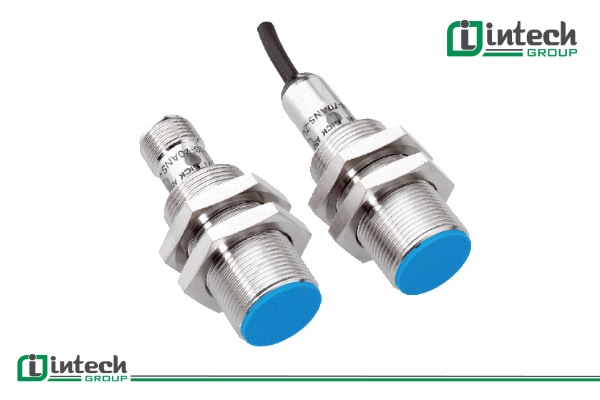
Proximity sensor features
Non-contact detection: Capable of detecting objects without touching, operating at a distance of up to 30mm.
Stable operation: Good shock resistance, ensuring high performance even in harsh environments.
Long life: Durable and cost-effective maintenance over a long period of time.
Fast response speed: Instant response when detecting changes.
Easy installation: Compact size, suitable for many locations and installation conditions.
Proximity sensor classification
Proximity sensors are classified based on many criteria such as operating principles, operating range, output type and specific applications. Below are the detailed classifications:
1. Based on operating principles
Proximity sensor features
Non-contact detection: Capable of detecting objects without touching, operating at a distance of up to 30mm.
Stable operation: Good shock resistance, ensuring high performance even in harsh environments.
Long life: Durable and cost-effective maintenance over a long period of time.
Fast response speed: Instant response when detecting changes.
Easy installation: Compact size, suitable for many locations and installation conditions.
Proximity sensor classification
Proximity sensors are classified based on many criteria such as operating principles, operating range, output type and specific applications. Below are the detailed classifications:
1. Based on operating principles
Electromagnetic induction proximity sensor: This type of sensor generates an electromagnetic or magnetic field and monitors changes when an object appears. This is a common type of sensor used to detect metals or conductive materials.
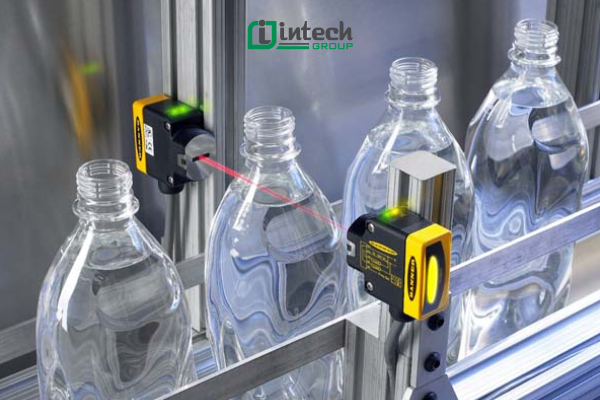
Photoelectric proximity sensors: Use light (such as infrared or laser) to detect objects. This sensor measures the reflection or absorption of light when it encounters an object, and is often used in the automation industry.
Mechanical proximity sensors: Operate based on contact or isolation between the sensor and the object, such as detecting compression or separation. This type is suitable for applications that require high accuracy.
2. Based on operating range
Proximity sensors: Specialize in detecting objects within a short range, from a few centimeters to a few decimeters.
Distance proximity sensors: Capable of measuring distances with higher accuracy and larger ranges, often used in automatic measurement systems.
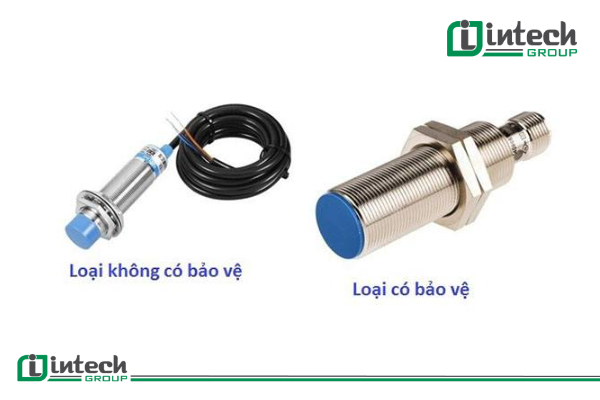
3. Based on output type
Digital proximity sensor: The output is a digital signal (0 or 1), indicating the presence or absence of an object.
Analog proximity sensor: Provides a continuous signal to measure values such as distance or level of interaction.
4. Based on specific application
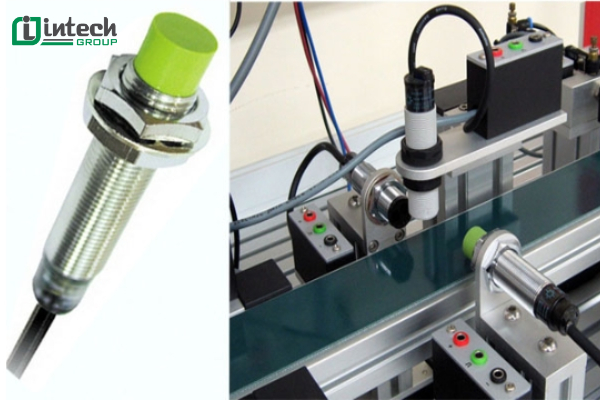
Industrial proximity sensor: Widely used in automation systems and manufacturing process management, such as detecting objects on assembly lines.
Automotive proximity sensor: Serves safety features such as automatic parking assistance and obstacle recognition.
Mobile phone proximity sensor: Applications in turning off the screen when the phone is brought close to the ear or identifying users during calls.
Classifying proximity sensors helps to choose the right type of sensor for each specific need. From industrial applications to everyday life, proximity sensors play an important role in improving efficiency and automation.
How does a proximity sensor work?
A proximity sensor is a device that detects the presence or distance of an object without direct contact. They work on the principle of induction and respond to changes in the surrounding environment. Each type of sensor has its own operating principle, the most common of which are three main types: electromagnetic induction, optical induction, and mechanical induction.
1. Proximity sensor based on electromagnetic induction
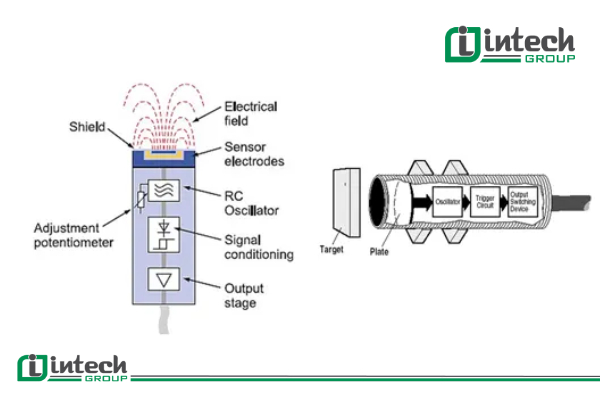
This type of sensor creates an electromagnetic field around it. When an object (usually metal or conductive material) enters the operating range, the electromagnetic field will change.
How it works: When the electromagnetic field changes, the sensor's output signal (current or voltage) also changes. Through this change, the sensor can determine the presence or distance of an object.
Applications: This type of sensor is commonly used in production lines, object inspection, and industrial automation.
2. Photoelectric-based proximity sensors
Optical proximity sensors work by using light to detect objects through reflection or absorption.
How it works: The sensor emits a beam of light (usually infrared or laser) and monitors the light that is reflected back or absorbed by the object. The change in the reflected light is analyzed by the sensor to determine the location and presence of the object.
Applications: Suitable for applications that require fast and accurate detection, such as product inspection on a production line or security systems.
3. Mechanical Proximity Sensors
Mechanical sensors operate based on physical changes when there is contact or separation between the sensor and the object.
Operating mechanism: When an object approaches or impacts the sensor, the pressure or position of the sensor changes, triggering an output signal. This type of sensor usually responds directly to touch or compression.
Applications: Used in systems that require physical contact, such as limit switches or compression testers.
4. Summary and applications
All types of proximity sensors transmit output information (digital or analog signals) to processing circuits for analysis. This information can be used to:
- Activate automatic control systems.
- Send warnings to operators.
- Adjust the operation of the device to optimize performance.
Proximity sensors are an indispensable technology in many fields, from industrial production, automation, to civil applications. Understanding the operating principles of each type of sensor helps to choose the right equipment, improving efficiency and accuracy in practical applications.
Applications of proximity sensors
Proximity sensors are widely used in many fields thanks to their ability to detect objects without contact. Here are some common applications:
1. Industry and automation
Object Detection: Proximity sensors are used to check the presence or absence of objects in the production line, helping to ensure accurate operating procedures.
Positioning: They assist in locating and tracking the movement of products or components during transportation.
Safety applications: Used in automatic shutdown systems when a collision risk is detected.
2. Autonomous cars and vehicles
Parking assistance: Proximity sensors are installed to detect obstacles around the car, ensuring that the automatic parking system operates safely and effectively.
Collision warning: The sensor supports safety features such as warning of distance to the vehicle in front or surrounding objects.
3. Information Technology and Mobile Phones
Automatic features: Proximity sensors in mobile phones are used to turn off the screen when the phone is brought close to the ear during a call, saving energy and avoiding unwanted touches.
4. In daily life
Automatic lighting systems: Proximity sensors are used to turn on the lights when someone enters the room and turn them off when no one is there, saving energy.
Smart home appliances: Used in automatic control systems, such as sensor faucets or automatic hand dryers.
5. Robotics and automatic control
Collision avoidance: In the field of robotics, proximity sensors help robots detect and avoid collisions with objects while moving.
Supporting precise manipulation: Sensors help robots locate and approach objects accurately in tasks such as assembly or arrangement.
Due to its versatility and efficiency, proximity sensors are an important solution in automation systems, smart devices, and life applications. Proper use of this technology not only improves performance but also optimizes costs and safety in many different fields.
Notes when using proximity sensors
Understanding what proximity sensors are and following the principles when using them will help optimize performance and extend the life of the device. Here are some important notes to remember when using proximity sensors:
1. Operating range and distance
- Determine the operating range and distance of the sensor to ensure that the device accurately detects the object.
- Note that factors such as the size and material of the object can affect the performance.
2. Operating environment
- Ensure that the sensor is suitable for the operating environment, including temperature, humidity, light, and other physical impacts.
- Avoid using the sensor in dusty, greasy or corrosive environments unless specifically designed for these conditions.
3. Proper Installation
- Install the sensor according to the manufacturer's instructions.
- Place the sensor in a suitable location and angle to accurately detect changes in the environment.
4. Periodic Inspection and Maintenance
- Perform periodic inspections to ensure stable sensor operation and early detection of potential problems.
- Clean to remove dirt or other interferences, ensuring accurate data.
5. Power Supply Quality
Ensure the power supply is stable and suitable for the sensor's requirements, avoiding fluctuations that may reduce performance or cause damage.
6. Select the appropriate sensor type
- Select the sensor based on the operating principle and specific requirements of the application.
- For example, electromagnetic inductive sensors are suitable for industrial environments, while optical sensors are suitable for applications that require high accuracy.
7. Anti-interference ability
In environments with many sources of electromagnetic interference, choose a sensor with built-in anti-interference features to ensure stable signals.
8. Reset and calibration
- After a period of use, the sensor may need to be reset or calibrated to maintain its performance.
- Follow the manufacturer's instructions to avoid deviations in measurement results.
9. Accuracy and resolution
- Understand the accuracy and resolution of the sensor to determine its suitability for the job requirements.
- These parameters determine the ability to detect objects and analyze data.
10. Safety in Use
Ensure that sensors and connected devices are installed safely, avoiding danger to people or damage to property.
Proximity sensors are an important tool in many fields, helping to optimize processes and improve efficiency. Proper application and compliance with usage instructions will ensure the device operates durably and reliably, contributing to the success of the system or application in which it is integrated.
