

Location-based warehouse management software
08-03-2025 153
Warehouse management is an indispensable activity in any business, whether large or small. Over time, this method has been improved with the application of management software, replacing the previous manual method. Today, many smart warehouse management software are born with outstanding features, optimally supporting business operations.
1. What is warehouse management software?
Warehouse management software is a tool that helps businesses track, inventory and manage imported and exported goods accurately. With this software, users can easily control the quantity of inventory and the location of each item in the warehouse, thereby optimizing the effective coordination of goods.
.jpg)
2. What is special about location-based warehouse management software?
Unlike traditional warehouse management software, location-based warehouse management software helps businesses accurately identify the storage locations of each product in the warehouse. As a result:
-
Minimized errors: Reduces confusion during inventory input/output, making it easier for employees to locate goods.
-
Increased management efficiency: Scientifically organizes the warehouse, optimizes space, and reduces search time for products.
-
Real-time inventory status updates: Accurately tracks inventory fluctuations by storage area.
3. Outstanding Features of Location-Based Warehouse Management Software
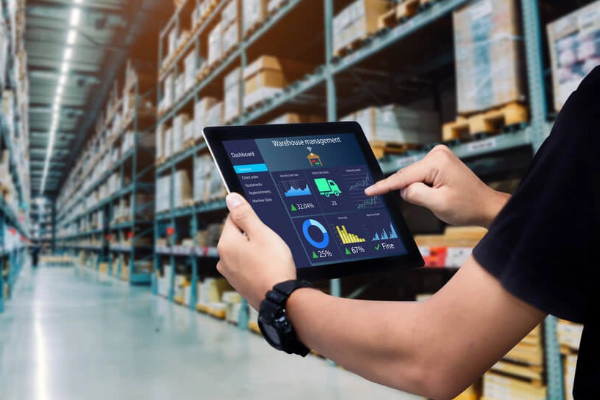
Order Status Tracking: The inventory management software displays the order status in real-time (pending confirmation, in transit, delivered, returned, etc.). As a result, business owners can easily monitor the delivery progress and address any issues that arise.
Inventory Management: With the ability to track goods by location, the inventory management software helps accurately update the quantity of products in each area of the warehouse. Users can filter data by time to check stock levels and make informed purchasing decisions.
Payment Transaction Management: Some online warehouse management software also supports generating sales reports by product, helping businesses quickly and accurately compare revenues and optimize business strategies.
Document Management: In addition to controlling inventory, the inventory management software also synchronizes important documents such as goods receiving and shipping slips, purchase order lists, and stocktaking reports, making it easier for businesses to track accounting data and manage the warehouse.
4. Why should online shops use location-based warehouse management software?
In online business, controlling the inventory of incoming and outgoing goods is a crucial factor for optimizing capital and ensuring effective operations. Location-based warehouse management software is the solution that helps shop owners monitor, arrange, and manage inventory scientifically. Below are the outstanding benefits of using this software.
Easy classification of goods: The software provides smart filters such as product name, production location, expiration date, brand, etc., allowing sellers to organize goods visually. As a result, searching for products becomes quick, minimizing errors in inventory management.
Accurate control of incoming and outgoing inventory: The real-time data synchronization feature helps shop owners track detailed incoming and outgoing stock levels. This supports timely decisions on restocking or liquidating products, preventing shortages or excess goods.
Accurate and real-time data updates: The location-based warehouse management software consolidates product information from all online sales channels (name, quantity, color, size, price, etc.). As a result, shop owners can easily reconcile and compare sales across different online stores quickly without spending much time or manpower.
Enhancing inventory management efficiency across all stores: Using location-based warehouse management software allows shop owners to monitor goods across multiple warehouses from a single interface. This makes it easier to transfer goods between warehouses, ensuring stable business operations and reducing shortages at point-of-sale locations.
Optimizing costs and manpower: Instead of incurring costs to hire inventory staff, shop owners can manage all warehouse activities with just one software. This significantly saves operating costs, enhances work efficiency, and reduces errors in management processes.
Using location-based warehouse management software helps businesses optimize operational processes, improve inventory management efficiency, and minimize the risk of errors. This is an intelligent solution for scientifically controlling goods, ensuring effective business operations.
5. Benefits of Smart Warehouse Management Software for Businesses
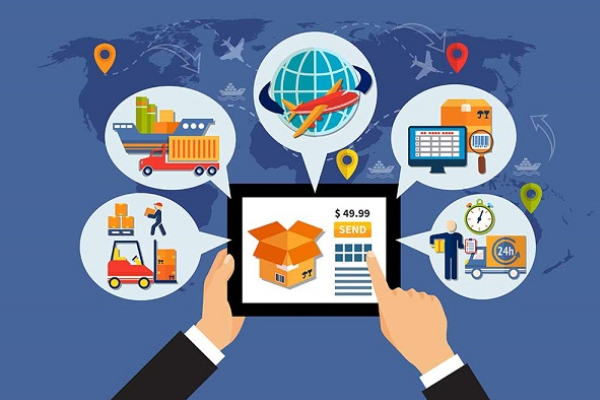
Tracking Outbound Processes: Managing inventory with software modernizes the process of tracking outbound logistics. Businesses can accurately identify the products to be shipped and closely monitor the status of goods. Furthermore, the software suggests optimal transportation methods, helping to save costs and time for buyers. This makes the outbound process quicker and more efficient, delivering significant benefits to the business.
Tracking Inbound Processes: The warehouse management software acts as an intelligent assistant, supporting the tracking and management of the quantity of goods received over specific time periods. When information is needed about a shipment or inbound materials, employees can receive detailed reports directly on the software interface. This enhances work efficiency and saves businesses up to 80% of the time.
Inventory Management: The software helps warehouse staff easily control and update information regarding stock conditions, as well as automatically send reports on the current inventory levels. Consequently, businesses can plan their operations accurately and timely. Additionally, the software supports identifying empty spaces in the warehouse for organizing goods, optimizing storage area.
The implementation of smart warehouse management software not only enhances management efficiency but also helps businesses save costs, time, and increase overall productivity.
6. The most popular warehouse and material management software
Warehouse and material management is one of the important factors to ensure effective business operations. Nowadays, with the development of technology, many warehouse management software have been born to support businesses to better control inventory, import and export processes and related issues. Below are the most popular warehouse management software that businesses should consider.
.jpg)
Smart Warehouse Management with Warehouse Management Software
Sapo Software
Outstanding Features:
- Integrates barcode scanning and sales invoice printing functions.
- Directly connects with payment methods via e-wallets or bank cards.
- Accurately and continuously tracks the flow of goods in the warehouse.
Advantages:
- Compatible with many hardware devices such as barcode printers and receipt printers.
- Allows users to visually track revenue and accounts receivable.
- Provides reporting charts that help businesses easily evaluate business performance.
Disadvantages:
- Relatively high monthly maintenance costs.
- Complex interface due to the integration of multiple sales channels.
Misa Software
Outstanding Features:
- Manages and analyzes financial data, supporting the import and export of accounting data.
- Supports comprehensive sales process management, including purchasing and invoice management.
- Provides inventory management and personnel management functions.
Advantages:
- Suitable for Vietnamese businesses, complying with specific tax and accounting regulations.
- Strong financial reporting capabilities, helping to closely monitor business performance.
- Has versions suitable for various industries.
Disadvantages:
- Leans heavily towards accounting functions, not strong in inventory management.
- Complex interface, requiring time to become familiar with and use effectively
7. Classify warehouse management software by industry
Warehouse Management Software for Manufacturing Companies
Warehouse management software for manufacturing companies plays a vital role in optimizing production processes and managing goods. Here are some specific features and benefits of warehouse management software designed for manufacturing companies:
-
Management of Raw Materials: The software helps track the quantity of raw materials needed for the production process, from receiving materials into the warehouse to controlling inventory status.
-
Tracking Finished Products: After production, finished products also need to be managed closely. The software allows for recording and controlling the quantity of completed products that are ready for sale.
-
Managing the Production Process: Many warehouse management software solutions come with features that support managing the production process, allowing users to monitor each stage of the production line, from processing raw materials to completing the final product.
-
Periodic and Ad-hoc Inventory Counts: Supports inventory counting based on actual needs, helping businesses promptly detect excess or shortage of stock.
-
Reporting and Analysis: Provides detailed reports on raw material usage, production productivity, and related figures, helping businesses make timely and accurate decisions.
-
Batch Inventory Management: For products with expiration dates or specific quality management requirements, the software can track stock across different batches, ensuring product quality.
-
Integration with ERP Systems: Warehouse management software can integrate with Enterprise Resource Planning (ERP) systems, helping synchronize information between departments like production, accounting, and sales.
Inventory Management Software for Materials
Inventory management software for materials is an important tool that helps businesses track, manage, and optimize the use of materials in the production process or other activities. Here are some features and benefits of this software:
-
Tracking Material Inventory: The software helps businesses keep track of the current quantity of materials in stock, enabling effective inventory control.
-
Managing Material Inbound and Outbound: Records inbound and outbound transactions of materials, including details about the date of entry, quantity, supplier, and usage project, allowing easy retrieval and control.
-
Inventory Counting: Supports regular or ad-hoc inventory counts, helping to determine the actual condition of the warehouse and quickly detect any irregularities in material management.
-
Supplier Management: Stores information about material suppliers, tracks quality and delivery history, making it easier for businesses to choose reputable suppliers.
-
Reporting and Analysis: Provides detailed reports on consumption levels, inventory status, and demand forecasting, helping businesses make decisions that align with their business strategies.
-
Integration with Other Systems: Material inventory management software can integrate with other software such as production management (ERP) and accounting software, creating a synchronized and efficient management process.
-
Managing by Material Code: The system allows for managing materials through unique codes, facilitating classification and easier retrieval.
Warehouse Management Software in Logistics
Warehouse management software in logistics plays a crucial role in optimizing operational processes, helping to control goods more effectively. Here are some features and benefits of this software:
-
Managing Inventory: The software allows tracking of the quantity of goods in stock, helping determine which goods are available, which are running low, and enabling timely replenishment.
-
Tracking the Status of Goods: The system can track the status of goods (such as items in stock, items in transit, or delivered goods), providing businesses with an overview of the logistics process.
-
Managing Orders: Integrated order management functionality helps businesses track orders from receipt to delivery completion, ensuring accuracy and efficiency in transactions.
-
Automatic Inventory Counts: Supports regular or ad-hoc inventory counts, helping to identify issues related to goods such as losses or inaccurate stock levels.
-
Reporting and Data Analysis: Provides detailed reports on inventory status, order conditions, and operational performance, helping businesses make strategic decisions.
-
Integration with Other Systems: Warehouse management software in logistics can integrate with ERP systems, accounting software, and other transportation management solutions, ensuring consistent and effective management.
-
Optimizing Transportation Processes: Based on available data, the software can assist in planning the transportation of goods optimally, saving time and transportation costs.
-
Managing Goods by Barcode: Utilizes barcode or RFID technology to automate the process of inventory management, enhancing accuracy and efficiency.
8. Technologies in smart warehouse solutions, automated warehouses
In the era of strong technology development, businesses increasingly focus on optimizing warehouse management to limit losses and improve storage efficiency. The application of technology to warehouse management (such as smart warehouse management systems - WMS, autonomous vehicles - AGV, automatic loading and unloading robots and smart factories) is becoming an inevitable trend. These technologies help reduce production costs, manage effectively and improve the supply chain. Below are 4 outstanding technologies in smart warehouses.
Smart Warehouse Management System (WMS)
Warehouse Management System (WMS) is a software that helps businesses automate warehouse management, simplify processes and optimize working time. WMS is one of the important factors that create an automated warehouse 4.0.
Main functions of WMS:
- Manage goods and materials categories.
- Track inventory by location, box, pallet.
- Manage goods by batch, expiry date and inventory age.
- Support multiple conversion units and cost calculation methods.
- Manage inventory levels and send detailed reports.
There are many domestic and international WMS solutions on the market today. Domestic products are often highly customized to suit the specific characteristics of the business, while having reasonable costs.
Robot AGV:
AGV (Automated Guided Vehicle) is a type of vehicle that moves according to guidance technology, transporting goods to a predetermined location without human intervention. AGV can work continuously 24/7, helping businesses minimize errors, save costs and improve labor efficiency. AGV replaces workers in heavy transportation tasks, can move pallets of goods weighing up to 500kg at a speed of 50m/minute, automatically recharges the battery and operates efficiently in warehouse space.

Automatic loading and unloading robot
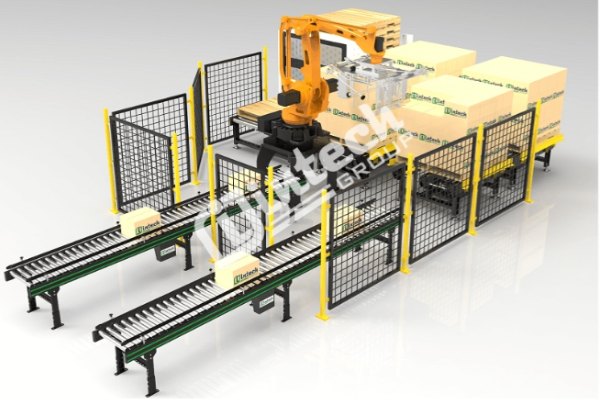
Automated palletizing robots are robots that can work together with humans without the need for a safety protection system. This is different from conventional industrial robots, which only operate independently and have their own protective areas.
Cobots are capable of coordinating with humans in tasks such as loading and unloading, transporting goods from AGVs or conveyors. Cobots such as the 6-axis UNIVERSAL robot (UR3, UR5, UR10) are widely used to automate palletizing processes.