

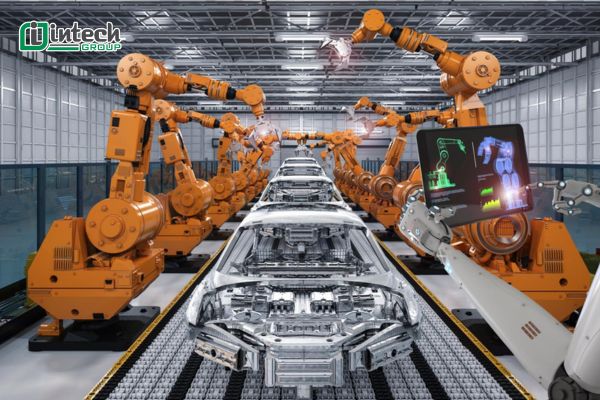
Overview of current product assembly lines
23-09-2025 130
Assembly lines play an important role in the manufacturing industry, helping to create mass products with high precision, from automobiles, electronics to home appliances.
Thanks to the tight organizational structure, each stage is clearly divided, this system helps to minimize errors, save time and optimize human resources, bringing outstanding economic efficiency to the factory.
What is an assembly line?
An assembly line is a production system designed according to a sequential process, where the product is gradually completed through specific assembly steps at each workstation. Each stage on the assembly line will be undertaken by a worker or machine, performing a task repeatedly, helping to increase specialization and optimize production time. This is a popular model in mass production industries such as automobiles, electronics, household appliances and many other industrial fields.
Components of a product assembly line
The design and implementation of a modern assembly line requires the construction unit to have high technical capacity and experience in integrating automation systems. An automated assembly line needs to include the following main components:
-
Automation equipment: Including automatic conveyors, specialized machines, robots loading and unloading goods onto pallets.
-
Handling and transportation systems: Including conveyors for transferring goods, goods sorting conveyors, automatic feed systems, AGV self-propelled vehicles.
-
Assembly and inspection systems: Assembly machines, quality inspection lines, packaging lines, etc.
-
Production support equipment: Such as work tables, shelves, carts, etc. to support the optimization of space and worker operations.
-
Production management solutions: Software and production operating systems help control progress, quality, and overall efficiency.
-
Smart Warehouse
-
Auxiliary systems: Including lighting, control systems, M&E systems, etc., play a role in ensuring a stable operating environment and conditions.
Classification of popular assembly lines today
Depending on the purpose of use and product characteristics, assembly lines in production are divided into many different types to optimize efficiency and operating costs. Below are some common types of assembly lines:
Automated assembly lines: Use mostly or completely automatic machinery, robots and sensors to perform the assembly process without human intervention. This line is suitable for mass production, requiring high precision.
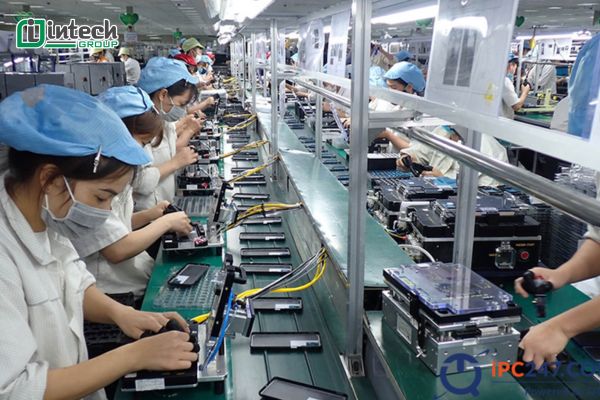
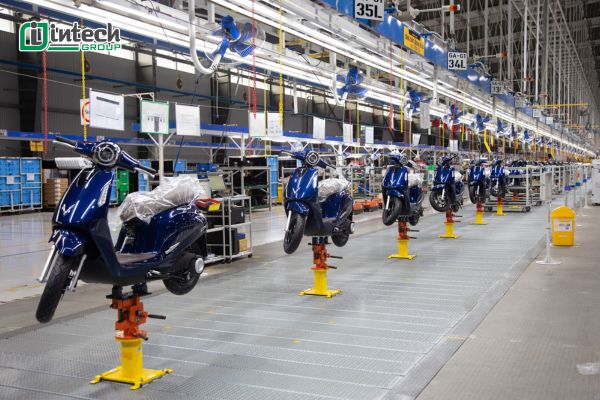
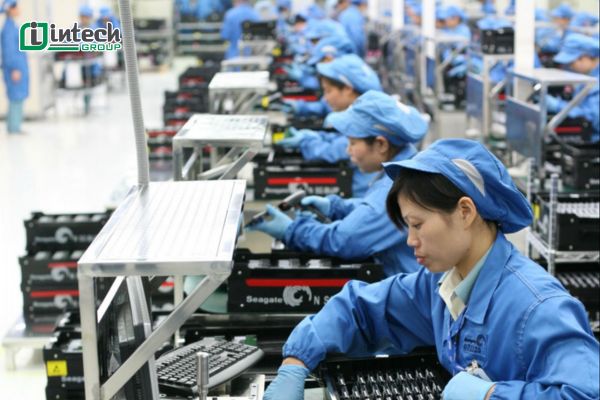
Semi-automatic (classic) assembly lines: Combine machinery and human labor, often applied in industries such as automobile, motorbike, electronics manufacturing, ... where flexible coordination between technology and operating skills is required.
Discontinuous assembly lines: Suitable for the production of similar but not exactly identical products, such as custom design versions.
Flexible assembly lines: Although aimed at high-volume production, some modern lines are designed with the ability to adjust quickly to adapt to product changes. However, switching to a different type of product can still be difficult if not optimized from the beginning.
Applications of assembly lines in industries
Assembly lines help break down the production process into manageable and repeatable stages, thereby increasing speed, improving accuracy and optimizing costs. Here are some applications of assembly lines in industries:
Automotive industry
In the field of automobile manufacturing, the assembly line is organized systematically according to each stage such as assembling the engine, suspension system, wheels... to help synchronize the process and increase the number of finished vehicles per day.
Electronics manufacturing industry
For products requiring high precision such as smartphones, computers, TVs, etc., the assembly line supports the quick and accurate installation of small components. From there, electronics businesses can easily control quality and shorten production time.
Large-scale manufacturing industry
Industries such as garment, food processing, furniture manufacturing, etc. all apply assembly lines to clearly divide the stages, from raw material processing to finished products. This model allows mass production with stable quality and optimal labor costs.
Outstanding advantages of assembly lines
Assembly lines have been widely applied in many industries thanks to their ability to organize work systematically, optimize resources and improve overall efficiency. Below are the benefits that businesses receive when applying the assembly line model:
Increase production productivity
Dividing the process into separate stages helps each worker or machine focus on a specific task, thereby shortening operating time and reducing errors. Thanks to high specialization, the line helps businesses increase output, shorten production cycles and respond quickly to market demand.
Reduce labor costs
Assembly lines help optimize resources thanks to repetitive tasks that help workers understand each stage without having to undergo specialized training. This not only reduces labor costs but also helps businesses maintain stable productivity and allocate resources reasonably.
Improve product quality
With a machinery system that sets clear standards for each stage. Thanks to that, each part in production is quality controlled from the beginning, helping to limit errors and increase uniformity.
Address to buy high-performance, cost-optimized assembly lines
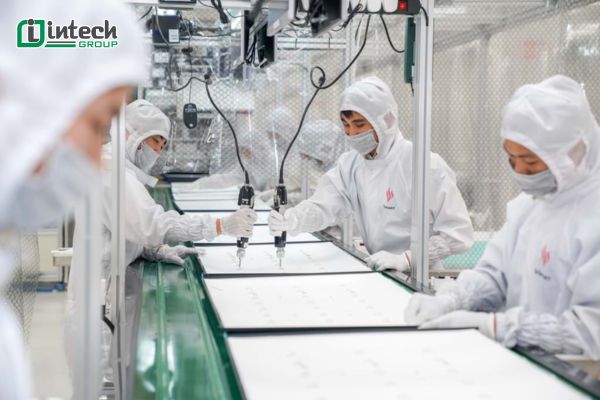
Intech Group is a reputable unit specializing in providing modern assembly line solutions, designed on demand, helping to optimize investment costs and improve production efficiency for businesses. With 15 years of experience operating in the field of mechanics and automation, Intech brings a stable and durable operating line system:
-
Intech designs and deploys assembly lines suitable for the production of electronic components, medical equipment, cosmetics, printers, cars, etc. Each solution is customized by the technical team according to the product characteristics and production process of the customer.
-
Intech's team of highly specialized engineers will advise, come up with ideas and manufacture the assembly line according to the needs and technical standards required by the business.
-
Intech not only provides assembly lines, but also provides a full package of technical services and periodic maintenance to ensure stable system operation, saving time and repair costs in the long term.
Contact Intech now for free consultation and choose the most optimal assembly line for your business!
