


Overview of modern packaging production line
23-09-2025 95
Modern packaging production lines are becoming an optimal system to help businesses improve productivity, control product quality and reduce operating costs. This chain system also plays an important role in protecting products, enhancing brand value and increasing competitiveness in the market.
So how does the packaging production line work? Let's explore with Intech Group through the following article:
Packaging usage trends in 2024
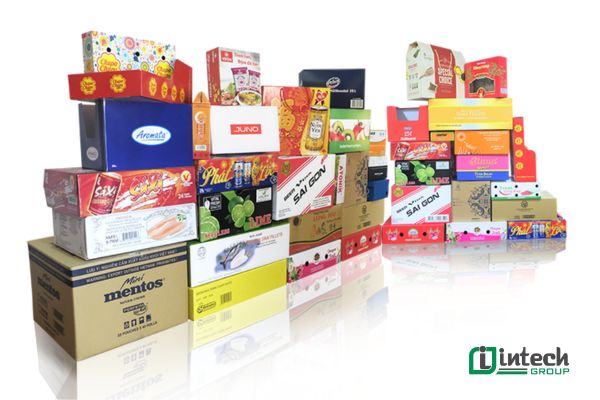
Today, product packaging is considered the face of the brand, so manufacturers are interested in the trend of investing in packaging to attract more customers. In particular, the use of plastic packaging such as plastic bags, PET bottles, plastic boxes is popular thanks to its durability, convenience and reasonable production costs. This is a popular choice in the packaging and preservation industry of consumer products, food, cosmetics, pharmaceuticals and many other fields.
According to the Vietnam Packaging Association, there are currently about 14,000 enterprises participating in the packaging production sector in our country, of which plastic packaging accounts for 65%. In the first 9 months of 2024, Vietnam's GDP grew by 6.82%, expected to reach 6.5% - 7% for the whole year. The main export packaging products include carton boxes, kraft paper, paper bags and paper boxes, which are highly appreciated for their quality in the international market.
In addition, a report from Mordor Intelligence Inc shows that the paper packaging market size in Vietnam is estimated to reach 2.6 billion USD in 2024 and is forecast to increase to 4.14 billion USD in 2029, with a compound annual growth rate (CAGR) of 9.73% in the period 2024 - 2029. These figures reflect the sustainable and promising development potential of the packaging industry in the near future.
Popular types of packaging production lines today
Each type of packaging production line will be based on its own factors, desires and technical characteristics suitable for specific usage needs. Below are the popular types of packaging production lines on the market:
1 - Based on packaging product materials
- Plastic packaging production line
Plastic packaging is commonly used in the following industries: food, pharmaceuticals, cosmetics, electronics, consumer goods thanks to its durable, light, waterproof, reasonable price and consistent product quality.
Plastic packaging production line includes the following stages:
- Plastic extrusion: Melting plastic to form thin films or fibers, mainly used for plastic bags and packaging films.
- Blow molding: Shaping bottles, jars, and plastic containers using blow molding technology.
- Printing plastic packaging: Using flexo or offset printing technology to display logos, brands and product information.
- Cutting and gluing: Shaping and finishing packaging according to standard sizes.
- Paper packaging production line
Currently, there are businesses aiming for sustainable development and building a green image in the eyes of consumers through environmentally friendly products, paper packaging is preferred. The basic process in the paper packaging production line includes:
- Paper lamination: Paper surface treatment to ensure smoothness and meet production standards.
- Paper packaging printing: Offset printing is the main printing technology, providing sharp images, accurate colors, helping to enhance brand recognition.
- Cutting - folding - gluing: Die cutting, folding and gluing to create shapes for paper bags, paper boxes or cartons.
- Surface treatment: Cover with PE or glossy film to make it waterproof and protect the printed surface.
- Carton packaging production line
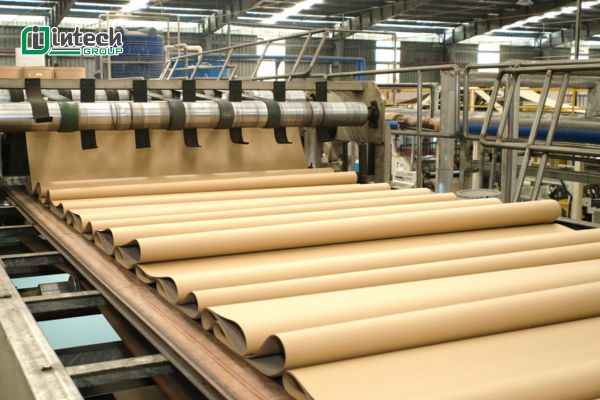
Carton packaging is an effective packaging solution, widely used thanks to its high durability, high performance, load-bearing capacity and easy recycling. The main stages in the carton packaging production line include:
- Carton sheet production: Creating carton sheets from multiple layers of paper, including corrugated layers and lining layers.
- Die cutting: Creating product shapes suitable for carton box sizes as required.
- Carton surface printing: Printing logos, instructions for use or product information.
- Product gluing and finishing: Attaching parts of the carton box to ensure firmness when used.
2 - Based on the purpose of use
- Food packaging production line
Food packaging plays an important role in preserving, transporting and distributing products to consumers safely and ensuring quality. Therefore, the food packaging production line must strictly comply with food hygiene and safety standards and packaging techniques.
- Materials: PE plastic, PET, kraft paper, aluminum or multi-layer composite film - materials that are moisture-proof, air-proof, anti-oxidizing and heat-retaining.
- Packaging used in the food industry such as: confectionery, soft drinks, milk, processed foods, frozen foods, vegetables and dried foods.
- Protect food from bacteria, moisture and light; while preserving the flavor, quality and nutritional value of the product.
- Industrial packaging production line
Industrial packaging is designed to contain and protect large-sized or heavy goods during transportation and storage. Industrial packaging production lines focus on durability, load-bearing capacity and protection from physical and chemical factors.
- Material: PP plastic, HDPE, carton paper, PP woven fabric or synthetic materials with high durability, impact resistance and good water resistance.
- Packaging for industries such as packaging cement, fertilizer, chemicals, electronic components, machinery, mechanical equipment, household appliances and large-scale consumer products.
- Ensure safety in transportation, easy to stack, suitable for strict storage conditions and modern logistics processes.
Main components of a standard plastic and carton packaging production line
A standard plastic or carton packaging production line cannot lack core components that play a role in connecting and operating the entire system effectively. Below are the types of machines used in the packaging production line.
1. Conveyor system
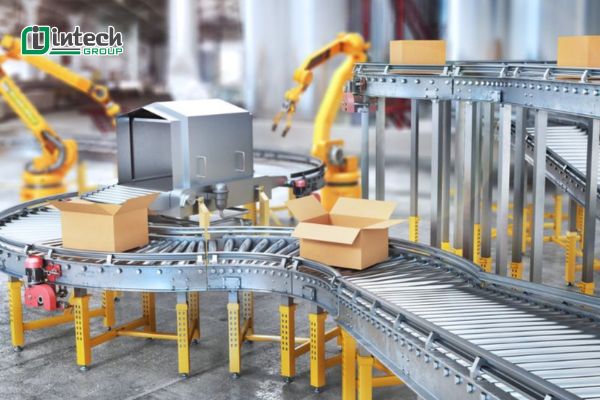
Industrial conveyor system plays the role of the main transport axis in the packaging production line, helping to transport input materials (paper, plastic, carton) and semi-finished products between stages, helping to optimize productivity and minimize waiting time.
Common conveyor types in packaging production:
- PVC conveyor belt with rough surface: Applied in carton packaging production lines. The rough surface helps increase friction or create vacuum suction, keeping the material stable during movement.
- Roller conveyor: Suitable for plastic packaging or light materials, helping to transport smoothly at high speed and save energy.
.jpg)
2. Control system
The automatic control system is the center for managing and monitoring the entire production operation, helping to synchronize the equipment on the line, ensuring smooth operation, improving efficiency and minimizing technical errors. Depending on the size of the business, you can choose the following types of control systems:
- PLC (Programmable Logic Controller): Suitable for small production lines, easy to program and change according to the product. Suitable for businesses that need flexible production and frequently change designs.
- DCS (Distributed Control System): Suitable for large production lines, capable of monitoring and controlling multiple devices at the same time remotely through an intuitive, operator-friendly interface.
- ACS (Automatic Control System): A modern automatic control solution that helps to comprehensively optimize production operations, reduce technical errors, save operating costs and maintain product stability.
3. Plastic injection molding machine
Plastic injection molding machine is used to mold plastic raw materials (usually plastic granules) into products with specific shapes and sizes such as boxes, lids, trays, shaped bags, etc. The machine can operate in semi-automatic or automatic mode, helping to control product quality evenly and improve production productivity. The machine is capable of molding different types of plastic such as PE, PP, PET, etc.
4. Plastic packaging blowing machine
Plastic packaging blowing machine is a device that shapes hollow products such as plastic bottles, nylon bags, plastic boxes, etc. used to contain liquids (cooking oil, water, shampoo, etc.) through the process of extrusion and blowing air. The highlight is the ability to flexibly adjust the size, thickness and transparency of the packaging.
5. Plastic packaging cutting machine
Plastic packaging cutting machine helps cut pressed or blown products into standard shapes and sizes according to the design. This device can often be programmed to cut according to a pre-determined pattern, mold or contour, with high precision to meet a variety of customer requirements.
6. Packaging printing machine
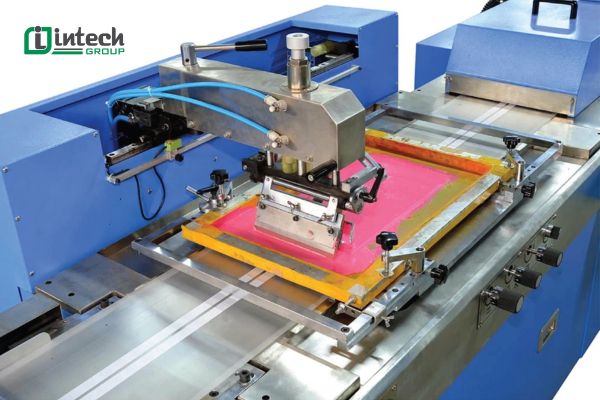
After shaping, the packaging is printed with the brand, logo, instructions for use or barcodes, which is necessary to help customers recognize and use the product properly. With some types of packaging such as color printed plastic bags, the printing process can take place before the shaping stage to ensure sharpness and color fastness.
7. Quality inspection machine
Before entering the packaging stage, the products go through a quality inspection system that applies technologies such as sensors, image processing, AI to help detect errors to ensure quality, maintain reputation and avoid legal risks related to defective goods.
8. Strapping machine
The strapping machine is the final equipment in automated production lines, helping to collect and fix packaging batches for easy transportation and storage. The strap can be plastic or nylon depending on the characteristics of the packaging, avoiding damage to the product surface, saving time, and improving packaging efficiency.
How does the carton packaging production line work?
To create quality packaging products, the carton packaging production line needs to be carried out according to the correct process. Each stage requires a close combination of modern machinery and a team of highly skilled technicians to ensure quality and optimize productivity.
Step 1: Adjust the humidity and tension of the paper
First, the source paper roll will be mounted on the roll lift and led into the thermal drying system. Here, the paper will be adjusted for humidity and tension to ensure stability, helping the paper not to wrinkle or crack before entering the next stages.
Step 2: Corrugated and glued
Then, the paper will move automatically into the single-sided corrugated machine to create a shaped corrugated layer, a specialized glue layer is brushed onto the corrugated surface, combined with the face paper layer to form a 2-layer paperboard. This step determines the stiffness and load-bearing capacity of the packaging.
Step 3: Heating through the multi-layer drying drum
The paperboard after gluing will be pulled by the conveyor system through the multi-layer heat drying drums to perform the heating process and fix the glue to ensure the glue sticks firmly, the paper surface is stable, and does not peel off after completion.
Step 4: Create complete corrugated cardboard and shape
The 2-layer paperboard is brushed with an additional layer of glue on the corrugated surface to bond with the bottom paper layer. After that, the entire cardboard will be passed through the splicing rack and the drying rack to create a complete cardboard sheet with the standard shape suitable for creating boxes or packaging later.
Step 5: Cross-cut and divide the cardboard size
The completed cardboard sheet will go into the sizing and dividing machine system, then be transferred to a specialized carton cutting machine to cut according to the specified size. Precise cutting for each order ensures that the product is uniform and suitable for the intended use.
Step 6: Count, pack and stack the finished products
Finally, the cardboard sheets after being cut will be automatically counted and stacked by the machine to avoid loss and ensure transparent output statistics before packing or shipping.
How to choose a suitable and effective packaging production line
For a business to operate effectively and aim to expand its scale, choosing the right packaging production line plays a decisive role. Below are important factors you need to know before investing in a production line system:
1. Production volume and speed
Enterprises need to determine production output by day, week or month, from which to determine the necessary production speed to meet the target. It is necessary to pay attention to cycle time, existing machine performance and operating frequency to choose a line with the right capacity to avoid waste.
2. Product characteristics
Determining the main product type (carton packaging, plastic bags, plastic boxes, food packaging...) along with specific technical parameters is the key factor to choose the right line with high flexibility.
3. Investment costs and operating costs
It is necessary to calculate short-term and long-term costs such as initial investment, maintenance costs, energy consumption, labor and machine depreciation to have a suitable investment plan.
4. Customization and expansion capabilities
The ideal line is a system that can be easily upgraded, expanded or customized to adapt to changing production needs in the future, such as changing packaging designs, increasing quantity, or upgrading technology.
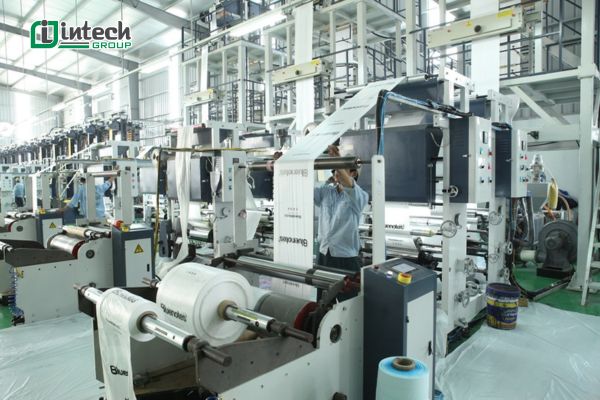
Maintenance and optimization of packaging production lines
Maintenance and optimization of packaging production lines is a key factor in helping businesses maintain stable production operations, improve product quality and optimize operating costs.
Regular maintenance helps detect potential failures early, thereby performing timely repairs or replacements. This not only minimizes downtime but also limits major repair costs arising from unexpected incidents. Maintenance activities often include:
Checking and cleaning equipment and transmission systems to remove dirt and deposits that affect operations.
- Periodic lubrication of moving parts to reduce friction, limit wear and prolong equipment life.
- Calibrating and adjusting equipment to ensure accurate, stable and reliable operation.
The above is detailed information about packaging production lines that Intech Group wants to share with readers. Nowadays, packaging production lines are very diverse, suitable for many different types of packaging such as paper, plastic, carton, shrink film, etc. Choosing the right type of line not only helps to optimize production efficiency but also ensures the quality of finished products and saves operating costs. If you want to find an automated solution for the production line in your business, please contact Intech Group for specific advice.
