


Overview of plastic bottle production line
11-09-2025 204
The plastic bottle production line is an integrated technology system to create PET, HDPE, PP plastic bottles for the beverage, cosmetics, pharmaceutical, chemical industries...
With the combination of preform press, bottle blowing machine, automatic filling and packaging machine..., this line helps businesses ensure consistent quality, increase productivity and reduce production costs. In the following article, Intech Group will provide you with important information about this type of line so that customers can choose the right solution for their needs and factory scale.
What are the raw materials for producing plastic bottles?
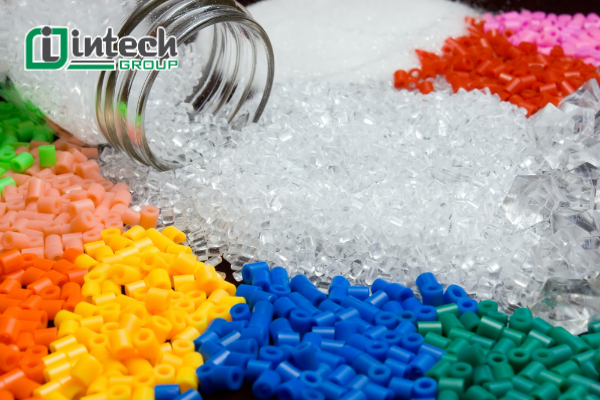
In the plastic bottle production line, input materials play a key role in determining the quality of the finished product. PET (Polyethylene Terephthalate) is the most popular type of plastic today because it is durable, lightweight, transparent and safe for food. PET is often used to produce bottles for water, soft drinks, juices and milk.
In addition to PET, other types of plastic such as HDPE (High-Density Polyethylene), PP (Polypropylene) and PVC (Polyvinyl Chloride) are also used depending on the purpose. HDPE is suitable for products that require high hardness such as milk bottles, detergents, cosmetics. PP is used for heat-resistant bottles, while PVC is mainly used in the chemical industry due to its corrosion resistance.
During the production process, the raw materials will be melted, molded and blown into the shape of bottles. Depending on the requirements, additives such as UV inhibitors, colorants or heat stabilizers can be added to increase the durability, safety and aesthetics of the final product.
Steps of operation of plastic bottle production line
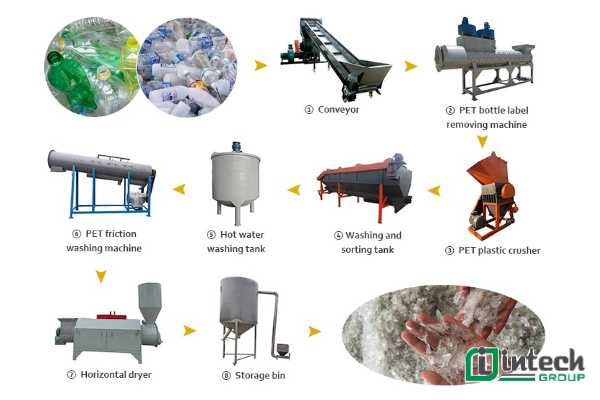
The plastic bottle production line includes many closely linked steps, from input materials to finished products. Below are the main stages in this process:
1. Preform processing
PET plastic granules are dried to remove moisture, then put into the heater to melt. The liquid plastic is pressed into the mold to form bottle preforms. After shaping, the preforms will be cooled and preliminarily checked. Unqualified preforms will be recycled, contributing to saving raw materials.
2. Bottle blowing
The qualified preforms are reheated to the appropriate temperature and then transferred to the shaping mold. Under high compressed air pressure, the preform will expand and adhere to the mold, creating the bottle shape according to the design. This stage requires precise control of temperature and pressure to ensure the durability and uniformity of the product.
3. Release pressure and take out the product
After shaping, the bottle is held under pressure for a short time to stabilize the structure, then released and taken out of the mold by the automatic system.
4. Quality control
Plastic bottles are put through the inspection step, removing excess materials, cleaning, drying and quality assessment. The criteria include transparency, thickness, load-bearing capacity and safety in use.
5. Labeling and packaging
Standard bottles will be labeled with brand name, product information and put into the packaging line. In modern factories, loading robots are used to put bottles on pallets, helping to save labor and improve transportation efficiency.
This closed and highly automated process helps businesses optimize productivity, reduce product defects and improve competitiveness in the market.
Machinery in the plastic bottle production line
The plastic bottle production line operates efficiently thanks to the synchronous coordination of many specialized machines, from the preform forming stage to the shaping and finishing of the product. Below are the main equipment in the system:
1. Host system (Blowing machine and preform loading machine)
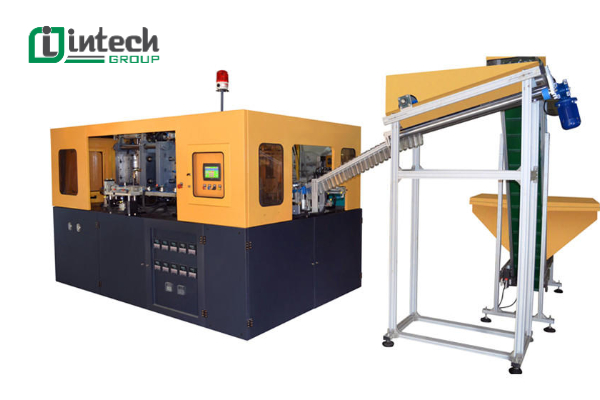
The automatic bottle blowing machine often integrates a preform loading machine, which helps to operate continuously without manual intervention. The bottle preform is put into the container, the loading system will automatically arrange and transfer to the heater.
The heater ensures that the preform is evenly softened thanks to precise temperature control, facilitating the blowing molding step. The bottle blowing machine operates by using high-pressure compressed air to shape the preform in the mold according to the desired design, the mold can be flexibly designed according to the size and shape of the bottle.
2. Auxiliary equipment for bottle blowing machine
2. Auxiliary equipment for bottle blowing machine
High pressure air compressor: Provides compressed air needed for the preform shaping process.
Air tank: Maintains stable pressure, avoiding fluctuations during the blowing process.
Air filter: Removes dust and impurities in compressed air, ensuring the quality of input air.
Air dryer: Limits moisture that affects the durability and clarity of plastic bottles.
Water cooler: Maintains a stable temperature for the mold and product after shaping, while prolonging the life of the equipment.
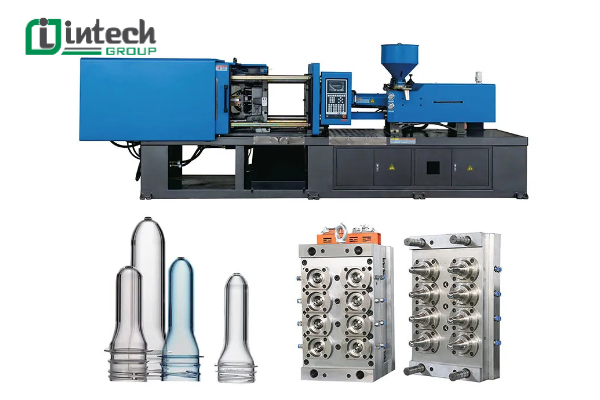
3. Bottle preform molding machine (PET plastic molding machine)
This is the first equipment in the process, specialized in creating plastic preforms from PET raw materials. The plastic is heated to a molten state and pressed into the shaping mold, forming standard-sized bottle preforms. After cooling, the preforms will be transferred to the blowing stage to shape into complete bottles.
4. Bottle labeling machine
After completing the shape, the plastic bottle is labeled for identification and packaging. Depending on the needs, businesses can use:
Roll labeling machine: Label around the bottle body with decal or plastic label.
Shrink film labeling machine: Use heat to shrink the label film to adhere tightly to the bottle surface, often used for products that require high aesthetics.
5. Filling and capping machine
The main function of the machine is to fill liquid into the bottle with the exact volume. There are two popular machine lines:
Automatic filling machine: Suitable for large-scale production, high speed, closed operation.
Semi-automatic filling machine: Suitable for small and medium-sized establishments with optimal investment costs. After filling, the bottle will be transferred to the capping machine to ensure airtightness, anti-leakage and ensure product hygiene and safety.
6. Date printer (expiry date printer)
This device helps print important information such as production date, expiry date or barcode on the bottle body or cap. Some popular printing technologies:
Date inkjet printer: Non-contact inkjet, high speed, suitable for continuous production lines.
Laser printer: Prints directly with laser, no ink used, ensuring information does not fade during storage and transportation.
7. Packaging and baling machine
After completing the production stages, plastic bottles will be put into the packaging machine. Some popular devices include:
Shrink film machine: Uses heat shrink film to pack the bottle packs into sturdy clusters, easy to transport and display.
Carton sealing machine: Automatically arranges bottles in cartons and seals, saving time and reducing labor.
8. Conveyor and transport system
This system plays the role of continuously moving preforms, finished bottles and packages between production areas. This system is designed depending on the type of bottle, capacity and factory floor:
Roller conveyor: Transports PET preforms, blown bottles and packaged product containers.
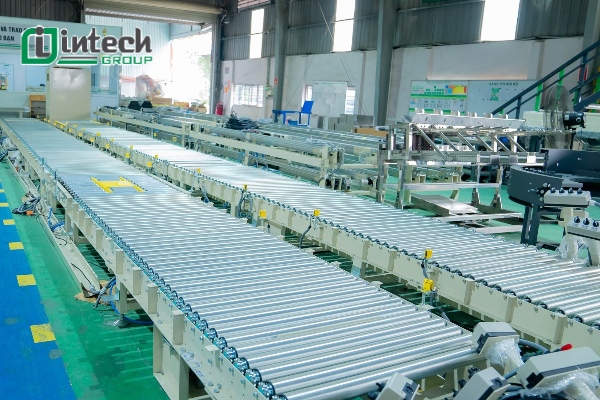
Roller Conveyor in Plastic Bottle Production Line
Chain Conveyor: Guides bottles through stages requiring high precision such as filling, capping, labeling.
Mesh Conveyor: Used in cooling or surface treatment areas, with the advantage of good air circulation.
AGV/AMR Autonomous Vehicle: Automatically transports pallets containing preforms, bottles or finished products between areas, increasing flexibility and reducing operating costs.
Integrating packaging machines and intelligent transportation systems not only improves line efficiency but also ensures that products reach customers quickly and meet standards.
Plastic bottle production lines play a key role in the modern packaging industry, helping businesses improve productivity, save costs and ensure consistent product quality. Investing in an automated line not only optimizes the production process but is also a strategic step to improve competitiveness in the market. If you are looking for a modern, efficient and suitable plastic bottle production line solution for your operational needs, contact Intech Group immediately for in-depth advice and support in implementing a comprehensive solution.
