


Overview of the Industrial Production Index IPI in 2025
04-10-2025 211
The Industrial Production Index (IPI) is one of the most important tools used to assess the development of the industrial sector in each country.
In 2025, with fluctuations in the global economy and industrial transformation trends, IPI plays a key role in reflecting the growth and changes of key manufacturing industries. Let's learn an overview of the IPI industrial production index through the following article:
1. What is IPI?
The Industrial Production Index (IPI) is an important measure reflecting the growth rate of the industrial sector in certain periods such as months, quarters or years. IPI is calculated based on the volume of products produced, helping to assess the development level of each industry as well as the entire industrial production.
The IPI index plays an important role in providing economic information to:
- State management agencies: Help formulate policies and adjust industrial development strategies.
- Investors: Provide important data to assess the growth potential of the industry.
- Enterprises: Support forecasting market demand and adjusting production and business strategies.

IPI is calculated as a percentage of the current period's industrial production volume compared to the base period. The calculation process is based on the volume of industrial products with the weight being added value, selected according to three levels:
- Level 1: Level 4 industry.
- Level 2: Industrial product group.
- Level 3: Product manufacturing facility.
Thanks to this calculation method, the IPI index helps to assess the growth rate of each product, industrial group and the entire industry accurately and promptly. The base period for comparison can be: Monthly average of the base year, the previous month, the same period of the previous year.
The Industrial Production Index (IPI) is calculated and published monthly by the General Statistics Office (CSO) or national statistical agencies. This is a synthetic index that helps monitor the development of the industrial sector and reflects the economic situation of a country.
The IPI is an important tool to assess the health of the industry and the economy in general. Regular monitoring of this index helps businesses, investors and management agencies make timely and correct decisions to optimize production and investment strategies.
2. How does the Industrial Production Index (IPI) work?
The Industrial Production Index (IPI) measures the level of production in key industries, including manufacturing, mining (including oil and gas drilling) and utilities such as electricity, water and gas. It not only reflects the production output but also assesses the maximum production capacity of the industry and the capacity utilization rate, the ratio of actual output to sustainable production capacity.
When the IPI index grows steadily, this shows the positive development of the industry, creating the premise for business expansion and increased investment. Conversely, a decline in the IPI can be a warning sign of an economic recession or a decline in market demand.
3. Benefits of IPI
The Industrial Production Index (IPI) offers many benefits to international supply chains, including:
Optimizing transport costs: Combining sea, rail and truck transport reduces costs, especially when compared to truck or air transport.
Operational efficiency: IPI reduces transport times to inland areas thanks to quick connections via rail and road.
Expanding market reach: Increasing access to domestic markets, especially those without seaports.
Reducing risks: Continuous transport simplifies procedures, minimizing the risk of loss and damage to goods.
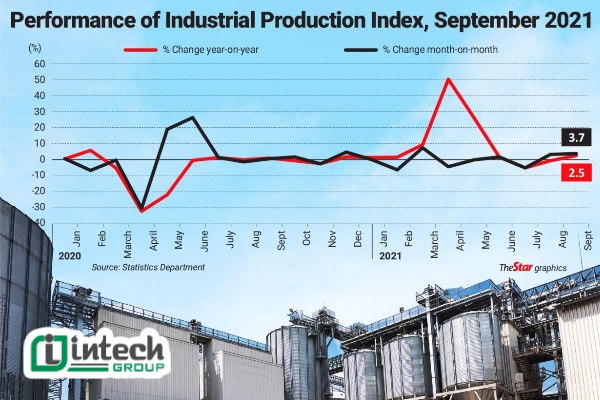
4. Calculating the IPI
4.1 General IPI Calculation
The Industrial Production Index (IPI) reflects the state of production in industry over a period of time relative to a reference point. The current base year is 2011-2012, with the index set at 100. The data used to calculate the IPI is varied, including physical inputs and outputs (such as tonnes of steel), inflation-adjusted sales figures and recorded labour hours. Agencies such as the FRB collect this data from industry associations and government agencies, and then apply the Fisher ideal formula to calculate the index.
The IPI is available in two forms: seasonally adjusted and non-seasonally adjusted. The index includes sub-indices to provide a detailed view of the output of specific industries, such as the production of domestic gas, ice cream, carpets, spring products, electrical wires, irons, audio and video equipment and paper.
4.2 IPI Calculation Formula
The sequence of steps to calculate the industrial production index (IPI) for the business sector is as follows:
Step 1: Calculate the production index for each product

In which:
iqn: Production index of the nth product (e.g., electricity, coal, fabric, cement, etc.).
qn1: Volume of products produced in the reporting period.
qno: Volume of products produced in the base period.
Calculating the production index for each product is an important step in calculating the general index for the industry and the whole country. Errors in the product index will directly affect the accuracy of the overall index.
Step 2: Calculate the production index for the 4th level industry
Use the weighted average method to calculate the production index for each 4th level industry, based on the production index of representative products of that industry.

In which:
- IqN4: Production index of the Nth level 4 industry;
- iqn : Production index of the nth product;
- Wqn: Production weight of the nth product;
- q : Symbol for production volume;
- N4: Symbol for the level 4 industry (N4=1,2,3,…j); (j: Serial number of the last level 4 industry)
- n: Symbol for the number of products (n=1,2,3…k); (k: Serial number of the last product in the level 4 industry).
When calculating the production index for each level 4 industry, the following points should be noted:
- If calculating the production index of the level 4 industry compared to the base period, use the product index compared to the base period.
- If calculating the index of the fourth-level industry compared to the same period, use the formula: The fourth-level industry index of the reporting period compared to the base period divided by the fourth-level industry index of the same period compared to the base period.
Step 3: Calculate the production index for the second-level industry
According to the weighted average method of the production indexes of the fourth-level industries. The weights are calculated based on the added value, calculated at the current fixed prices of the base year for the fourth-level industries in the second-level industry of the enterprise sector.

In which:
- IqN2: Production index of the secondary industry.
- IqN4: Production index of the secondary industry, representing the secondary industry.
- WqN4: Production weight of the secondary industry in the secondary industry.
The production weight of the secondary industry is the proportion of the added value of the secondary industry in the total added value of the secondary industry at the time of calculating the weight.
Notes when calculating the production index for the secondary industry:
- When calculating the production index of the secondary industry compared to the base period, it is necessary to use the production index of the secondary industry compared to the base period.
- When calculating the production index of the secondary industry compared to the same period, use the following formula: Production index of the secondary industry in the reporting period compared to the base period divided by Production index of the secondary industry in the same period compared to the base period.
The accurate calculation of these indexes is very important, as it helps to accurately reflect the level of change in industrial output and support the management and operation decisions of state agencies and enterprises.
Step 4: Calculate the production index for the primary industry
The production index of the primary industry is calculated by the weighted average method of the production indexes of the secondary industries. The weights are calculated according to the added value of the secondary industries, using the current fixed price in the base year 2015 in the total primary industry of the enterprise sector.

In which:
- IqN1: Production index of the primary industry.
- IqN2: Production index of the secondary industry.
- WqN2: Production weight of the secondary industry.
In the primary industry, there are many secondary industries with different roles and levels of importance. Therefore, the production index of the primary industry can be calculated as a weighted average from all secondary industries belonging to the primary industry, or only calculated as a weighted average from a number of important secondary industries representing the primary industry.
Notes when calculating the production index for the primary industry:
- If calculating the production index of the primary industry compared to the base period, it is necessary to use the production index of the secondary industries compared to the base period.
- If calculating the production index of the first-level industry compared to the same period, apply the formula:
The production index of the first-level industry in the reporting period compared to the base period divided by the production index of the first-level industry in the same period compared to the base period.
Step 5: Calculate the production index for the entire industry
The production index of the entire industry is calculated by the method of the weighted average of the production indexes of the first-level industries. The weight is calculated based on the added value of the first-level industries, calculated at the current fixed price in the base year in the entire industry of the enterprise sector.
In which:
- IQ: Production index of the entire industry.
- IqN1: Production index of each level 1 industry.
- WqN1: Weight of each level 1 industry.
In short, IPI is an important index in assessing industrial production and reflecting the economic situation of a country. It provides an overview of production performance and demand levels in different industries. However, IPI cannot alone comprehensively assess the economic situation, but needs to be combined with other indexes to have a more complete and accurate view of the health of the global economy and specific industries. Hopefully this article has helped you better understand the concept and importance of the industrial production index IPI.
