


Types of automation lines in food factories
06-10-2025 49
In the era of Industry 4.0, automation plays an important role in the food production industry. The application of automatic production lines not only helps increase productivity, reduce costs but also ensures food quality and hygiene and safety.
Let's join Intech Group to learn about the popular types of automation lines in this industry.
What is food?
Food is a product that people use to eat or drink, which can be fresh or processed and preserved. Food does not include products such as cosmetics, tobacco, functional foods and substances used as pharmaceuticals...
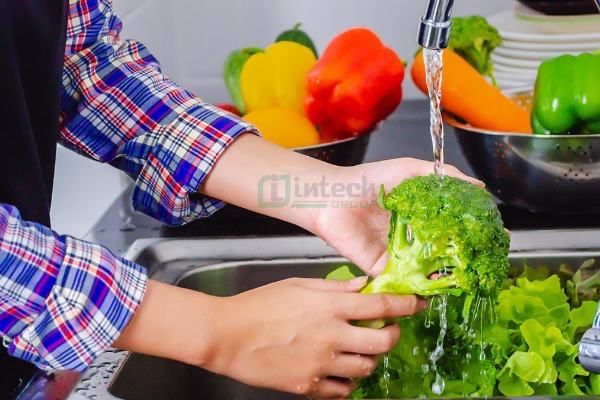
What is food production?
Food production is the process of carrying out activities such as growing, raising, harvesting, catching, exploiting, pre-processing, processing, packaging and preserving to create food that meets safety standards and is nutritious.
What is food safety?
Food safety is an important factor to ensure that food does not cause harm to human health when processed, preserved and used properly. This is a criterion to help control biological, chemical and physical hazards that can contaminate food, negatively affecting public health.
Food safety is not only related to preventing food poisoning but also ensuring that products meet hygiene standards, do not contain toxic substances exceeding the permitted level and have the necessary nutritional value.
What is food hygiene and safety?
Food hygiene and safety is a set of conditions and measures to ensure that food does not harm human health and life. This is an important factor in controlling food contamination, preventing bacteria, toxic chemicals and pathogens during the production, processing, preservation and distribution of food.
Food hygiene and safety not only helps to minimize the risk of food poisoning but also contributes to improving product quality, protecting public health and creating trust for consumers.

Principles of food safety management
According to Article 3 of the Food Safety Law 2010, food safety management must comply with the following principles:
1. Responsibility of organizations and individuals producing and trading food
All enterprises and individuals participating in the food supply chain must be responsible for ensuring the safety of their products, from raw materials to consumption.
2. Food production and trading are conditional activities
All food production, processing and trading establishments must meet food safety standards and be subject to strict control by competent authorities.
3. Compliance with technical regulations
Food safety management must be based on technical regulations and legal regulations issued by competent state agencies, and at the same time apply the quality standards of the enterprise.
4. Controlling food safety along the supply chain
Food safety must be controlled throughout the entire production, processing, transportation and distribution process, based on risk analysis to prevent food contamination.
5. Clear assignment of responsibilities and inter-sectoral coordination
Food safety management requires decentralization and coordination between management agencies, businesses and related organizations to ensure effective monitoring and inspection.
6. Meeting the requirements of socio-economic development
Food safety management is not only aimed at protecting public health but must also be consistent with the goals of economic development, improving food quality and integrating into the international market.
Complying with food safety management principles helps businesses ensure their reputation, meet legal standards and bring long-term benefits to consumers.
What is a food business?
Food businesses include units that produce, process and distribute food on the market. These establishments can be food factories, cooked food stores, fast food stalls, restaurants, collective kitchens or facilities that provide ready-to-eat meals.
In the modern context, many food factories have applied automatic food production lines to optimize processing processes, improve productivity and ensure product quality.
To ensure food safety, food factories need to comply with strict regulations on:
- Input materials: Ensure clear origin, do not contain toxic chemicals.
- Food production line: Apply modern technology to help control quality and limit the risk of bacterial contamination.
- Processing process: Carried out in a hygienic environment, ensuring safety for consumers.
- Quality control: Products must be tested before being put on the market.
Compliance with these standards not only helps protect consumers' health but also enhances the reputation of businesses in the food industry.
Types of automated food production lines in factories
In food factories, the application of automated food production lines helps optimize processes, improve productivity and ensure product quality. Modern technology not only helps minimize errors but also increases the effectiveness of food safety control. Below are the popular types of automated food production lines today:
1. Automatic quality control system
The quality control system in the food production line helps control important factors such as:
- Consistency and smoothness of the product.
- Chemical composition ensures compliance with food safety standards.
- Detect errors in the processing process to eliminate substandard products.
- Smart sensors and automatic scanning devices help factories accurately check output quality, avoiding food safety risks.
2. Automatic packaging and transportation lines
The packaging and transportation process plays an important role in the food production line. The application of modern machinery helps increase speed and accuracy in the packaging stage, including:
- Automatic packaging machines
- Capping and wrapping machines
- Adhesive tape and labeling machines
Thanks to the automatic system, packaging time is significantly shortened, while helping to preserve products better during transportation.

3. Smart warehouse management system
Modern warehouse management system in food production line helps to optimize storage space and manage goods more effectively:
- Monitor inventory quantity in real time.
- Automatically warn when there is a shortage or excess of goods for timely adjustment.
- Manage import and export warehouse with AI and RFID technology.
In addition, in large food factories, smart transportation systems such as AGV self-propelled vehicles, large conveyor belts, and Palletizing systems help reduce labor, ensure safety, and not affect product quality.
The application of automated food production lines helps businesses reduce costs, optimize processes, and improve product quality. With the strong development of technology, this is an inevitable trend to improve the competitiveness of food factories today. Contact Intech Group immediately via Hotline 0966.966.103 / 0966 966 032 for advice on the most modern food production solutions!
