


Types of electronic circuit boards and applications in modern technology
07-10-2025 388
Electronic circuit boards are an indispensable component in electronic devices and industrial machinery. So what types of electronic circuit boards are there and what are their characteristics? Let’s explore the details through the article below to better understand the common types of electronic circuit boards today.
What is a circuit board?
A circuit board, also known as a Printed Circuit Board (PCB), is an important platform in the electronics industry. PCBs are widely used in most devices from smart watches, computers, telecommunications equipment to high-tech systems such as military weapons. With the function of creating electrical connections between components, PCBs play a central role in maintaining the operation of the device.
PCBs are made up of three main parts:
- Insulating base plate: Is the foundation for installing and isolating electronic components.
- Conductors: Create transmission lines between components.
- Pad: Supports the assembly and soldering of components to the circuit surface.
With a smart design, PCBs not only replace complex wiring systems but also help optimize electrical connections in the circuit. Electronic circuit boards take on two important roles: both a conductive circuit and an insulating plate to ensure safety.

What is an Integrated Circuit?
An Integrated Circuit, also known as an Integrated Circuit (IC), is an advanced form of microcircuit in which many electronic components are integrated into a very small space. Components such as transistors, resistors, capacitors and other circuits are designed to be tightly linked together, creating complex electronic functions.
Thanks to this integration, integrated circuits offer many outstanding advantages:
- Size reduction: Integrated components make ICs more compact than circuits using discrete components.
- Weight reduction: Integrating components onto a single chip significantly reduces the overall mass of the system.
- Energy saving: Integrated circuits consume less energy, contributing to improved operating efficiency.
With these benefits, ICs have become indispensable components in modern electronic devices such as smartphones, computers, cars and many other high-tech products. This is the optimal solution for developing compact, high-performance devices in the era of industry 4.0.
Circuit Board Structure and Materials
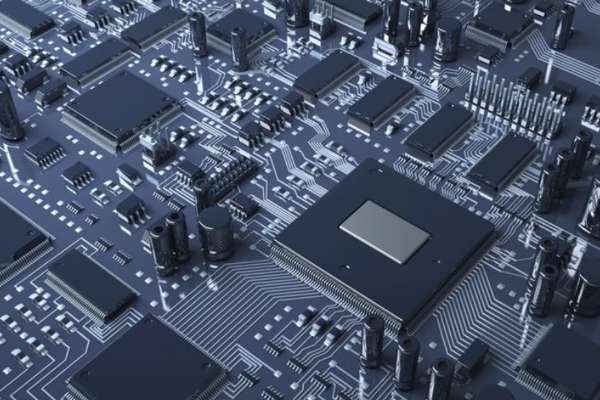
The circuit board plays a central role in every modern electronic device, consisting of three main components: the circuit board, electronic components, and connections.
Circuit boards are usually made of flexible or rigid materials, with printed circuit lines and holes for mounting components. These circuit lines ensure the transmission of current and connection between components. Electronic components, such as diodes, capacitors, resistors and transistors, are mounted on the circuit board to perform the functions of controlling current, processing and amplifying signals. The connection process between components is done through soldering or direct mounting methods, creating a synchronous, precise and efficient system in processing electrical signals.
The circuit board material also plays an important role, ensuring durability, heat resistance and good electrical conductivity. Choosing the right material helps optimize the performance and stability of the electronic circuit board in different environments.
Printed Circuit Board Manufacturing Standards
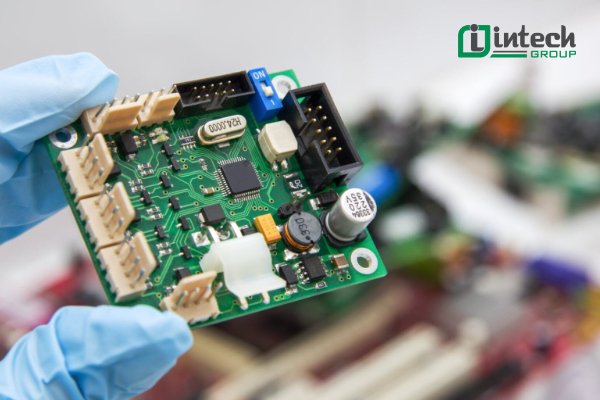
To ensure the quality and reliability of printed circuit boards, the industry has adopted international standards IPC (Institute for Printed Circuits). This is a system of standards that helps improve manufacturing processes, increase consistency, and increase product longevity.
Some common IPC standards include:
- IPC-2581: Used to exchange design data between designers and manufacturers, helping to reduce errors and ensure consistency in manufacturing.
- IPC-2221: Guidelines for PCB design, from layout, component lists, to thermal management and electrical properties.
- IPC-4101C: Provides requirements for materials used in rigid or multilayer printed circuit boards.
- IPC-6012B: Establishes quality and performance requirements, such as solderability, mechanical strength, and structural integrity of the circuit board.
- IPC-A-600F: Defines acceptance criteria, from drilling holes, copper plating, to circuit structure.
- J-STD-001: Standards for materials and soldering techniques, ensuring high-quality connections in electronic products.
- IPC-A-610: Evaluates acceptance criteria of final products, this is the most popular standard in the industry.
Compliance with IPC standards helps electronics businesses produce quality, durable and reliable products. This not only improves customer satisfaction but also creates a superior competitive advantage in the market.
Using international standards such as IPC not only ensures the quality of circuit boards but also lays the foundation for innovation and long-term development in the global electronics industry.
Benefits of electronic circuit boards
Electronic circuit boards bring many outstanding benefits in the production and use of electronic devices, including:
- Reduced product costs and weight: Compact and optimized design helps reduce costs.
- Improved quality and reliability: PCBs have high consistency, meeting standardization in mass production.
- Support automation: Suitable for modern production lines, easy to mechanize and automate.
- Convenient maintenance: PCBs that have been tested and fully assembled can be used as independent replacement parts, helping to reduce maintenance time and costs.
Currently, PCBs have become one of the most important components, contributing to improving production efficiency and durability of electronic devices in all fields.
Popular types of electronic circuit boards today
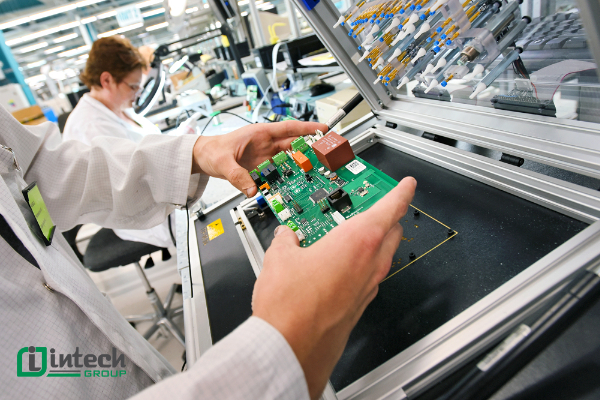
After learning about the structure and function of electronic circuit boards, let's explore the common types of electronic circuit boards and their roles in life and production.
1. Amplifier circuit
An amplifier circuit is a type of circuit board that has the function of enhancing electrical signals. It receives input signals with small power, amplifies them and creates a larger power at the output. This type of circuit often appears in devices such as amplifiers, audio-frequency equipment, radios, televisions, etc.
Types of amplifier circuits:
- Current amplifier circuit: Receives weak current at the input and amplifies it into a much stronger current at the output.
- Voltage amplifier circuit: Receives signals with small amplitudes at the input and supplies currents with many times larger amplitudes at the output. This type is often used in transformers and voltage stabilizers.
- Power amplifier circuit: Is a combination of current and voltage amplification, helping to amplify weak power signals into significantly stronger signals.
2. Power circuit (rectifier, filter, voltage regulator)
Power circuit, also known as rectifier, filter and voltage regulator circuit, is used to convert alternating current into direct current or stabilize the current, avoiding overloading and damaging the device.
Types of rectifier circuits:
- Half-cycle rectifier circuit: Only allows current to pass through the load in half a cycle.
- Full-cycle rectifier circuit: Allows current to pass through the load in both cycles, providing higher efficiency.
This type of circuit is often used in electronic devices to protect and maintain stable operation.

3. Pulse Generator
A pulse generator is an electronic circuit used to convert DC current energy into pulsed current and required frequency.
Applications of pulse generator:
- Precision pulse generator.
- Pulse width modulation (PWM).
- Pulse position modulation (PPM) - often used in infrared transceivers.
This type of circuit plays an important role in electronic pulse generators and control devices.
4. Sine wave generator
A sine wave generator is designed to generate a sine wave signal that is standard in amplitude and frequency.
Applications of sine wave generator:
- As a signal source to test the characteristics of electronic components, amplifier circuits, and other devices.
- Generate carrier waves in radio transceiver technology.
This type of circuit is often used in research and testing of electronic devices, helping to ensure accuracy and efficiency in operation.
Electronic circuit boards such as amplifiers, power supply circuits, pulse generator circuits and sine wave generator circuits play an important role in the design and operation of modern electronic devices. Each type of circuit has its own function and application, helping to improve the efficiency and durability of electronic systems in production and life.
Applications of electronic circuit boards
Electronic circuit boards (PCBs) are important components, present in most modern electronic devices. Thanks to their flexibility and customizability, PCBs are widely used in many fields, from consumer electronics to heavy industry.
- In consumer electronics: PCBs are the foundation for products such as mobile phones, tablets, personal computers, televisions, and smart home appliances. They ensure stable and efficient operation for everyday products, from energy-saving LED lights to high-quality audio equipment.
- In the automotive industry: PCBs play an important role in systems such as engine control, ignition systems, in-car entertainment, and safety features such as airbags, reverse sensors, or advanced driver assistance systems. The presence of PCBs helps optimize performance and enhance vehicle safety.
- In the medical field: PCBs are used in advanced diagnostic equipment such as X-ray machines, MRI machines, and health monitoring devices such as heart rate or blood pressure monitors. These boards are also found in mobile medical devices, contributing to improving the quality of health care for patients.
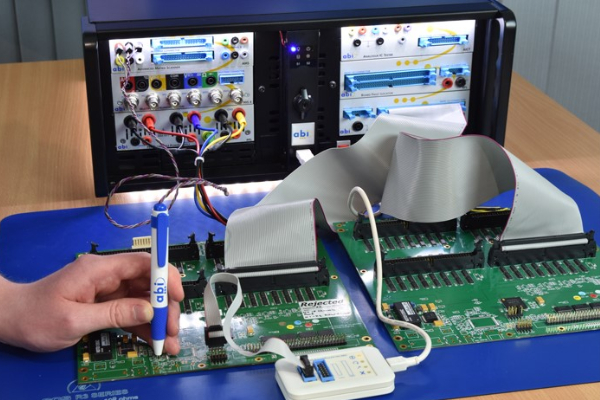
- In the electronics industry: PCBs are used in industrial machinery, automated robots, and 3D printers. As a control center, PCBs help automation systems operate accurately, increase production efficiency, and minimize errors.
- In information technology and telecommunications: PCBs are indispensable components of devices such as routers, modems, switches, and data centers. Thanks to their effective signal processing capabilities, PCBs help ensure speed and reliability in network communications.
- In the aerospace industry, PCBs are used in electronic systems on aircraft, spacecraft, and satellites. With high requirements for reliability and performance, PCBs in this field help maintain stable operation of space navigation and communication devices.
The development of the Internet of Things (IoT) has also expanded the scope of applications of PCBs. From smart home control devices to temperature, light, and motion sensors, PCBs play a central role in connecting and controlling IoT devices, bringing convenience and modernization to life.
- In the electronics industry: PCBs are used in industrial machinery, automated robots, and 3D printers. As a control center, PCBs help automation systems operate accurately, increase production efficiency, and minimize errors.
- In information technology and telecommunications: PCBs are indispensable components of devices such as routers, modems, switches, and data centers. Thanks to their effective signal processing capabilities, PCBs help ensure speed and reliability in network communications.
- In the aerospace industry, PCBs are used in electronic systems on aircraft, spacecraft, and satellites. With high requirements for reliability and performance, PCBs in this field help maintain stable operation of space navigation and communication devices.
The development of the Internet of Things (IoT) has also expanded the scope of applications of PCBs. From smart home control devices to temperature, light, and motion sensors, PCBs play a central role in connecting and controlling IoT devices, bringing convenience and modernization to life.
