


Types of sensors in industrial manufacturing 4.0
07-10-2025 354
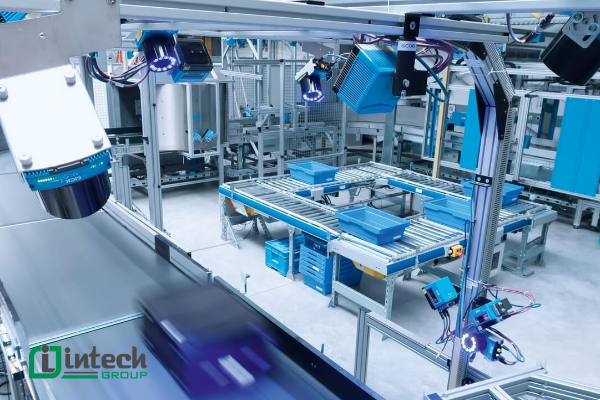
The key to the success of Industry 4.0 lies in the collection of data and information. Industrial sensors are the nerve center of this industry, or in other words, without sensor technology, there would be no Industry 4.0.
What are smart sensors in the manufacturing industry?
In the field of industrial automation, smart sensors play a key role in transforming traditional manufacturing processes into modern automation processes. They allow supervisors to easily monitor, analyze, and handle changes at the production site, including factors such as temperature, motion, pressure, altitude, and security.
Each manufacturing process or environmental condition has its own specialized and suitable sensors. The highlight of smart sensors is the ability to integrate modern technologies such as signal conditioning, MEMS (Micro-Electro-Mechanical Systems) and advanced software. These sensors not only meet the need for ease of use but also significantly reduce the workload of design engineers, optimizing production efficiency.
Common types of industrial sensors
1. Temperature Sensor
Temperature sensors play an essential role in industrial production, especially when temperature is the most frequently monitored physical parameter. This type of sensor collects temperature information from the environment and converts it into specific values for use.
The two most common types of sensors today:
Digital temperature sensors
Temperature and humidity sensors
Applications: Widely used in fields such as food industry, medical, hydropower, petrochemical, metallurgy, and printing industry.
2. Pressure Sensors
Pressure sensors are designed to sense the pressure in the environment and convert the pressure signal into an electrical signal according to certain rules. This device includes:
Pressure Sensitive Element
Signal Processing Unit
Applications: Common in industrial automation such as water conservancy, hydropower, transportation, smart buildings, automated manufacturing, aerospace, and petrochemicals.
3. Level Sensors
Level sensors are used to measure, maintain, and control the level of liquids or solids. The sensed data will be converted into electrical signals.
Applications:
In the manufacturing and automotive industries.
In household appliances such as washing machines, ice makers, ensuring the prevention of liquid spills.
4. Infrared Sensors
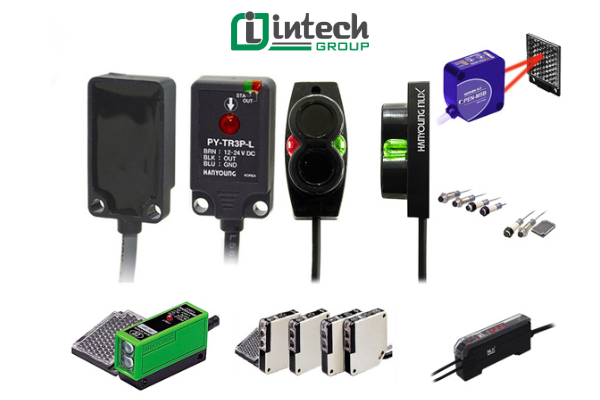
Infrared sensors use infrared rays to process and analyze data through properties such as reflection, refraction, and absorption.
Applications:
Medical, military, space technology: Disease diagnosis, security monitoring.
Industrial IoT: Monitoring and optimizing production processes.
5. Proximity Sensors
Proximity sensors are capable of detecting objects without contact, helping to avoid abrasion or damage to the object.
Outstanding features:
Works well in water and oil environments.
Not affected by stains and grease.
Applications: Suitable for industries that require fast and accurate detection in harsh environments.
6. MEMS (Micro-Electromechanical Systems) Sensors
MEMS sensors are modern technology made from micro-electromechanical systems, featuring small size, low power consumption and high reliability.
Applications:
In space, aerospace, and transportation equipment.
Widely used in the medical field and consumer electronics such as smartphones.
Industrial sensors are not only production support devices but also the core of Industry 4.0, bringing flexibility, automation, and optimizing operational efficiency. Choosing the right sensor for each industry will determine the success of businesses in the digital age.
How sensors work
1. Temperature Sensors
The temperature sensor operates based on the principle of receiving heat from the environment and converting it to a resistance signal. From there, the mV signal is transmitted to temperature sensors, such as K-type and S-type. This is how the sensor accurately measures and displays temperature parameters.
2. Pressure Sensors
When a solution such as water, acid, chemical or gas flows through the sensor, the ceramic membrane inside the sensor is impacted by pressure, causing the membrane to bend. This impact is transmitted to the central unit to create a voltage current with an intensity of 4-20mA or 0-20mA. This is how the sensor measures and displays pressure in an automated environment.
3. Float Level Sensors
Float sensors are made of heat-resistant plastic and stainless steel, operating on the principle of buoyancy: when the liquid level rises, the float will float. This is an ideal device to indicate low or full water levels in the system.
4. Capacitive Level Sensors
The operating principle of a capacitive sensor is to convert the liquid level measurement distance into an electric current of 4-20mA. When the liquid rises, the sensor will measure and report the exact level in real time.
5. Ultrasonic Radar Sensors
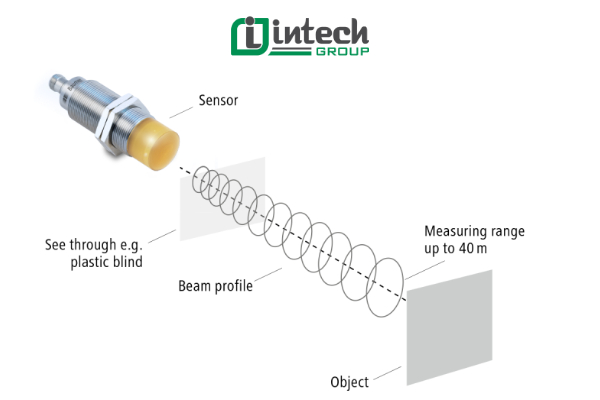
Ultrasonic sensors measure the level of liquids or solids using ultrasonic waves emitted from stainless steel rods or wires in the device. These ultrasonic waves are reflected back, helping the sensor accurately determine the level of the substance in any environment. This is one of the types of sensors with the most complex and modern operating principles.
6. Proximity Sensors
Proximity sensors are divided into two main types:
Electromagnetic proximity sensors: Operate by creating an electromagnetic field. When a metal object enters this magnetic field, an alternating current is generated, reducing the coil energy and is detected by the monitoring circuit.
Capacitive proximity sensors: Operate by detecting changes in capacitance between the sensor and the object. The capacitance value depends on the size and distance of the object, allowing the sensor to detect almost any material.
7. Optical Sensors
Optical sensors consist of three main parts:
- Light emitter: Uses LEDs to emit light with different frequencies and pulses, limiting external interference. Common types of light include red, infrared, laser, white and green LEDs.
- Light receiver: Converts light into electrical signals based on appropriate ratios, integrates optical circuits and amplifiers.
- Signal processor: Analyzes and outputs final measurement data.
Sensors are important components in factory automation, acting as the "door" to collect data and the "heart" of IoT systems, smart devices and Industry 4.0. Understanding the operating principles of each type of sensor will help optimize the efficiency of practical applications.
