


Understanding the electric cable production line
22-09-2025 552
Electric cable production line is a system of modern equipment and technology designed to automate the process of creating electric cables for industrial, construction and civil use.
An efficient production line must ensure output quality that meets electrical safety standards, while also helping to optimize costs, shorten production time, and increase the ability to meet large orders. In this article, Intech Group will help you understand the structure, process, and importance of the electric cable production line.
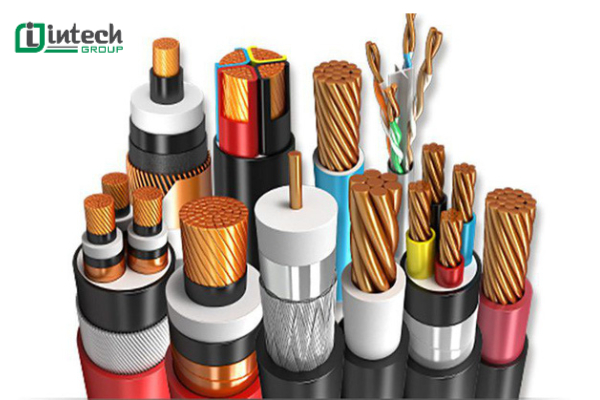
Structure of electric cables in the production line
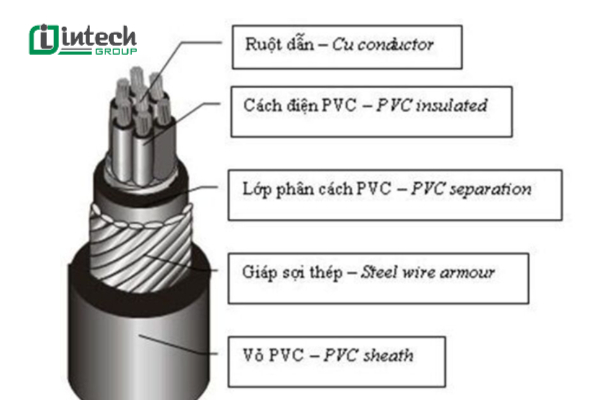
A standard electric cable includes many layers of materials that are precisely designed and manufactured to meet the requirements of electrical conductivity, insulation, and mechanical strength. The basic structure includes the following components:
Conductor
The core of the cable, usually made of copper or aluminum, which are good conductors. In the production line, the conductor is drawn, bent, and braided to ensure stable, safe, and high-performance power transmission.
Insulation
Usually made of PVC or XLPE, which acts as an insulator of the electric current from the outside environment. This layer is precisely extruded in the line, ensuring uniform thickness and optimal insulation.
Active material
A layer of polypropylene (PP) fibers located between the core and the outer layer, helping to increase mechanical strength and stabilize the cable structure when operating in harsh environments
Winding tape
Consists of woven fabric fibers surrounding the insulation layer, creating additional strength and protecting the inner layers from impact and friction during use.
Inner lining
A secondary layer made of PVC or PE plastic, with fire-resistant, insulating properties and increasing the safety of the entire power cable.
The importance of power cables in the transmission system
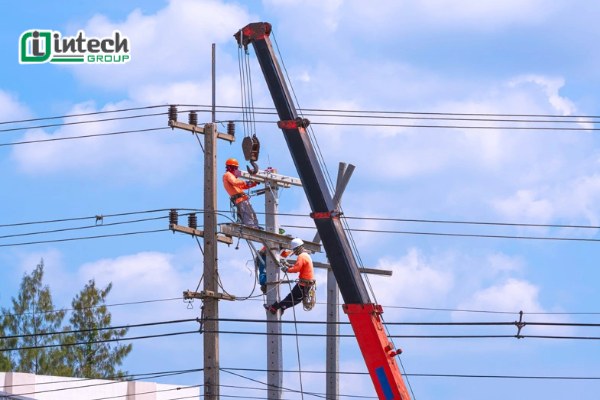
In any power cable production line, the most important thing is to create high-quality, almost absolutely safe power cable products because the power cable is the "lifeblood" of the entire power system. Electric cables play a key role in transmitting energy from the source to the consumption points, ensuring continuous and stable operation for both households and industrial systems.
Electric cables are not only used in household electrical appliances such as washing machines, air conditioners, water heaters, but are also present in all infrastructure works such as advertising LEDs, buildings, factories, industrial parks, hospitals, etc. Especially, in factories, manufacturing plants, electric cable production lines need to ensure strict standards to meet the requirements of transmitting energy to large-capacity machinery systems.
With the development of technology and strong infrastructure as today, the electric cable network is increasingly optimized in terms of durability, insulation, fire resistance and energy saving to ensure safety for users, improve the operating efficiency of the entire electrical system.
Operation process of electric cable production line
In the electrical and electronic engineering industry, the electric cable production line is a system of many closely linked stages to create electric cable products with high precision, safety and durability. Below is the detailed production process:
Step 1: Prepare raw materials
In the electric cable production line, the first step is to select and prepare raw materials.
Conductor: Use high-purity copper or aluminum to ensure good electrical conductivity.
Insulation and protective materials: Use PVC (Polyvinyl Chloride) or XLPE (Cross-linked Polyethylene) with high insulation properties and durability in the environment.
Auxiliary materials: Including steel tape, aluminum tape, PP core-shaped fiber, anti-stick powder, ... used for armored cables or cables with special structural requirements.
Step 2. Continuous wire drawing and annealing
This is an important step to turn raw copper (or aluminum) wire into a wire with a suitable diameter for each type of cable:
Rough drawing machine (11 dies): Drawing from copper 8.0mm → 1.6mm – 3.5mm
Medium drawing machine (17 dies): Drawing from copper 2.6mm → 0.4mm – 1.6mm
Fine drawing machine (22 dies – 16 lines): Drawing from copper 2.0mm → 0.16mm – 0.5mm
During the drawing process, the wire is annealed with nitrogen gas to make it soft, flexible, shiny and easy to shape in the following steps. At the same time, the lubrication and cooling system helps to avoid overheating, ensuring the stability of the device.
Step 3. Braiding the conductor
The braiding process has the role of gathering small wires into a uniform conductive core, helping to create a strong cable core, preventing breakage when bent, and at the same time preparing for the insulation layer.
Braiding (soft copper): Used for household electrical wires, the number of strands is from 29 - 75 strands.
Hard copper braid: Applied to industrial electrical cables, the number of strands is from 7 - 37.
Group braiding (twisting): Use a 4-bobbin braiding machine to twist the cores together, usually with a PP fiber filler layer to create a round cross-section and a protective armor layer made of steel or aluminum (if required).
Step 4. Insulation
After braiding, the wire is passed through an extruder to be coated with an insulating layer to prevent electric current from leaking into the environment, ensuring safety for users and equipment.
Copper core power cable: Structure CU/XLPE/PVC, voltage from 600V - 1000V. Using XLPE helps reduce the thickness of the insulation layer, reduce the cable size and save costs.
Civil soft electric wire: Cu/PVC/PVC structure, voltage from 300V - 500V, white/black PVC coating to distinguish the electric phase.
Step 5. Outer protective sheath
The outer sheath is the part that covers the entire core and insulation, protecting against mechanical impacts, chemicals, UV rays, humidity, etc. The sheath is made of PVC or heat-resistant and weather-resistant materials. The sheath is often printed with technical parameters such as: manufacturer name, product code, size, quality standards (such as IEC, TCVN, etc.)
In addition, in some high-end products, the sheath also has the function of preventing fire spread or being waterproof.
Step 6. Finished product inspection
Finished product inspection is an indispensable step in the electric cable production line. Here, the electric cable after completing the insulation and protective covering process will be put on a specialized operating table to conduct an overall quality check, including: External appearance, size and technical parameters, voltage resistance test, adhesion between the insulation layer and the core and mechanical testing before packing and storing the product.
Step 7. Packing and warehousing finished products
After completing the above steps, the electric cable is packed into rolls or batches. Then, the robot will load the goods onto a pallet or conveyor belt to help move the product to the labeling area, seal and put it into the packaging line. The product is then stored in production batches, waiting to be distributed to construction sites, agents or consumers.
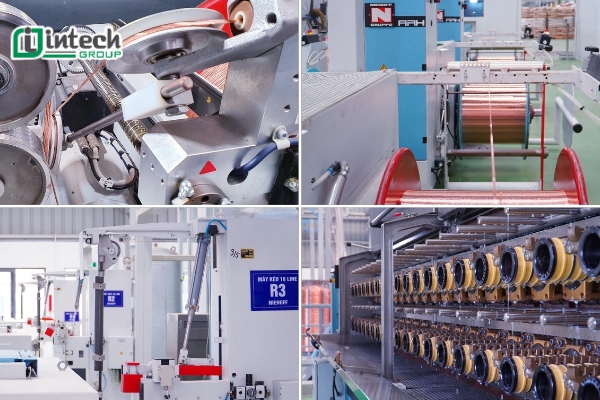
With modern, automated electric cable production lines, businesses can control product quality from raw materials to finished products, while increasing productivity, saving raw materials and meeting a variety of technical standards in the current electricity industry.
If you need further advice on solutions to optimize production lines or equipment in electric cable production, please contact Intech Group today for advice and support.
