


What is 5S? Detailed instructions for implementing 5S in businesses
22-09-2025 263
5S standard is a prominent management method widely applied in businesses around the world, especially in the manufacturing and service sectors.
This method originated in Japan, not only helping to create a clean, scientific working environment but also contributing to improving efficiency, minimizing waste and optimizing operating costs. Join Intech Group to learn in detail about the concept of 5S, how to implement 5S as well as the benefits of 5S in the following article:
1. What is the 5S standard?
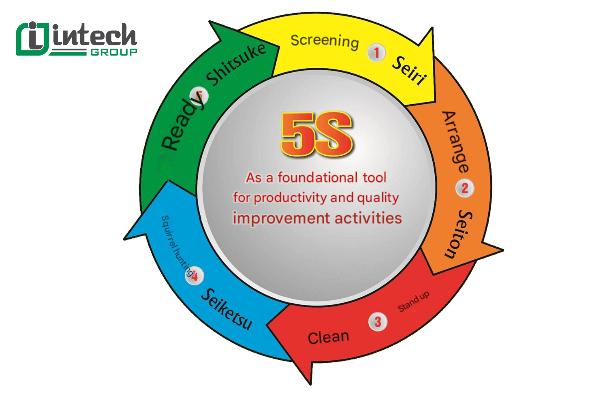
The 5S standard is a management system to improve the working environment, originating from Japan, with the goal of improving productivity and efficiency through organizing and maintaining the workplace scientifically. The above standard includes 5 principles: Seiri (Sort), Seiton (Sort), Seiso (Clean), Seiketsu (Standardize), Shitsuke (Readiness)
Implementing the 5S standard helps businesses significantly improve the working environment to reduce wasted time, increase productivity and limit the risk of occupational accidents. When all equipment and products are placed in the right place, the workplace is clean, employees will work more efficiently, save operating costs and build a professional and sustainable working culture.
2. History of the formation and development of the 5S standard
The 5S standard originated in Japan in the 1960s, under the leadership of Mr. Taiichi Ohno, the father of the Lean Manufacturing method, Toyota Corporation first applied 5S in automobile factories. The initial goal of 5S was to create a neat and clean working environment to increase labor productivity, improve product quality and reduce waste.
From the obvious successes in the automobile manufacturing industry, the 5S standard quickly spread to other industrial fields in Japan such as: machinery manufacturing, food, pharmaceuticals and electronics. By the 1980s and 1990s, when Japanese companies expanded their markets internationally, the 5S method was widely introduced in Asia, Europe and North America.
An important milestone in the development of the 5S standard was in 1998, when the International Organization for Standardization (ISO) issued the ISO 14001 standard on environmental management. In particular, the 5S method is considered an effective tool to help businesses improve their working environment and comply with international environmental standards.
Currently, the 5S standard is not only applied in the manufacturing sector but also widely applied in the service, healthcare, education and public administration sectors in Vietnam. With its flexibility and high efficiency, 5S has become an important foundation for quality improvement programs, effective management and sustainable development in all types of organizations.
For example: In 2017, Intech Group invited Japanese Jica experts to consult and train on 5S and Kaizen, to advise on management and product quality improvement. Up to now, the enterprise has been operating systematically and professionally, optimizing processes and improving performance and quality of operations.
3. What does the 5S standard include?
The 5S standard focuses on creating a clean, scientific and efficient working environment. This method helps improve working conditions, thereby improving the working spirit and performance of workers. 5S is an abbreviation of 5 Japanese principles starting with the letter "S", including:
Seiri (Sort)
The first step in the 5S standard is to classify and remove unnecessary items in the workplace. This helps free up space, reduce clutter and focus on equipment and tools that are truly useful for the job. Unused items can be disposed of, recycled or stored properly. Screening should be done monthly or quarterly.
Seiton (Set in Order)
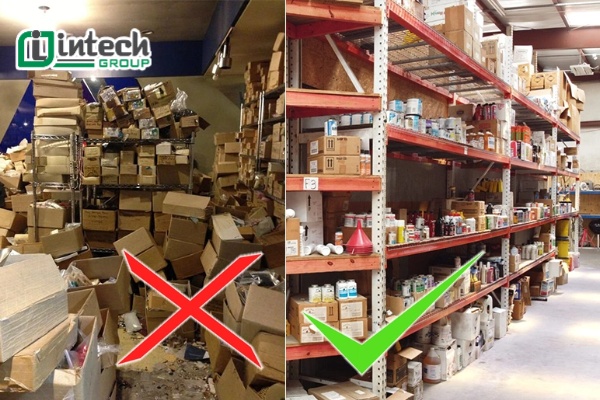
The Seiton principle emphasizes the proper placement of everything. Items must be arranged so that they are easy to find, easy to see, easy to take and easy to put away, saving time and increasing work efficiency. Clearly marked locations will help employees quickly identify and use items properly.
Seiso (Cleanliness)
A clean working environment contributes significantly to increasing productivity and improving work safety. The 5S standard requires cleaning of machinery, equipment and work areas to be done regularly, every day. This helps prolong the life of equipment, reduce the risk of damage and work accidents, and create a neat and professional image for the Enterprise.
Seiketsu (Care)
Enterprises need to develop specific processes and regulations to ensure that all activities are performed correctly and at the right frequency. Regular monitoring and evaluation are necessary to maintain sustainable and long-term effective 5S standards. Each individual needs to clearly understand their responsibilities and perform their work according to the established regulations.
Shitsuke (Readiness)
The last step is the most difficult step in the 5S standard, training self-awareness and discipline. Workers need to form professional working habits and maintain order without being reminded. When each individual is aware of complying with the 5S rules, the working environment will become more synchronized, efficient and civilized.
.jpg)
4. How to effectively implement 5S standards in a business
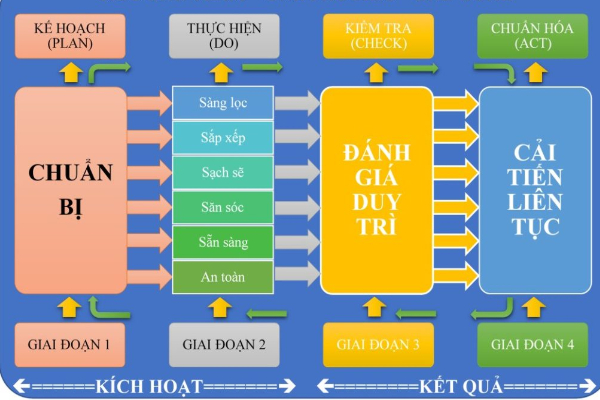
5S standards require careful preparation and consensus from the entire organization. To ensure successful implementation, businesses need to clearly identify specific steps such as selecting participants, appropriate training methods, and using visual support tools to maintain long-term effectiveness.
Who should participate in implementing 5S standards?
5S standards are effective when the entire team from senior leaders, middle managers to employees are fully involved. Lack of consensus or omission of any group will cause inconsistency and lead to failure in implementation.
Some individuals, especially the 5S coordinator, will play a key role in monitoring, checking and updating stickers and storage locations. However, the key point is that the entire organization needs to change its mindset and turn 5S into a daily working habit. In particular, when managers set an example of serious implementation, employees will tend to comply and follow.
5S process training
Each participating individual needs to clearly understand the purpose, meaning and benefits that the 5S method brings. Training can be done through classes, instructional videos or direct practice activities at the workplace.
Each department may have a different way of applying 5S depending on the specific space and tasks. Therefore, groups should be flexible in choosing the solution that best suits their conditions. In addition, training also needs to be updated and organized regularly, especially when there are new personnel.
Visual management tools to support 5S implementation
To make 5S effective and sustainable, these support tools will help create a clean, tidy and easy-to-manage workspace, which is a key factor in improving productivity.Some popular visual management tools include:
- Floor marking tape: Helps clearly define work areas, equipment and goods locations, or hazard warnings.
- Label and sign: Use colors, symbols, and writing to clearly indicate the location, name, and function of each item.
- Visual guide board: Quickly summarizes procedures, cleaning standards, or work content to be performed.
All of the above tools aim at a core principle of 5S: "Everything in its place – and each place for only one thing." When all equipment and items are clearly identified, businesses not only save time searching but also avoid chaos and disorder in operations.
5. Benefits of applying 5S standards
Increased labor productivity
Scientific arrangement, eliminating waste and optimizing space help employees easily access necessary tools and materials, thereby shortening working time, smoother operating processes, and improving overall productivity.
Improved product quality
When the workplace is organized neatly, errors arising during the production process due to equipment or material errors will be significantly reduced, and the control of output product quality will be more stable and meet standards.
Cost savings
Applying the 5S standard helps reduce waste of resources, limit damage, loss and optimize operating time, businesses will save a lot of costs related to material management, maintenance and repair of equipment.
Enhance organization and management capabilities
When equipment and products are arranged in the right place according to the 5S standard, businesses can easily monitor, check and evaluate the work process. This helps the management team control production activities more effectively.
Build a positive working environment
A clean, tidy space creates a comfortable and professional feeling, contributing to improving working spirit, satisfaction and responsibility in the work of employees.
Ensure labor safety
Removing unnecessary items and arranging space reasonably helps minimize the risk of accidents in the workplace. Applying the 5S standard contributes to building a safe working environment, protecting the health of workers.
Increase flexibility and adaptability
A scientifically organized working environment helps businesses easily adjust production processes and quickly adapt to market changes. Thereby, increasing competitiveness and maintaining long-term business efficiency.
The Relationship Between 5S and Kaizen
5S and Kaizen are both famous management philosophies originating from Japan, applied by businesses to improve operational efficiency and continuously improve quality. But both methods aim at the same goal, below is a comparison table of the differences between 5S and Kaizen:
| Khía cạnh | Tiêu chuẩn 5S | Kaizen |
| Khái niệm và mục đích | Là phương pháp quản lý nơi làm việc thông qua việc giữ gìn sạch sẽ, gọn gàng và tổ chức khoa học. | Là triết lý cải tiến liên tục để tối ưu hóa mọi hoạt động trong doanh nghiệp. |
| Tiêu chuẩn cụ thể | Bao gồm 5 nguyên tắc: Seiri (Sàng lọc), Seiton (Sắp xếp), Seiso (Sạch sẽ), Seiketsu (Săn sóc), Shitsuke (Sẵn sàng). | Không có bộ tiêu chuẩn cố định; tập trung vào việc cải tiến không ngừng mọi khía cạnh. |
| Thời gian triển khai | Có thể thực hiện theo đợt, định kỳ và hoàn thành trong thời gian ngắn. | Là quá trình liên tục, không có điểm kết thúc, trở thành một phần văn hóa doanh nghiệp. |
| Phương pháp thực hiện | Dựa vào các bước hành động cụ thể, ưu tiên tổ chức và làm sạch không gian làm việc. | Thực hiện thông qua nhóm cải tiến, phân tích dữ liệu, đề xuất ý tưởng và triển khai thay đổi. |
| Phạm vi áp dụng | Chủ yếu trong quản lý nơi làm việc, thiết bị, công cụ, kho bãi. | Áp dụng toàn diện trong mọi hoạt động: sản xuất, nhân sự, dịch vụ khách hàng, v.v. |
| Vai trò trong cải tiến | Tạo nền tảng cơ bản cho môi trường làm việc ổn định, sạch sẽ trước khi cải tiến sâu hơn. | Là bước tiếp nối để nâng cao chất lượng, năng suất sau khi môi trường làm việc được ổn định. |
Kết luận
Tiêu chuẩn 5S là một phương pháp quản lý không gian làm việc, mà còn là nền tảng quan trọng giúp doanh nghiệp xây dựng môi trường làm việc chuyên nghiệp, hiệu quả và an toàn. Chính vì vậy, áp dụng tiêu chuẩn 5S là bước đi chiến lược để doanh nghiệp hướng đến sự phát triển bền vững và cạnh tranh vượt trội trong thời đại hiện đại.
