


What is a DC motor? Structure, classification and applications
01-10-2025 341
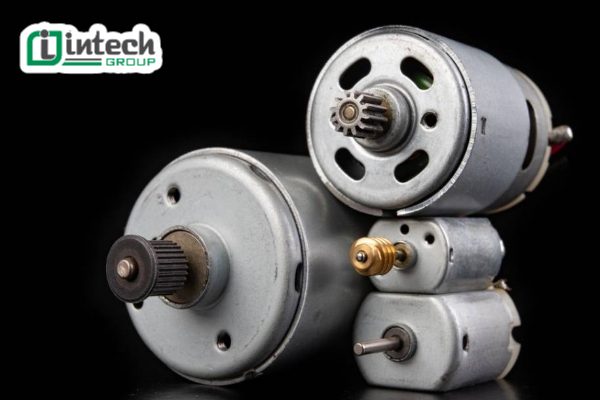
A DC motor is a device that converts direct current voltage energy into rotating mechanical energy, thanks to a directional current passing through a coil in a magnetic field.
Understanding the operating principles of DC motors, including the interaction between magnetic fields and currents, helps to control speed and torque accurately and flexibly. With the ability to start quickly, adjust speed easily and high efficiency, DC motors are used for electric cars, industrial robots, medical equipment conveyors and office machines. Join Intech Group to explore the detailed structure, operating principles and practical advantages and disadvantages to optimize the performance of your system.
1. What is a DC motor?
A DC motor is a specialized electromechanical device used to convert DC voltage energy (DC - Direct Current) into rotating mechanical energy. A fixed steel frame (stator) creates a magnetic field thanks to a permanent magnet or excitation coil, while the rotor (rotating part) carries a coil wound on a steel core connected to a set of carbon brushes and a commutator, allowing DC current to flow through the coil and generate magnetic force.
Thanks to the DC voltage source with a specific current direction, the DC motor allows for quick starting, flexible speed and torque adjustment, suitable for applications requiring precise control such as industrial robots, conveyors, medical equipment or electric cars.
2. Structure of a DC motor
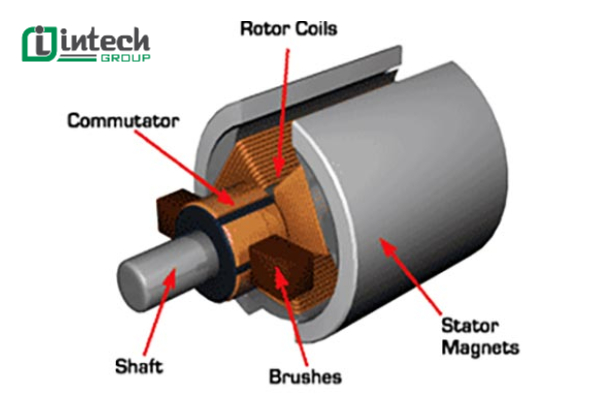
A DC motor consists of main components that work closely together to convert DC power into mechanical energy:
Stator: A fixed body, which can be one or more pairs of permanent magnets (Permanent Magnet) or electromagnets (Field Coil). Creates a fixed magnetic field, determining the North - South pole to interact with the rotor.
Rotor - Armature: Cylindrical steel core, evenly wound with conductive coils (Armature winding). When DC current runs through, the rotor turns into an electromagnet, creating a rotating force thanks to the effect between the two magnetic fields.
Carbon brushes - Brushes: Make sliding contact with the commutator, conducting current from the source to the rotor coil. Graphite carbon material has low wear, ensuring stable transmission and long life.
Commutator: Consists of many copper pieces in a ring, fixed on the rotor shaft. “Divide and transfer the DC current into each rotor coil at the right time, helping to stabilize the rotation torque.
Case and bearing: Protect internal parts from dust and moisture; at the same time keep the rotor shaft rotating smoothly, reducing friction.
3. Classification of DC motors
Based on the method of supplying the excitation field, DC motors are divided into the following types:
Permanent magnet DC motor (PM DC Motor)
The stator uses a permanent magnet, is simple, compact, low cost, and is often used for small capacity devices that require basic speed control.
Separately Excited DC Motor
The field winding and armature coil are supplied with separate DC power, allowing independent adjustment of the magnetic field and the excitation current, making it easy to control speed and torque.
Motor 1 parallel excitation (Shunt DC Motor)
The excitation coil is connected in parallel with the armature to stabilize the magnetic field, commonly used in conveyors and machine tools.
Series DC Motor
The excitation coil is connected in series with the armature, providing a large starting torque. Often used for applications requiring high traction, such as electric locomotives and cranes.
Compound DC Motor
Combining both parallel and series coils with the armature. It has the advantage of both a large starting torque and maintaining a stable speed, suitable for presses and lifting machines.
With a simple but flexible structure in control, DC motors are increasingly widely used in industry and automation equipment.
4. Operating principle of DC motors
DC motors operate based on the interaction between the fixed magnetic field of the stator and the magnetic The field generated on the rotor, combined with the rectification mechanism to maintain continuous rotation. Specifically:
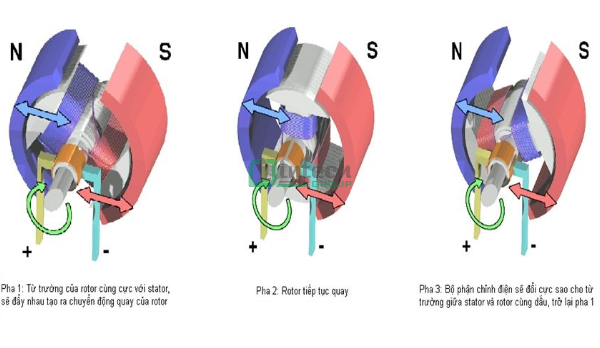
Creating a magnetic field and rotating force
The stator provides a fixed magnetic field through a permanent magnet or an excitation coil. The rotor (armature) contains coils wound on a steel core. When a DC current flows through, the rotor coil becomes an electromagnet. According to Lorentz's law, the magnetic force generated at each section of the conductor will create a torque, pulling the rotor around the axis.
The direction of this force is determined by Fleming's left-hand rule and its magnitude is given by:
| F = B.I.L |
In which:
- B = magnetic flux density
- I = current
- L = length of conductor in magnetic field
Commutation
The commutator consists of copper pieces mounted on the rotor shaft. The brushes act as sliding contacts, bringing DC current from the source to the commutator. When the rotor rotates, the commutator and brushes automatically reverse the current through each coil, keeping the rotational force in the same direction, maintaining continuous motion.
Back EMF
When the rotor rotates under the influence of an external force (such as a mechanical load), the DC motor will generate an induced electromotive force (EMF) similar to a generator. In motor mode, the rotor also creates a counter-EMF (counter-EMF) that opposes the applied voltage, helping to regulate current and torque.
Output mechanical power
The mechanical power generated by a DC motor is proportional to the product of the current and the back-EMF. This relationship shows that, with EEE proportional to rotational speed, the DC motor provides both flexible speed control and stable torque maintenance over a wide load range.
The current flowing through the motor is calculated according to the following expression:
| I=(Vnguon-Vphandiendong)/Rphanung |
The mechanical power that the engine can produce is calculated by:
| P=I*Vphandiendong |
The operating principle of a DC motor is based on the combination of the stator-rotor magnetic field, the current reversal mechanism thanks to the commutator, carbon brushes and the reverse electromotive force effect, helping the motor start quickly, accelerate and decelerate easily and control torque precisely.
5. Advantages and disadvantages of DC motors
Advantages of DC motors
Ability to generate large torque immediately upon power supply, suitable for heavy loads and requiring strong initial traction.
Changing the supply voltage or changing the excitation current helps control speed and torque easily and accurately.
Withstand high currents for a short time without damaging the motor.
DC current has little loss, especially at low speed ranges.
Simple structure, wear resistance and load fluctuations also have little effect on stable operation.
Disadvantages of DC motors
Complex rectifier mechanism, high maintenance and replacement costs and require periodic maintenance.
When switching on the commutator, sparks can be generated, posing a risk of fire and explosion in flammable environments.
Compared to brushless motors (BLDC) or equivalent AC motors, the investment cost is higher while the capacity is not superior.
6. Applications of DC motors
Industrial equipment: Conveyors, turntables, machine tools, automatic robots, small cranes, etc.
Automobiles and transportation: Starters, generators, regenerative brakes, automatic doors, electric chairs.
Home electronics: Air conditioners, printers, photocopiers, DC drives, magnetic disc players, FM radios, etc.
Toys and hand tools: Drills, mini grinders, remote-controlled models, etc.
Medical and office applications: Electric syringe pumps, patient lifts, lift tables, PTZ cameras.
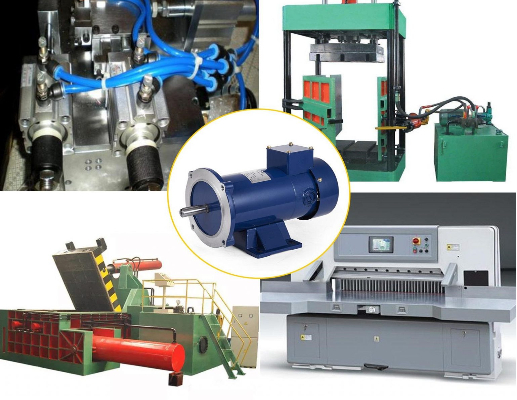
Thanks to high torque, precise speed control and flexible design, DC motors are still the leading solution for systems requiring strong starting, continuous speed control and stable performance in many industries. If you are interested in automation solutions using DC motors, please contact Intech Group immediately for timely support and advice, with reasonable prices and solutions suitable for each business.
