


What is a humidity sensor? Things to know before applying this device
17-09-2025 188
Cảm biến độ ẩm là thiết bị để đo và giám sát độ ẩm trong không khí hoặc môi trường kín, đóng vai trò quan trọng trong nhiều lĩnh vực như nông nghiệp, công nghiệp thực phẩm, hệ thống nhà thông minh, kỹ thuật - điện tử và hệ thống HVAC.
In the following article, Intech Group will provide complete basic knowledge and useful information about humidity sensors from concept, structure, classification to practical applications.
What is a humidity sensor?
Humidity sensor (English name: Humidity Sensor) is a specialized device used to measure and detect the humidity level in the air or a specific environment. This device helps determine the ratio of water vapor in the air, which is a factor that can affect human health, the durability of electronic devices and the efficiency of industrial production processes.
Currently, humidity sensors are widely used in many fields such as: air conditioning systems (HVAC), smart home systems, Rotronic monitoring, smart agriculture, food preservation and other electronic devices. Data collected from the sensor helps users control humidity more accurately, thereby optimizing operating conditions and ensuring product quality or living environment.
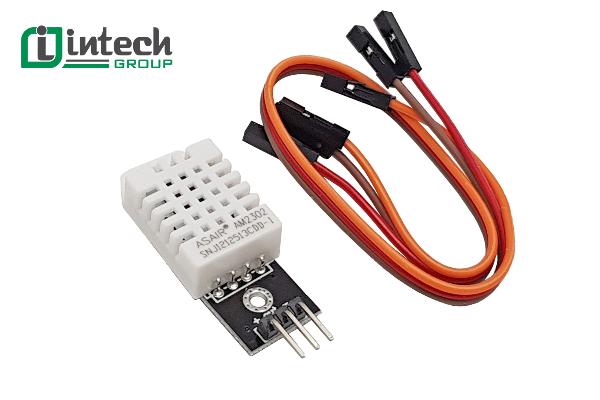
Structure of humidity sensor
The structure of the humidity sensor will vary depending on the type of technology used such as capacitive sensor, resistive sensor or thermal sensor. Of which, capacitive humidity sensor is the most commonly used today. Below is the structure of a capacitive humidity sensor:
-
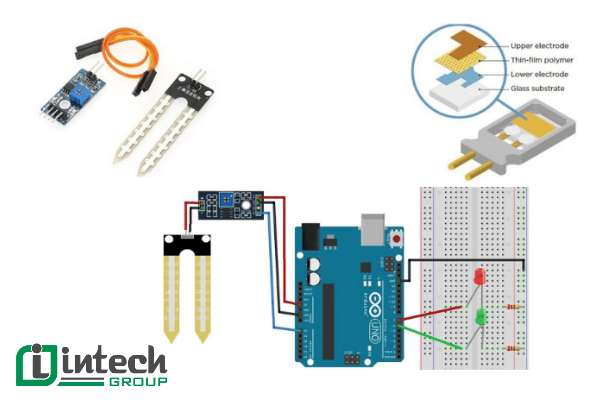
Absorbent material (Thin-film Polymer or Ceramic): This is the main layer that has the ability to absorb or release water vapor from the surrounding environment. When the humidity changes, this material will change the dielectric constant, affecting the total capacitance of the sensor.
-
Electrode (Upper/Lower Electrode): Two conductive electrodes are arranged above and below the absorbent material layer to form a capacitor and measure the change in capacitance caused by humidity.
-
Measurement and signal processing circuit: This part includes electronic microcircuits such as amplifiers, signal converters (ADC) and signal processing circuits. It has the function of recording changes in capacitance and converting them into output humidity data.
-
Signal output: Humidity sensors can output in the form of analog signals (voltage, current) or digital (digital data). Depending on the system requirements, users can choose the type of sensor suitable for the control device or monitoring system.
3. Operating principle of humidity sensors
The operating principle of humidity sensors depends on the type of technology integrated in the device. There are 3 common principles commonly applied in modern humidity sensor lines:
1. Capacitance principle
This is the most commonly used operating principle in capacitive humidity sensors. The device uses two electrodes separated by a layer of insulating material that can absorb water vapor such as polymer or ceramic. When the ambient humidity increases, the material will absorb water, changing the dielectric constant and leading to a change in capacitance. From there, the sensor records and converts it into an electrical signal, then the sensor will accurately determine the current humidity value.
2. Resistance principle
The device operates based on the change in resistance of a material that is sensitive to humidity. When exposed to air with high humidity, this material will change its resistivity or conductivity level. This change will be processed by the sensor system and displayed as a specific humidity value.
3. Thermal principle
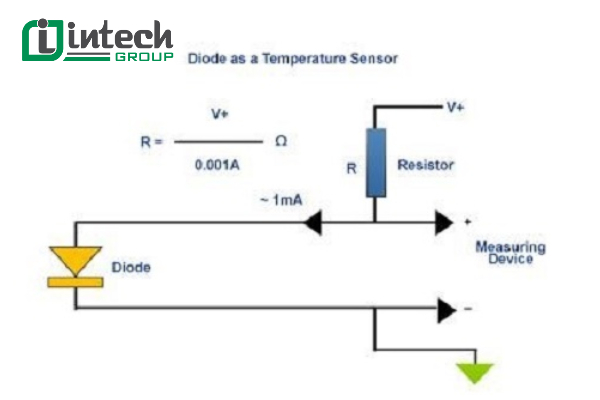
The thermal humidity sensor uses two parallel temperature sensors, in which one sensor is placed in a dry environment and the other sensor is in direct contact with water vapor in the air. When there is a change in humidity, the temperature difference between the two sensors will reflect the level of water vapor in the air. Then, this difference is converted into the corresponding humidity value.
Classification by operating principles
+ Resistive humidity sensors: Operate based on the change in impedance of the sensor material (conducting polymer or electrolyte salt) when the humidity changes. This type of sensor is low cost, compact in size and suitable for applications that require signal transmission over long distances.
-
Classification by operating principles
+ Resistive humidity sensors: Operate based on the change in impedance of the sensor material (conducting polymer or electrolyte salt) when the humidity changes. This type of sensor is low cost, compact in size and suitable for applications that require signal transmission over long distances.
+ Capacitive humidity sensors: Based on the change in dielectric constant proportional to the relative humidity in the environment. This type of sensor is not much affected by temperature, can measure in a wide humidity range and is commonly used in precision monitoring systems.
-
Classification by application
+ Air humidity sensors: Used to measure humidity in living spaces, offices, factories and air conditioning systems. This is a common type of sensor in civil and commercial applications.
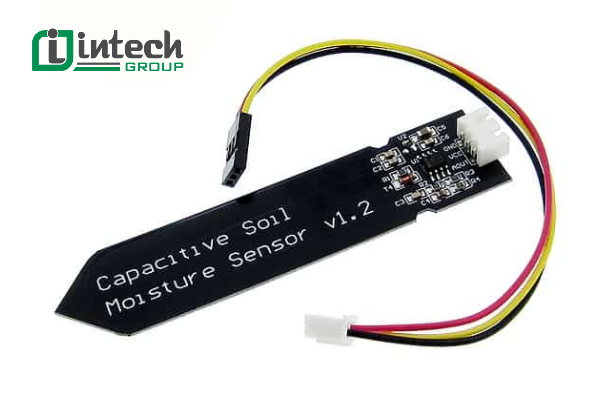
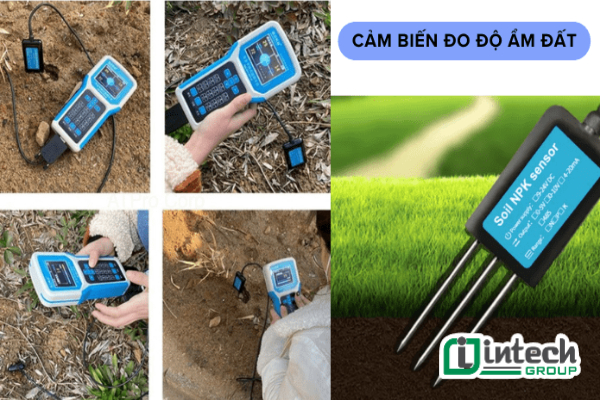
+ Soil moisture sensor: Designed to measure the amount of moisture in the soil, often used in smart agriculture, automatic irrigation and monitoring soil conditions in environmental research.
+ Industrial humidity sensor: Used in production processes, goods storage, warehouses, and industrial environmental control systems where humidity greatly affects product quality.
-
Classification by technology used
+ Polymer resistance humidity sensor: Uses polymer materials that can change resistance according to environmental humidity, suitable for compact and energy-saving devices.
+ Ceramic resistance humidity sensor: Uses ceramic materials to measure humidity thanks to the change in resistance of the sensor layer when absorbing water vapor.
+ Capacitive humidity sensor: Based on the structure of two electrodes sandwiched between a layer of moisture-sensitive insulating material, thereby measuring the change in capacitance corresponding to the humidity level.
Outstanding applications of humidity sensors in life and industry
Below are the most common and practical applications of this device in practice.
1. Application of humidity sensors in daily life
Humidity sensors are often integrated in household appliances such as: Air purifiers, Dehumidifiers, Air conditioners suitable for daily use to measure humidity in the room and automatically adjust to maintain the ideal humidity level for human health.
2. Application of humidity sensors in agriculture
In the agricultural sector, soil humidity sensors are tools that help measure soil humidity accurately, helping farmers determine the appropriate time to irrigate, save water and increase crop yields
In particular, in the high-tech agricultural model, air humidity sensors are also installed in greenhouses to monitor and maintain ideal conditions for plant growth.
3. Application of humidity sensors in industry
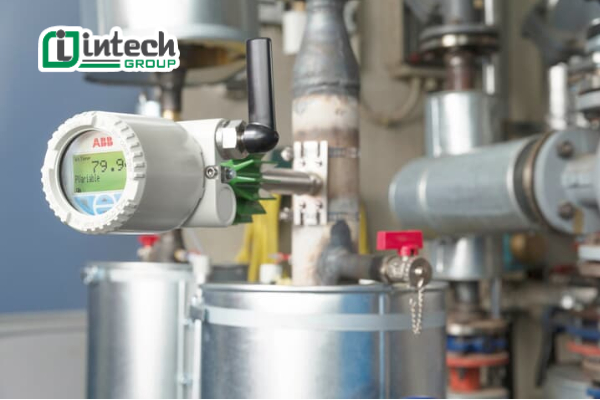
In industries such as pharmaceuticals, food, electronics, etc., humidity control is a vital factor to ensure product quality and durability. Humidity sensors are used to monitor the environment in the production line, maintain stable humidity in storage and transportation, limit equipment damage and product quality degradation.
4. Application of humidity sensors in smart home systems (Smart Home)
In smart home systems, humidity sensors are connected to Internet of Things (IoT) devices such as air conditioners, dehumidifiers and ventilation systems. Users can monitor indoor humidity in real time, automatically adjust devices to maintain ideal humidity levels, and optimize the living environment without manual intervention
5. Application in food and medical preservation
Humidity sensors are used in the preservation of moisture-sensitive products such as: Packaged foods, drugs and pharmaceuticals, medical equipment. Maintaining humidity at the right level helps prolong product life, limit mold and ensure effective use.
