


What is a pressure sensor? Structure and classification of common pressure sensors today
01-10-2025 178
Pressure transducer is an important measuring device in industry, used to monitor and control pressure in liquid or gas systems.
With other names such as pressure sensor, pressure sensor or pressure sensor, this device plays an essential role in ensuring the safety, accuracy and performance of machinery and production lines. In the following article, Intech Group will help you understand what a pressure sensor is, its structure, operating principle and common classification methods today.
1. What is a pressure sensor?
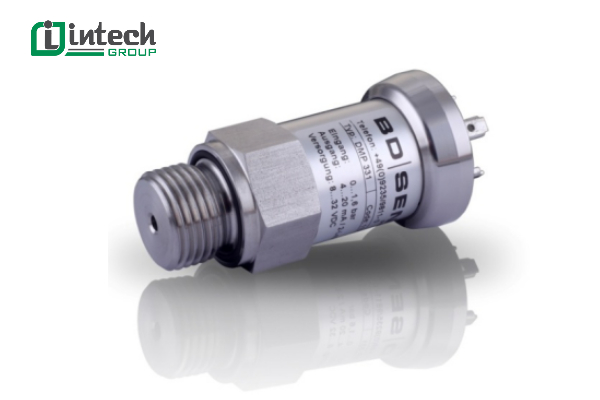
Pressure sensor in English: Pressure Sensor, also known as Pressure Transmitter or Pressure Transducer, is an electromechanical device used to measure, monitor and control pressure in pipeline systems, industrial equipment or environments containing liquids and gases. This device also has many other names such as: pressure sensor, pressure sensor, pressure transducer, pressure sensor, pressure sensor, ...
The sensor works by receiving pressure values through a mechanical probe, then converting them into corresponding electrical signals. This signal will be transmitted to display devices, automatic control devices or PLC systems via electrical wires. Common output signal standards of pressure sensors include: 0–5V, 0–10V, 2–10V, 0.5–4.5V, 4–20mA, 0–20mA,…
Pressure sensors are widely used in industries such as: manufacturing, water treatment, oil and gas, food, beverage, HVAC systems and many other fields that require pressure control in the operating process.
2. Structure of the Pressure Sensor
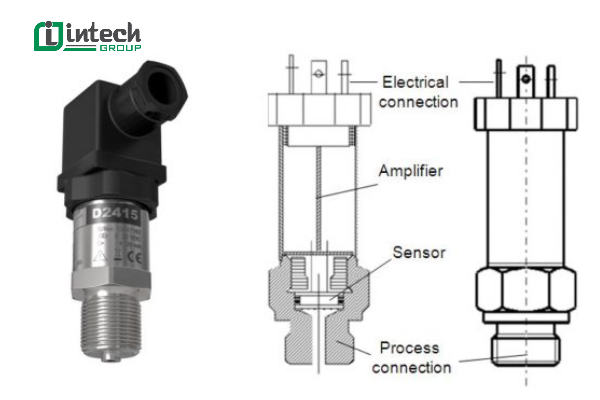
Pressure sensors, also known as pressure sensors or pressure sensors, are designed with many different types and variations depending on the purpose of use. The structure of the pressure sensor includes the following main parts:
Sensor Body
This is the outer shell, helping to protect the internal components from environmental impacts such as temperature, humidity, chemicals or vibration. The sensor body is usually made of stainless steel SS304, SS316 or other specialized materials, ensuring durability and high corrosion resistance.
Mechanical connection (Process Connection)
This is the contact part between the sensor and the measuring system, usually in the form of threaded connection, flange connection or clamp connection. This part helps to fix and seal the sensor with the device, pipe or system that needs to measure pressure.
Sensing Diaphragm
Located inside the sensor, the sensor diaphragm is the place to receive pressure from the gas or liquid medium and transmit that pressure to the sensor above. This membrane has the effect of preventing the medium from directly contacting the electronic components, avoiding damage.
O-ring Seals
Made from rubber or other elastic compounds, O-rings act as a seal between the sensor diaphragm and the sensor body, ensuring that the medium does not leak into the electronic part.
Sensing Capsule
The capsule is where the pressure signal is converted into corresponding electrical signals such as resistance, capacitance, inductance or current signal. This is the main part that helps the sensor to perform accurate pressure measurement.
Signal Processor
Receives signals from the capsule and processes them, then converts them into standard signal formats such as: 4–20mA, 0–5VDC, 0–10VDC, 1–5VDC,… to transmit to the control or display device.
Connecting cable
Is the signal wire located at the sensor head, used to transmit data from the processor to the terminal device such as the display screen, central controller, warning system,... The cable can have a plastic or metal protective connector depending on the design.
3. Operating principle of pressure sensor
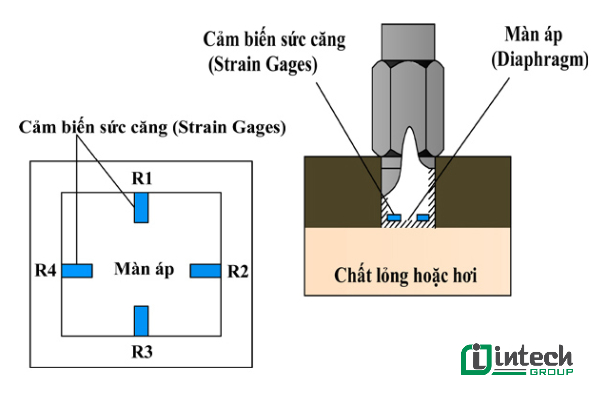
Pressure sensor (Pressure Sensor or Pressure Transducer) is based on converting physical pressure values into electrical signals for processing and transmission. When the liquid or gas medium creates pressure acting on the sensor membrane, it will be integrated with pressure-sensitive elements such as resistors, capacitance or piezoelectric sensors to record the change.
The mechanical force from the pressure deforms the sensor membrane, leading to changes in electrical properties (resistance, voltage, current). This information is transmitted to the microprocessor integrated in the sensor, where the signal will be processed and calibrated to produce standard output signals such as: 4-20mA, 0-10V, 0-5V, ...
The output signal is then transmitted to the display device (if only used to observe pressure parameters), or control devices such as PLC to perform automation functions such as controlling pumps, valves, motors, ... to ensure the system operates safely and effectively.
4. Classification of popular pressure sensors today
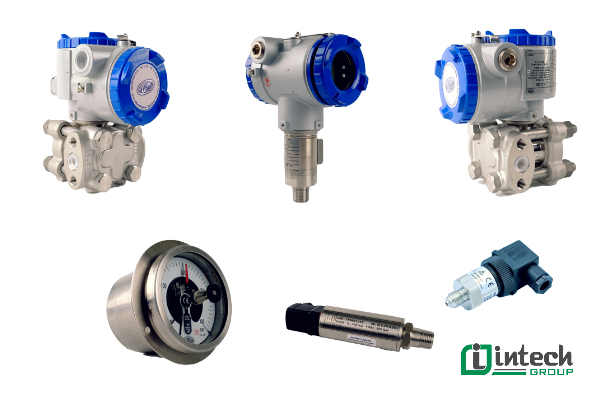
Pressure sensors are classified according to many criteria such as operating principles, output signals, application environments, ... Pressure sensors include the following 3 common types:
Absolute Pressure Sensor
Absolute pressure sensors are sensors used to measure pressure compared to a complete vacuum. A standard pressure of 1 bar is always maintained inside the sensor, which acts as a reference point. When the sensor is placed in an atmospheric environment, the measured pressure value will be 1 bar.
This type of sensor is not affected by changes in atmospheric pressure, giving more stable results in applications that require high accuracy and less interference from the surrounding environment.
Relative pressure sensor (Gauge/Relative Pressure Sensor)
A relative pressure sensor is a type of sensor that measures pressure compared to the current atmospheric pressure. When there is no pressure applied and placed in an atmospheric environment, the sensor will display a pressure value of 0 bar. Relative pressure sensors are suitable for common civil and industrial applications such as monitoring compressed air, water, oil systems, etc.
Differential Pressure Sensor
Differential pressure sensors are designed to measure the difference between two pressure points. This sensor has two pressure input ports, each connected to a different location in the system.
- Monitors the pressure drop across an air filter or oil filter.
- Measures the liquid level in a tank by measuring the pressure above and below the liquid level.
- Measures the flow of liquid or gas through a pipe based on the pressure change at the two ends of the throttle.
5. Applications of pressure sensors in industry and life
Pressure sensors with pressure transducers are important devices widely used in many modern industries. With the ability to accurately measure the pressure of liquids or gases, this device plays an indispensable role in monitoring, controlling and automating operating processes. Below are some typical applications of pressure sensors:
Used in hydraulic, pneumatic and liquid systems
- Measure hydraulic pressure in hydraulic cylinder systems, hydraulic presses.
- Monitor compressed air pressure in air compressors to ensure that it does not exceed the safety limit, avoid overpressure or explosion.
- Measure the pressure of liquids such as water, oil, chemicals, gas in pipes or tanks.
Used in boiler systems
Pressure sensors are installed directly on the boiler to measure steam pressure. This is a high temperature environment, requiring high accuracy and durability of the sensor to ensure safe operation.
Used in pumping stations and water supply systems
- Monitoring water pressure in pumping stations, sending signals to the inverter or PLC to control pump operation.
- Maintaining stable pressure for civil and industrial water supply pipes.
Controlling valves and stabilizing output pressure
Pressure sensors help monitor and adjust the pressure after the control valve, ensuring that the output pressure is always stable and accurate according to the operating requirements of the system.
Used on cranes and lifting equipment
On motor vehicles such as cranes, pressure sensors are attached to hydraulic cylinders to control the lifting and lowering force, ensuring safety and operating efficiency of the equipment.
Measuring tank level with pressure sensor
In water or raw material tanks, pressure sensors are used to measure liquid levels indirectly through pressure values, supporting effective inventory control.
Application in automatic production lines
Pressure sensors play an important role in production lines of electronic components, automobiles, and food where high accuracy and integration with automation control systems are required.
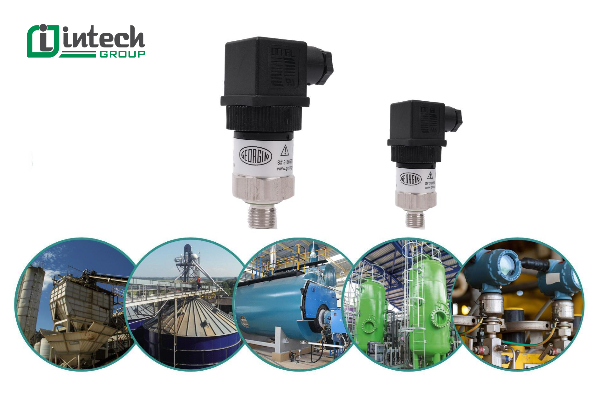
6. Notes when choosing to buy a pressure sensor
To ensure the efficiency and durability of the device, choosing a pressure sensor suitable for the environment and purpose of use is extremely important. Below are important criteria you need to note when choosing to buy a pressure sensor:
Determine the appropriate pressure measuring range
The measuring range is an important factor when choosing a pressure sensor. If you choose a sensor with a measuring range lower than the actual pressure, the sensor membrane will be damaged due to overpressure. On the contrary, choosing a sensor with a measuring range too large compared to the pressure to be measured will lead to high errors and inaccurate results.
Note: The ideal measuring range should be between 70-80% of the maximum pressure of the environment to be measured.
Select the sensor according to the measuring environment
Pressure sensors are designed specifically for each type of liquid or gas: water, oil, compressed air, steam, chemicals, etc. Choosing the right type of sensor for each environment will help ensure accuracy and prolong the life of the device.

Working environment temperature
Check the temperature range in which the sensor can operate stably. For high temperature environments such as boilers and industrial lines, it is necessary to choose a heat-resistant sensor that is explosion-proof.
Sensor connection thread type
Some common connection thread standards are: G1/4", G1/2", NPT 1/4, NPT 1/2. For the food and pharmaceutical industries, etc., it is recommended to use the Clamp connection type for easy cleaning and safety. Make sure the sensor's connection thread is compatible with the installation system.
Pressure sensor output signal
Common signal types include 4-20mA, 0-10V, 0-5V, depending on the controller you are using. If the signal is not compatible, a signal converter can be used to ensure accurate data transmission.
Pressure sensor price
Sensor prices range from several million to tens of millions of VND, depending on the manufacturer, quality and measuring range. Consider the price and quality, avoid choosing cheap but unstable sensors.
Choose to buy sensors at a reputable unit
Always prioritize buying genuine pressure sensors, with full quality certification documents, clear warranty because poor quality sensors can easily lead to damage, errors and unsafety during use.
The above is the information about pressure sensors that we want to share. Intech Group hopes that through this article, readers can understand more about the types of pressure sensors and how to choose good equipment that suits their needs. If you want to learn more about equipment in the field of automation, please leave your contact information for us via hotline 0966.966.103 / 0966 966 032. With the motto of dedicated and professional work, Intech Group is always committed to bringing customers products with the best quality at the most reasonable price on the market!
