


What is a Servo Motor? The Role of Servo Controllers in Industrial Automation
01-10-2025 263
Servo motor is a high precision transmission system, widely used in many industries such as CNC machines, industrial robots, packaging machines, automatic production lines... Thanks to the ability to flexibly control position, speed and torque, Servo motor helps improve the efficiency and stability of the operating process.
What is a Servo Motor?
A Servo Motor is a type of drive motor that uses a closed-loop control mechanism, which helps to precisely adjust position, speed and torque according to control signals from the programmer (PLC). The Servo system has the ability to respond quickly within a few milliseconds, helping to ensure high performance and near-absolute accuracy in modern industrial applications.
Other definition: A Servo Motor is a high-precision drive system, widely used in many industries such as CNC machines, industrial robots (AGV Robots), packaging machines, automatic production lines... Thanks to the ability to flexibly control position, speed and torque, the Servo Motor helps to improve the efficiency and stability of the operating process.
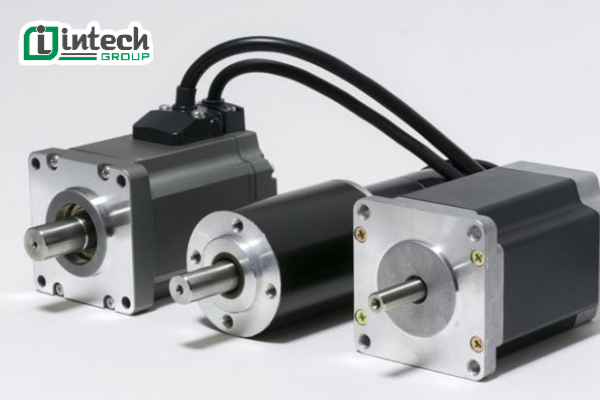
Servo motor structure
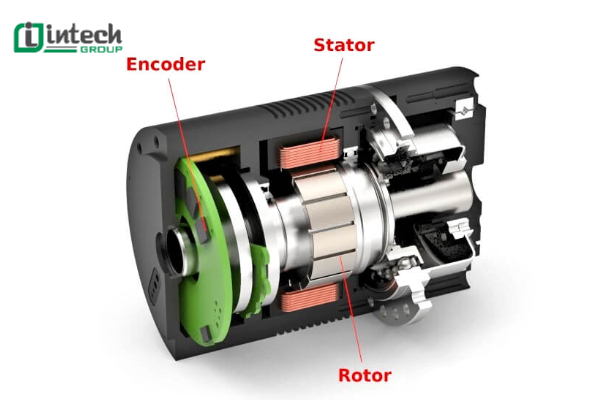
An AC Servo motor usually consists of 3 main parts:
-
Stator: Is the fixed part, including coils that are powered to create a rotating magnetic field, helping to exert force on the rotor.
-
Rotor: Is the rotating part of the motor, usually made of a permanent magnet with strong magnetism, creating torque when affected by the stator magnetic field.
-
Encoder: Mounted at the rear of the motor, has the function of recording the speed and position of the rotor, then sending feedback signals to the controller to adjust the motor operation in real time.
In addition, for the Servo motor system to operate effectively, there must be smooth coordination between the following 4 basic components: Servo Amplifier (Servo Amplifier), central controller, feedback device (Encoder, Resolver...), drive motor
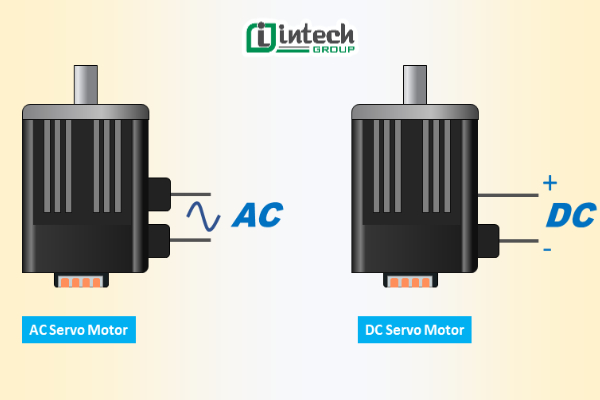
Servo Motor Classification
Servo motor is the main part of the Servo drive system, which is responsible for receiving control signals from the Servo controller (Servo Drive) and providing the necessary moving force for the machine equipment. The outstanding advantage of the Servo motor is the ability to operate at high speed and absolute precision, helping to meet the strict requirements in industrial automation lines (Automation lines)
Servo motors are divided into two main types:
- AC Servo: Designed to handle large currents, often used in industrial machinery systems, automatic robots, and CNC equipment with high loads.
- DC Servo: Suitable for small applications that do not require high power. DC Servo motors are popular in electronic devices, mini robots, technical models...
Servo Motor Operating Principle
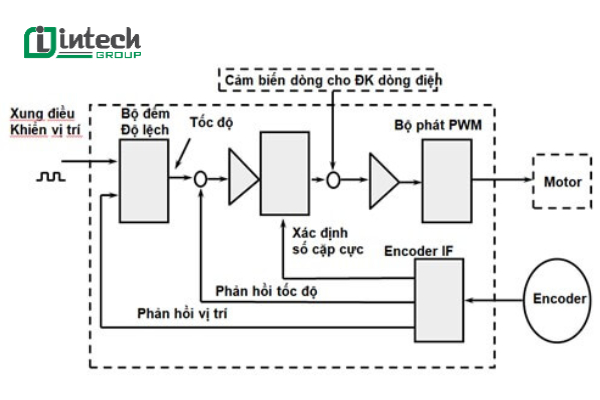
Servo motors operate on the principle of closed-loop control, ensuring precise control of position, speed and torque. During operation, the Servo motor operates as follows:
- The controller sends a control signal (usually in the form of PWM or analog pulses) to the Servo motor.
- The motor receives the signal and performs the required movement.
- The encoder mounted on the back of the motor records information about position and velocity, then continuously feedbacks it to the controller.
- The controller compares this feedback signal with the original input signal. If there is any deviation due to resistance or external factors, it will automatically calibrate to ensure the motor operates correctly according to the desired parameters.
This mechanism helps the Servo motor achieve extremely high precision, limit errors and increase working efficiency in industrial environments that require speed and reliability.
The role of Servo controllers in industrial automation
In Servo motors, the Servo controller (Servo Drive) is the coordination center, considered the "brain" of the entire transmission process.
Some of the main functions of the Servo controller include: Communicating and receiving control commands from PLC or HMI (human-machine interface), processing feedback data from sensors and encoders to make appropriate adjustments, and accurately controlling the operation of devices such as motors, pumps, valves, and mechanical equipment in the production line.
With the ability to process information quickly and respond continuously, the Servo controller helps ensure that the production process is accurate and energy-saving. This is why Servo motors have become a core component in smart automation systems, especially in the fields of CNC, packaging, assembly, and industrial robots.
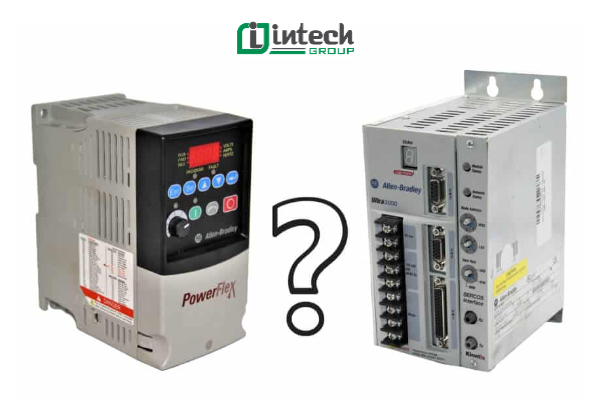
Compare the difference between Servo motor and inverter
In the field of automatic control, Servo motor and inverter (VFD) are two popular devices used to control motors. However, each type of device has a completely different operating principle and practical application.
1. Servo motor
Servo motor (Servo Drive) is designed to control the speed, position and torque of the motor extremely precisely thanks to the closed-loop feedback control system. Servo is suitable for applications that require flexible movement, high precision and fast response, commonly found in:
- CNC machine
- Industrial robot
- Packaging machine, assembly line
- Automatic printing equipment
2. Inverter
Inverter operates based on the principle of changing the frequency and input voltage to adjust the speed of the motor. This device is often not as precise in controlling position or torque as a Servo motor, but has the advantage of optimizing energy and cost. Inverters are suitable for applications:
- Water pump motor control
- Ventilation fans
- Air compressors
- Simple conveyors
Servo motors are suitable for systems that require high precision and comprehensive motor control. Meanwhile, inverters are a cost-effective solution for simpler applications that do not require absolute precision. Choosing the right device will help businesses optimize performance and save operating costs.
With over 14 years of experience in the field of automation and having received the trust of thousands of domestic and foreign customers, Intech Group is confident in being a supplier of products in the fields of precision mechanics, automation, technology and reliable energy with specialized solutions, ensuring timely response to all needs and bringing the highest efficiency to customers. For more information and consulting needs, please contact the hotline for advice and support.
