


What is an electric vehicle battery case?
30-09-2025 316
In the trend of shifting to green energy, electric vehicles are becoming an increasingly popular choice globally. To meet this demand, automakers are constantly improving battery technology to increase travel distance and shorten charging time. However, in addition to the battery core, the battery casing of electric vehicles also plays an important role in ensuring the safety, performance and durability of the entire energy system.
In the trend of shifting to green energy, electric vehicles are becoming an increasingly popular choice globally. To meet this demand, automakers are constantly improving battery technology to increase travel distance and shorten charging time. However, in addition to the battery core, the electric vehicle battery case also plays an important role in ensuring the safety, performance and durability of the entire energy system.
In this article, we will learn what an electric vehicle battery case is, its function and common materials used in the production of battery cases today such as aluminum, steel, composite materials, ... to help you have a more comprehensive view of this important but often overlooked part.
What is an electric vehicle battery case?
An electric vehicle battery case is a structural part that encloses and protects the battery pack in an electric vehicle, playing an important role in ensuring the safety and performance of the energy system. Currently, electric vehicle battery cases are made from lightweight and durable materials such as aluminum or steel to ensure both mechanical impact resistance and weight reduction for the entire vehicle. The battery case performs two main functions:
- Protect the battery system from impact, dirt and water, ensuring safe operation.
- Create a solid connection for the battery modules, helping to form a complete and stable block.
In the lithium-ion battery structure, the battery case accounts for 20% to 30% of the total weight of the entire system, being the main force-bearing and protective part. Therefore, reducing the weight of the electric vehicle battery case is becoming a major goal in modern battery development.
Electric vehicle battery structure
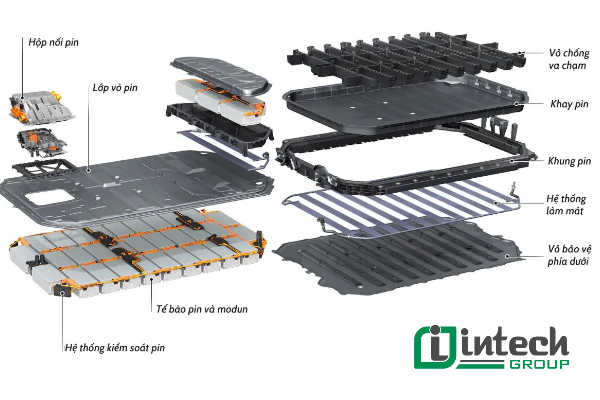
Electric vehicle batteries consist of 4 main components specifically as follows:
- Electric vehicle battery case: Is the outer protective layer responsible for mechanical impact resistance, water resistance, insulation and explosion protection, ensuring safety for the entire battery system.
- Battery cells and modules: Store and supply power for vehicle operation. These modules are often arranged in an optimal structure to increase efficiency and energy density.
- Cooling system: Helps maintain the ideal temperature of the battery during charging and discharging, preventing overheating and extending battery life.
- Battery management system (BMS): Monitors battery status, detects errors, balances voltage between cells and coordinates the efficient operation of the entire battery pack.
Thus, in the entire system, the electric vehicle battery case is not simply a covering layer but also contributes to determining the safety, durability and stable operation of the electric vehicle.
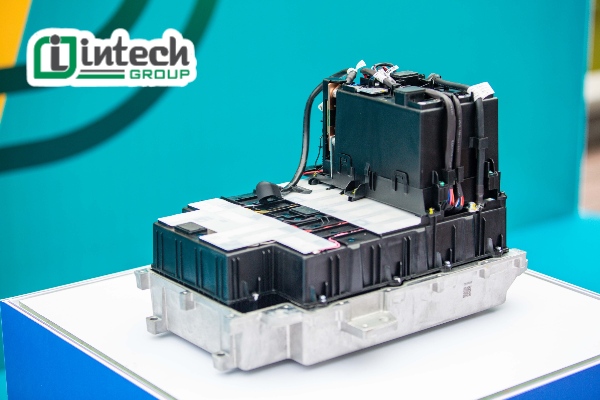
Essential features of electric vehicle battery casing to ensure performance and safety
The battery case of an electric vehicle is not only an external protective layer, but also plays an important role in ensuring the performance and prolonging the life of the battery system. To meet increasingly stringent technical requirements, the battery case needs to possess the following important characteristics:
Stable thermal conductivity
The battery case of an electric vehicle must have good thermal conductivity to maintain a stable temperature for the battery modules, especially under high-intensity operating conditions. The temperature difference between modules in the same battery pack can reduce the overall performance, affecting the battery life and safety of use.
Durable and impact-resistant structure
A good battery case needs to be designed with high mechanical strength, strong resistance and impact resistance to protect the battery modules as well as internal components from external impacts such as collisions, vibrations or harsh weather conditions.
Compatible with thermal management systems
In hybrid vehicles (HEVs), which have higher charge/discharge configurations than pure electric vehicles (EVs), more heat is generated. Therefore, the battery casing of electric vehicles needs to be compatible with a smart thermal management system that is compact, lightweight, easy to install, and cost-effective. This system helps ensure stable battery operation even in changing ambient temperatures.
Support flexible temperature control
In addition to insulation, the battery casing should also support thermal control methods such as:
- Air or liquid cooling
- Specialized insulation materials
- Integrating phase change materials (PCMs) to store and release heat when needed
- Active or passive solutions in cooling and heating systems
These technologies help maintain the battery in an optimal temperature range, ensuring stable performance and increasing the life of the battery system throughout its use.
Common Materials Used to Produce Electric Vehicle Battery Cases
Electric vehicle battery cases are not only a protective layer, but also an important part of the design that helps optimize performance and ensure the safety of the battery system. Depending on the requirements for weight, durability and environmental resistance, manufacturers use many different materials to manufacture electric vehicle battery cases. Below is an overview of the popular materials today:
Steel battery case
This is a traditional material widely used in car lines such as the Nissan Leaf. Steel battery cases are manufactured by stamping and spot welding, providing high strength and hardness, low production cost. However, the disadvantages are heavy weight, easy to corrode if not handled properly.
Aluminum battery case
Aluminum plate + Solid cast aluminum: Used in hybrid cars such as the Cadillac CT6 and Audi Q7 e-tron. Cast aluminum helps increase the tightness, prevent leakage and improve the overall durability of the electric vehicle battery case. However, the size of the die-cast housing is often limited by the capacity of the device.
Aluminum plate + Aluminum profile: This type of structure is popular on Tesla Model S, Weilai ES8, Volkswagen MEB... to reduce weight, increase flexibility and rigidity of the battery frame. This is the optimal choice for modern electric vehicles with high requirements for energy density and operating performance.
Composite material
Plastic + Aluminum: For example, the BYD Qin Pro EV500 uses plastic for the upper plate and aluminum for the lower plate. This design helps reduce the weight of the battery pack to 157kg and increase the energy density to 160Wh/kg, allowing the vehicle to travel a longer distance.
SMC + High-strength aluminum: Used in models such as Geely Emgrand EV450, GAC Trumpchi GE3 530. This combination is both optimal in weight and ensures rigidity and impact resistance.
Carbon fiber composite material (CFRP)
NIO ES6 is one of the pioneering models using carbon fiber battery casing. This material is 40% lighter than conventional steel and aluminum, has superior stiffness and excellent heat insulation. However, the production cost is still high, so it is not widely popular.
Potential new materials
In addition to traditional and composite materials, electric vehicle battery casings are also tested with hot-stamped steel, foam aluminum and other lightweight materials. Although not yet widely used, this will be the future trend to reduce weight and increase the safety of the battery system.
Should you choose aluminum or high-strength steel for electric vehicle battery casing?
When designing an electric vehicle battery casing, choosing between aluminum and high-strength steel is an important decision, directly affecting the weight, durability, production cost and operating performance of the vehicle. Below is a detailed comparison table between these two popular materials:
| Comparison Criteria | Aluminum Alloy | High Strength Steel |
| Weight | Very light (density of only ~2.7g/cm³), significantly reducing the overall vehicle weight | Heavier than aluminum, but can reduce weight through advanced forming technology |
| Overall weight reduction | High efficiency, supporting increased range and energy savings | Medium efficiency, still being improved through hot stamping and laminating technology |
| Corrosion resistance | Very good, especially suitable for humid environments and harsh weather conditions | Less than aluminum, surface treatment is required to increase oxidation resistance |
| Recyclability | High, recycling process is easy and energy-saving | Also recyclable but requires more energy |
| Machinability | Excellent, easy to shape, cast or die-cast | Difficulter than aluminum, especially in complex details |
| Details Cost | Higher than steel, affecting the final product price | Lower, suitable for mass production and mass production |
| Practical applications | Used for high-end models, e.g. Tesla Model S uses aluminum for both the body and battery | Used for mass production models such as Nissan Leaf, Toyota Prius, Volkswagen Golf |
| Application flexibility | Suitable for high-performance electric vehicles, requiring light weight and optimal performance | Suitable for mass production electric vehicles, emphasizing cost and basic durability |
| Mechanical strength | Good but still inferior to steel in some applications requiring high strength | Very high, suitable for areas subject to high force or prone to collision |
Potential for the development of the electric vehicle battery casing industry in the future
In the context of the booming electric vehicle and automation market, the demand for electric vehicle battery casings is increasing. Currently, most battery factories only supply battery cells, while automakers will assemble complete battery packs themselves. Therefore, electric vehicle battery casings are an important link that is ordered separately according to the technical standards of each vehicle line.
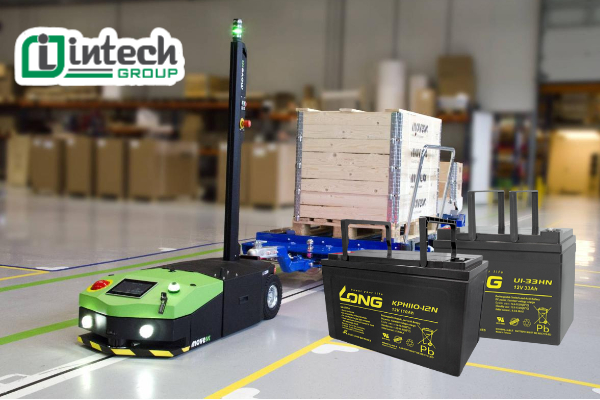
Intech Group is currently one of the pioneers in providing autonomous robots and high-precision battery assembly solutions, meeting strict technical standards in the production of electric vehicle battery casings. This is an important step forward in promoting the automation process and improving product quality for the new generation of the automobile industry.
