


What is an infrared sensor? Operating principle and application of infrared sensors
01-10-2025 818
Infrared sensor is a device that automatically detects infrared rays from objects, helping to detect movement, measure distance or control devices.
Thanks to its flexibility, this sensor is widely used in smart lighting, automatic door systems, anti-theft devices, remote controls... Let's explore infrared sensors in more detail with Intech Group in this article!
What is an infrared sensor?
Infrared sensor has the English name Infrared Sensor and is abbreviated as IR Sensor. This is an electronic device that can detect or emit infrared radiation from the surrounding environment that is invisible to the naked eye. When an object has a temperature above 35°C or emits a heat level above 5 degrees K, this radiation will be generated. Infrared sensors help detect motion, measure temperature and control automatic devices.
.jpg)
Infrared sensor classification
Infrared sensors are designed with high sensitivity, capable of detecting objects emitting temperatures above 5 Kelvin. Sensors are divided into two main types:
1. Active Infrared Sensor (Active Infrared – AIR)
Includes an infrared LED emitting light and a receiver receiving a reflected signal. When an object appears near the sensor, the infrared light will reflect back and be recorded by the receiver. This type is often used in obstacle detection systems such as robots, automatic door sensors or distance measuring devices.
2. Passive Infrared Sensor (Passive Infrared – PIR)
When detecting a change in temperature (motion), the sensor will transmit a signal to the control system. PIR is commonly used in anti-theft devices, motion sensors of smart lights or security systems.
Operating principle of infrared sensors
Infrared sensors operate based on the ability to detect infrared rays, a type of heat radiation that is invisible to the naked eye. Depending on the type of sensor, the operating principle will be different:
1. Active Infrared Sensor
Active infrared sensors consist of two main components: an infrared source (usually an infrared LED) and a signal receiver. When the sensor emits infrared rays, if an object appears in front of the sensor, the rays will reflect back and be recorded by the receiver. This feedback signal allows the sensor to determine if an object is nearby, thereby transmitting the signal to the control system.
2. Passive Infrared Sensor (Passive Infrared Sensor - PIR)
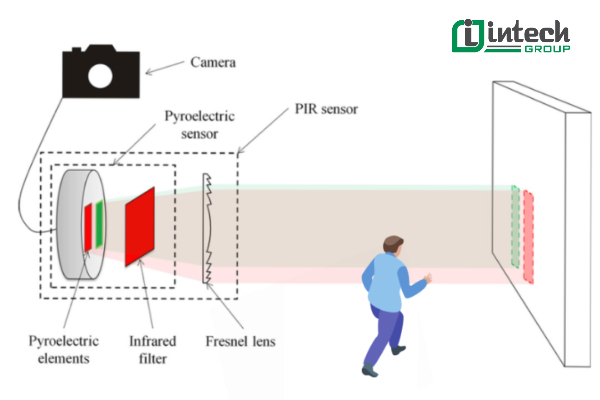
PIR sensors do not emit infrared rays but only receive heat radiation emitted from living objects such as people or animals. The device uses a combination of: Thermoelectric sensor, infrared filter, Fresnel lens to amplify the signal from the heat-emitting areas.
When detecting a change in temperature in the monitoring area, the sensor will send a warning signal or activate the control system.

Applications of infrared sensors in life
Infrared sensors are commonly integrated in smart devices to detect movement or heat radiation from humans. Thereby, the device can automatically operate according to pre-programmed programs, improving efficiency in daily life. Some applications of infrared sensors in life:
1. Automatically turn on and off lights
Infrared sensors detect the presence of humans through infrared rays emitted from the body. When someone passes by, the lighting system will automatically turn on; when there is no one, the lights will turn off. This application is often found in hallways, stairs, and public restrooms to help save electricity and improve automation.
2. Anti-theft system
Infrared sensors detect strange movements or abnormal temperatures from objects entering protected areas such as fences, windows, and balconies. When an intrusion is detected, the sensor will activate an alarm or send a warning signal to help the homeowner handle it promptly.
3. Automatic door opening
In shopping malls, offices or hospitals, infrared sensors are installed above the entrance door. When detecting someone approaching, the device will automatically open or close the door without touching it.
4. Remote control command transmission
Infrared rays are a popular signal transmission technology in remote control devices such as TV remotes, air conditioners, DVD players, etc. Thanks to infrared sensors, signals are transmitted quickly and accurately to the receiving device. Today, many smartphones are integrated with infrared sensors, allowing users to control electronic devices such as TVs, air conditioners, fans, etc. with their own phones.
5. Night vision device support
Based on the principle of converting light photons into electrons and amplifying them with chemical technology, the device can help users see clearly in low-light environments. This application is often used in: Military, police, border security...
6. Applications in astronomy
In the field of astronomy, infrared sensors are integrated into telescopes and solid-state detector systems. The device helps detect objects that emit heat or infrared light that cannot be seen with the naked eye. Therefore, astronomers can observe more clearly the structure and activities of planets, stars and celestial bodies in the universe.
7. Analysis and restoration of art paintings
Infrared sensors are also used in analyzing hidden layers under the surface of ancient paintings. Thanks to the different reflection and absorption capabilities of the material layers, the sensor helps determine the original material and paint layer, analyze the age of the painting, and identify real or fake paintings.
Applications of infrared sensors in industry
Infrared sensors are important devices in the industry thanks to their ability to detect and measure infrared radiation accurately. Here are some prominent applications of infrared sensors in industry:
1. Temperature monitoring and control
Infrared sensors help measure the temperature of equipment and materials during the production process, ensuring that the process operates within the optimal temperature range. This helps prevent overheating, protect equipment and improve performance. For example: Monitoring the temperature of machinery and motors in factories.
2. Applications in automation
Infrared sensors play an important role in industrial automation systems, helping to optimize production processes, minimize human intervention and improve efficiency. For example: Industrial robots use infrared sensors to locate and interact with objects during assembly or processing, helping to automate complex tasks.
3. Industrial Security Control
Infrared sensors are used in industrial security systems to detect movement and protect assets. When there is a person or object present, the infrared sensor will trigger an alarm or security system, helping to protect factories and production areas.

Other applications of infrared sensors
In addition to the above applications, infrared sensors are also used in many other important fields, including:
-
Gas detectors
-
Water analysis
-
Moisture analysis
-
Anesthesia testing
-
Oil and gas exploration
-
Railway safety
Thanks to the ability to detect accurately and effectively in many conditions, infrared sensors are increasingly becoming an indispensable important technology in industry and daily life.
Advantages/Disadvantages of infrared sensors
Advantages of infrared sensors
Infrared sensors are capable of detecting and accurately identifying objects emitting infrared radiation in space, even in low light or dark conditions.
Infrared sensors are capable of determining the distance of objects emitting infrared radiation, making them effective in many applications requiring high accuracy.
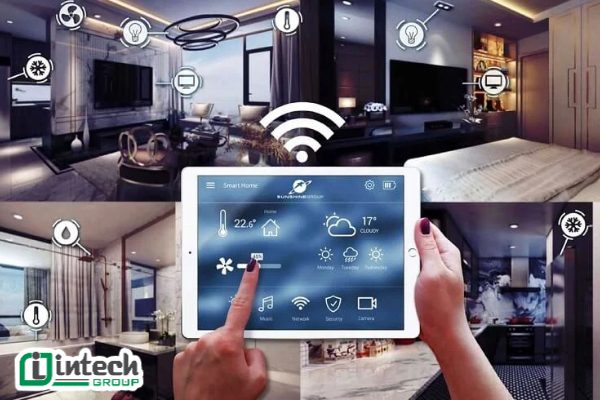
Infrared sensors have a simple structure, are easy to install and have a reasonable price, suitable for use in automation and security systems, especially in smart home systems (smarthome, home automation).
Disadvantages of infrared sensors
Infrared sensors are very sensitive to changes in ambient temperature. In environments with high temperatures or sudden changes, the sensor may operate inefficiently, causing false alarms.
Infrared sensors have limited scanning angles and ranges, which can lead to the appearance of blind corners where the sensor cannot detect objects.
With very high sensitivity, infrared sensors are easily confused when detecting small or weak movements, leading to inaccurate alarms.
Some notes when installing and using infrared sensors
To ensure that the infrared sensor works effectively and properly, you need to note some important points when installing:
- Do not install the infrared sensor in areas with obstacles or hidden corners that prevent the sensor from detecting the correct target.
- Infrared sensors are very sensitive to heat sources such as air conditioners, stoves, vents, or sunlight. These factors can cause false alarms.
- Make sure the infrared sensor is installed at the correct height according to technical instructions to optimize detection and monitoring capabilities.
- After installation, check and test the sensor to ensure it works effectively and accurately.

With outstanding advantages and important notes when using, infrared sensors are a useful tool, indispensable in many industrial applications and daily life. For more information, please contact hotline 0966.966.103 / 0966 966 032 for advice and support.
