


What is an IoT Gateway? How does an IoT Gateway work?
11-10-2025 431
IoT Gateway is an essential component in the Internet of Things (IoT) system, acting as a bridge between IoT devices and network infrastructure. Its main function is to collect, process, and transmit data from IoT devices to the cloud platform or management system. At the same time, IoT Gateway also supports remote device control and monitoring.
Not just a relay device, IoT Gateway also has the ability to process data on the spot (edge computing), minimize latency and improve system efficiency. Thanks to that, it creates an intelligent connection between the physical and digital environment, playing an important role in optimizing IoT applications. Join Intech Group to explore IoT Gateway in detail through the article below!
What is IoT Gateway?
IoT Gateway (IoT Portal) is a physical device or software that helps connect IoT devices such as sensors, controllers with the cloud platform. IoT Gateway acts as an intermediary "bridge", ensuring that the data flow from smart devices to the cloud and vice versa is transmitted efficiently and securely.
With the ability to collect, process data, and support remote control, IoT Gateway not only helps transmit data but also provides smart management features. This creates the foundation for effectively connecting and managing the IoT ecosystem, making an important contribution to optimizing modern technology applications.

What is an IoT Gateway used for?
An IoT Gateway plays an important role in routing and managing data in an IoT system. Some of the main tasks of an IoT Gateway include:
Data routing:
- An IoT Gateway transfers data bidirectionally between IoT devices and the cloud.
- Outbound traffic transfers data from IoT devices to the cloud.
- Inbound traffic performs tasks such as firmware updates and remote device management.
Data preprocessing:
- An IoT Gateway is capable of processing data locally before sending it to the cloud.
- It deduplicates data, summarizes or aggregates information to reduce the volume of data transmitted, which saves network costs and increases response speed.
IoT system security:
- An IoT Gateway enhances the security of an IoT network with features such as fraud detection, data encryption, and device protection against security vulnerabilities.
- For example, the 2020 Ripple20 vulnerability in the TCP/IP library left millions of IoT devices vulnerable to attacks. IoT Gateway helps mitigate this risk through its powerful protection mechanisms.
Thanks to these outstanding functions, IoT Gateway not only connects but also protects and optimizes the performance of IoT devices in many fields such as industry, healthcare, and smart agriculture.
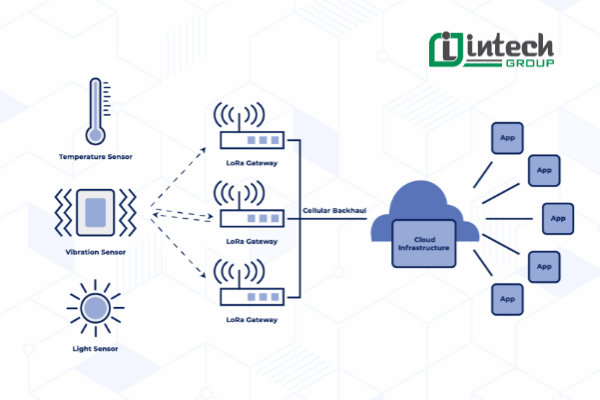
How an IoT Gateway Works
How an IoT Gateway Works
An IoT Gateway acts as an advanced router, connecting IoT devices together and transmitting data to the cloud. However, the functionality of an IoT Gateway is much more complex than a typical Wi-Fi router, as it needs to handle different protocols and manage diverse data.
Connecting IoT Devices
The IoT Gateway uses a variety of protocols such as Z-Wave, Zigbee, Bluetooth Low Energy (BLE), or BACnet to communicate with IoT devices. This allows the Gateway to connect to multiple devices from different manufacturers in the same system.
Data Routing
The gateway routes data collected from devices to the appropriate destination. For example:
- Data from industrial sensors is sent to a database on AWS Cloud.
- Data from security sensors can be transferred to a security management SaaS system.
Temporary storage and overload management
In case of internet connection loss or system overload, IoT Gateway has the ability to temporarily store data to ensure information is not lost.
Scalability
IoT Gateway is designed to meet the expansion requirements as the scale of IoT devices increases, ensuring the system operates stably and efficiently.
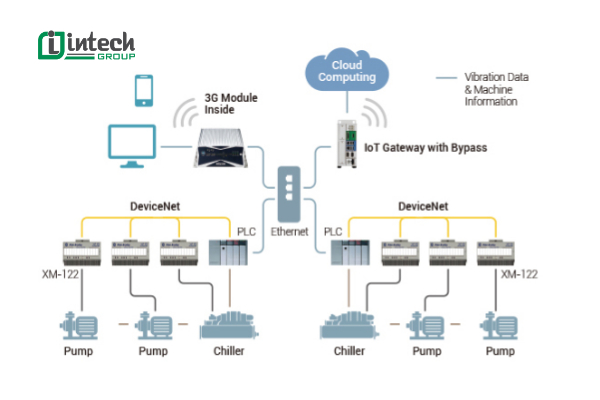
Outstanding advantages of IoT Gateway
IoT Gateway brings many outstanding benefits to optimize connection and management of IoT systems.
1. Centralized connection and easy management
IoT Gateway acts as a central connection point, allowing data transmission between IoT devices and the cloud. Instead of controlling each device independently, Gateway facilitates the control and programming of devices to operate in a unified manner, saving time and effort.
2. Translating communication language between IoT devices
Currently, there is no common standard for communication language between IoT devices. IoT Gateway acts as a "translator," helping devices from many different manufacturers interact and work together seamlessly.
3. Intelligent data filtering and processing
IoT Gateway filters and processes data on the spot (Edge Computing), transmitting only important information to the cloud. This helps reduce the network load, improve communication speed, and increase the efficiency of IoT systems.
4. High security and reduced security risks
As a "layer of protection," IoT Gateways provide security features such as data encryption, fraud detection, and device protection from cyber attacks. This is especially important in the context of IoT devices being vulnerable to security vulnerabilities.
5. Support for edge computing
IoT Gateways are capable of processing data at the point of collection, reducing latency and optimizing response time. This is especially useful in real-time applications such as security monitoring or industrial control.
With these advantages, IoT Gateways are an indispensable solution in building modern, efficient, and secure IoT systems.

Important functions of IoT Gateway
A modern IoT Gateway is not just a connecting device but also possesses many outstanding functions, including:
1. Facilitating communication between IoT devices
IoT Gateway allows old or non-internet capable devices to communicate within the system. This ensures synchronization and efficient management of the entire IoT device network.
2. Data caching
Gateway has the ability to temporarily store data, helping to reduce the load on the network when bandwidth is limited. It also supports live streaming or storing necessary content for quick access.
3. Data preprocessing
Before sending data to the cloud, IoT Gateway can clean, filter, and optimize data to reduce transmission load, improve processing speed, and reduce storage costs.
4. Data aggregation from multiple sources
IoT Gateways are capable of aggregating data from multiple devices in the IoT network. This feature helps businesses gain a comprehensive view and make decisions based on diverse information.
5. Device-to-Device or Machine-to-Machine (D2D/M2M) communication
IoT Gateways support direct communication between IoT devices or machines in the network without going through the cloud. This opens up many innovative applications and improves operational efficiency.

6. Basic Data Visualization and Analysis
IoT Gateway provides data visualization capabilities, helping users monitor, analyze, and better understand the information collected from IoT devices.
7. Short-term data history
Gateway can store short-term data history, helping to monitor and analyze changes over time. This feature supports detecting trends or predicting potential problems.
8. Security and access management
IoT Gateway acts as a security layer, helping to protect IoT systems from external attacks. It also manages user access rights, ensuring data security.
9. IoT device configuration management
Gateway allows configuring and managing IoT devices in the network, helping to optimize performance and minimize operational complexity.
10. System Diagnostics and Monitoring
IoT Gateway monitors the performance of the IoT system, provides alerts and reports on failures or device status. This helps to detect and fix problems quickly, improving management efficiency.
IoT Gateway and Edge Computing Solution
IoT Gateway and Edge Computing solution are two combined solutions used for large amounts of data from IoT devices. In IoT systems, some devices can generate very large volumes of data, leading to difficulties in transmitting and storing all this data to the cloud. This problem not only causes bandwidth congestion but also increases storage costs.
Edge Computing solution is applied to solve the problem by processing data on-site (at the edge). This helps reduce the amount of data that needs to be sent to the cloud, saving bandwidth and operating costs.
For example, if a business uses multiple IP security cameras, it is not feasible to transmit all real-time data to the cloud for processing, especially when many cameras monitor areas with no noticeable activity. Instead of sending all data, the edge device will filter and send only important or necessary footage to the cloud via the IoT Gateway.
The IoT Gateway not only supports local data processing but also helps manage security and optimize bandwidth for the IoT system. This ensures the system operates more efficiently, especially in applications requiring real-time.
The IoT Gateway has become an indispensable element in building and managing modern IoT systems. With the ability to process data on-site, enhance security, and support diverse communication, the IoT Gateway brings outstanding benefits to businesses and users.
The application of IoT Gateway not only helps to optimize IoT system performance but also plays an important role in building smart, flexible and secure solutions for the future.
