


What is AR technology? The difference between AR and VR that you need to know
18-10-2025 261
In the digital age, virtual reality (VR) and augmented reality (AR) are becoming more and more popular. However, not everyone clearly understands the difference between AR and VR.
VR/AR allows users to enter a virtual world completely separate from reality, while AR combines virtual objects into the real environment. Understanding this difference helps consumers and businesses choose the right technology.
What is AR technology?
AR (Augmented Reality), also known as Augmented Reality, is a technology that allows users to experience the physical environment through a direct or indirect perspective, in which real-life elements are "augmented" by computer-generated information. AR uses many different sensory modalities, including vision, hearing, touch, and smell.
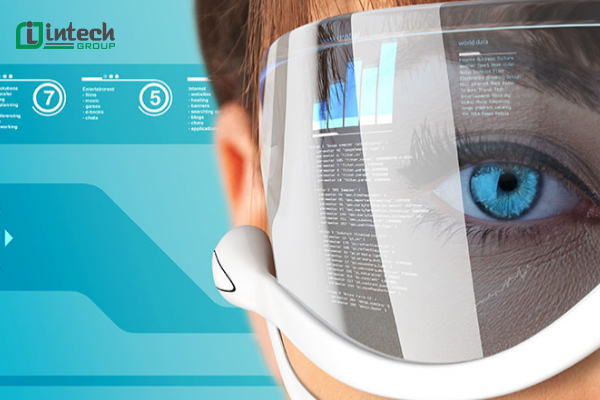
The simple way to understand AR technology is that it will overlay real scenes with virtual objects created by computers, thereby enriching the user experience. While VR (Virtual Reality) brings a completely separate virtual world, AR combines the real world and the virtual world.
A typical example of AR technology is the game Pokemon GO. When playing the game on a mobile device, users can see virtual Pokemon creatures appearing on roads, rocks or walls in the real world. With high-end devices such as Microsoft's Hololens AR glasses, users can not only observe but also interact with those virtual objects.
How AR technology works
AR (Augmented Reality) technology works based on adding digital information to the real world through devices such as phones, tablets or AR glasses. This information can be images, sounds, text or even 3D objects displayed and integrated into the real environment with the following operating principles:
- Collecting data from the real environment: AR devices collect data from the surrounding environment through sensors such as cameras, GPS, accelerometers and gyroscopes. These sensors help determine the location, viewing angle, distance and speed of the device.
- Processing data and spatial recognition: Data from the real environment is processed using image and spatial recognition algorithms
- Creating AR content: After recognizing and locating the space, digital content such as images, text or 3D models will be created.
- Displaying content on the device screen: Finally, the digital content is displayed directly on the device screen so that they match the surrounding real environment in the correct proportion, position and angle.
What is VR technology?
VR (Virtual Reality), also known as Virtual Reality, is a technology that brings users into a completely virtual world created by computers. This technology converts the surrounding environment with real objects into a virtual space where you are not only an observer but also can interact in a variety of ways. In addition to creating a virtual visual experience, VR also stimulates other senses such as hearing, smell and touch.
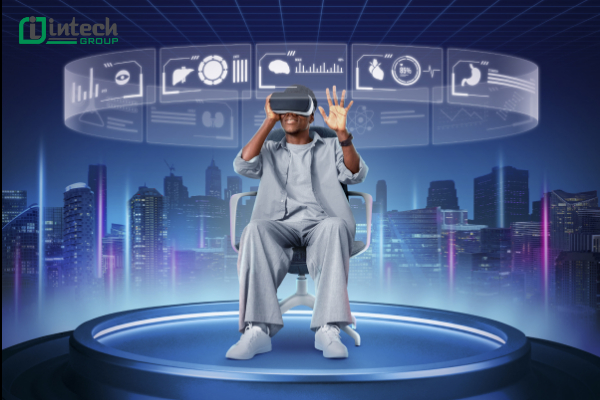
In fact, virtual reality technology has been around since the 1990s. At that time, many large VR products were developed, but most of them failed for many reasons: computer processing capabilities were not strong enough, the user community was small, the cost was high and the experience was not really good. Only in recent years, when microprocessor technology developed rapidly with small chips but with processing performance equivalent to computers, VR had enough foundation to develop.
How VR technology works
VR technology (Virtual Reality) works based on creating a completely digital environment, simulating three-dimensional space for users through devices such as VR glasses, headsets and controllers. Basic operating principle of VR:
- Creating a virtual environment: The environment is built with graphics and simulation software, which can be a completely simulated space or a simulation of a real location. It can be images, sounds and 3D interactive elements in real time to bring the most vivid and realistic experience.
- Display via VR headset: There are dual screens or a large screen, placed close to the user's eyes to create a wider, more comprehensive view. This screen will display 3D images of the virtual environment for each eye, creating a sense of depth.
- Motion tracking: Use built-in sensors (such as accelerometers, gyroscopes) or external sensors (such as cameras or base stations) to track the movement of the user's head, hands and body.
- Interaction with virtual space: Hand-held controllers and hand position sensors allow users to directly interact with virtual objects such as holding, grasping, throwing, or moving them.
- Create a sense of realism: Expressed through vibration feedback or force feedback, helping users feel physical interactions in the virtual environment, such as the weight of an object or the resistance when touching something.
Currently, VR technology has become popular in the entertainment industry, especially in VR games with VR-gear devices from Samsung and Valve.
Difference between AR and VR
Many people often confuse augmented reality (AR) and virtual reality (VR) because both belong to the virtual reality technology group. However, AR is a technology that combines the real world and virtual information, while VR creates a completely virtual environment. Both technologies exist in parallel and can support each other. To distinguish more clearly between them, you can refer to the comparison table below provided by Intech Group.
| Criteria | Augmented Reality (AR) | Virtual reality (VR) |
| Define | It is a technology that brings virtual information into real space, creating an experience that combines reality and virtuality. | It is a technology that completely simulates a virtual world, where the user becomes part of the experience through interactions in a 3D environment. |
| Purpose | AR can be experienced through devices such as smartphones, laptops and tablets, allowing users to interact with digital images in real space. | VR immerses users in a completely virtual world with digitally rendered images, allowing interaction with objects in this environment. In VR, 75% is virtual and 25% is reality. |
| Application | AR is widely applied in many fields such as shopping, travel, art, and design. | VR is mainly used in fields such as education, entertainment, design and training. |
Practical applications of AR and VR technology in life
VR technology
Virtual reality (VR) technology is becoming a powerful tool in the entertainment industry. Thanks to the ability to separate real and virtual spaces, VR brings users completely new experiences. This helps manufacturers easily conquer customers by creating vivid scenes, allowing them to experience what has been programmed and designed.
In addition to the entertainment industry, VR is also applied in real estate and construction projects. Investors and customers can experience the project in a realistic way, from design to completion, helping them visualize the final product more clearly.
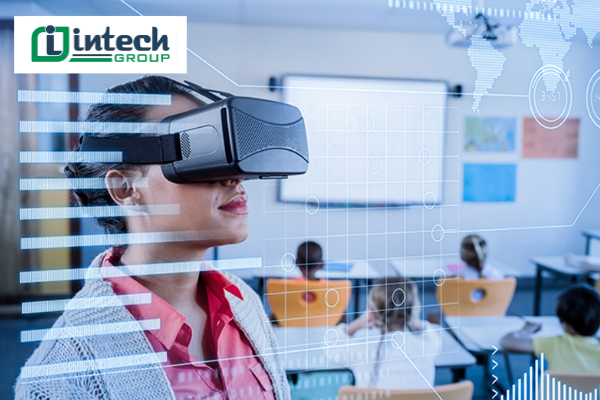
AR technology
In contrast to VR, augmented reality (AR) technology offers a blend of real and virtual experiences without the high cost. AR focuses on enhancing the real experience by adding virtual information. For example, a HoloLens device can allow users to see a real car and try on different paint colors on it. A smart mirror can let you try on many outfits without having to actually change.
In addition, AR can also provide useful information when you scan a house with a camera, such as the year it was built, the history of development, and information about the owner. AR games like Pokémon Go or shooting games with the context of your living space are also becoming a trend.
Current and future challenges of AR, VR
Although AR (Augmented Reality) and VR (Virtual Reality) technologies are gradually being widely applied in many fields, they still face major challenges that need to be overcome to develop more strongly in the future.
Hardware challenges
Currently, VR and AR devices, especially virtual reality and augmented reality glasses, have been developed by many technology companies. However, the market still has no products that truly meet the optimal needs of manufacturing enterprises.
One of the major limitations of these devices is their bulky design, making it difficult for users to use for long periods of time. Many current AR/VR glasses models still require connection to computers or peripheral devices, reducing flexibility and convenience. For this technology to develop more strongly in the future, manufacturers need to improve design, enhance mobility and reduce cumbersome connections.
Content Challenges
Content is an important factor that determines the level of application of AR and VR, but this is also a big barrier for businesses. Integrating this technology into areas such as e-commerce, product design or training requires a large amount of high-quality 3D content.
However, the cost of building realistic, detailed 3D models is very expensive, and at the same time requires businesses to invest in highly specialized human resources. This makes many businesses hesitant to apply AR/VR, slowing down the development of this technology in the market.
AR and VR technologies are not competitors but complementary technologies. Each technology has its own applications that the other cannot replace. Currently, AR has the prospect of developing faster in terms of commerce and popularity, while VR still needs more time to reduce costs and improve user accessibility.
Hopefully, through the information from Intech Group about AR technology and the benefits it brings, you will have a new perspective on this technology. Don't forget to follow us to wait for articles exploring new technology in the next issues!
See more: What are the core components of an AI system?
