


What is JIS? The role of JIS standards in industrial systems
06-10-2025 1.798
JIS standards are one of the prestigious industrial standards systems, widely applied around the world. This is a set of standards established to ensure quality, safety and efficiency in industrial activities.
What is JIS standard?
JIS standard stands for Japan Industrial Standard. This is a system of specific standards and guidelines, designed to be applied in industrial activities in Japan, to ensure quality, safety and efficiency in production and business.
The JIS standardization process is established by the Japanese Industrial Standards Committee (JISC) and officially issued through the Japanese Standards Association (JSA). These standards include technical regulations and practice guidelines to support the sustainable development of the industry.

Origin of JIS standard
JIS standard originated from the Meiji period. During this period, private enterprises in Japan often built their own standards for their products. Although the government at that time issued a number of standards and technical guidelines, these documents mainly served the government's commercial activities, especially in the defense sector, such as the production of weapons and ammunition.
The JIS standards were created to unify and standardize technical regulations, meet the needs of economic development and promote international trade.
How are JIS standards denoted in different industries?
JIS standards represent many industrial products, classified and marked with specific symbols for easy reference and management. The use of these symbols helps users quickly identify products, grasp technical parameters and related fields without having to search for complicated information.
JIS standard notation
Products according to JIS standards are notated according to the structure: JIS [Alphabet letters] xxxx : xxxx
Detailed explanation:
- JIS: Abbreviation of Japan Industrial Standard - Japanese Industrial Standard, this is a general notation to distinguish it from other standard systems.
- Alphabet letters: Represent each specific industrial field, each letter represents a product line. For example:
A: Construction and architectural engineering.
G: Iron and metallurgical materials.
- Number series xxxx : xxxx:
First four numbers: Represent the manufacturing field or small products in the product line.
Last four numbers: Indicate the year of issuance or revision of the standard.
This notation system not only helps to quickly look up products but also supports in managing, exporting and complying with international standards, ensuring product quality in accordance with global standards.
Details of the product lines and symbols of JIS standards will be shown in a specific classification table.
| JIS Standard Symbols | Field/ Industry | Specific Item |
| A | Civil Engineering and Architecture |
|
| B | Mechanical Engineering | - JIS B 7021: 2013 – Water-resistant watches for general use – Classification and water resistance |
| C | Electrical and electronic engineering | - JIS C 0920: 2003 – Degrees of protection provided by barriers (IP Code) |
| D | Automotive engineering |
|
| E | Railway engineering |
|
| F | Shipbuilding |
|
| G | Iron and metallurgical materials | - JIS G3101 Laser cutting steel |
| H | Non-ferrous and Metallurgical Materials | - JIS H 2105 – Pig Lead |
| K | Chemical engineering |
|
| L | Textile engineering |
|
| M | Mining |
|
| P | Pulp and paper | - JIS P 0138-61 (JIS P 0138: 1998): Finished paper processing |
| Q | Management systems | - JIS Q 9001 – Quality management systems – requirements |
| R | Ceramics |
|
| S | Domestic products |
|
| T | Medical devices and safety devices all |
|
| W | Aircraft and aviation |
|
| X | Xử lý thông tin | Information processing |
| Z | Other fields | - JIS Z 2371: 2015 – Salt spray test method |
The role of JIS standards in industrial systems
Japan Industrial Standard (JIS) plays an important role in ensuring the quality, efficiency and safety of products in industrial systems. Here are some of the prominent roles that JIS standards bring:
1. Ensuring common standards on quality and technical specifications
JIS standards create a common system of conventions on quality, technical specifications and scope of application for industrial products. This helps manufacturers and users easily grasp the necessary technical parameters when choosing or using products.
2. Symbol of quality
JIS standard products are often guaranteed in terms of the quality of materials used, chemical composition, resistance in harsh working environments and high safety. These products bring peace of mind to users, ensuring durability and efficiency throughout the operation process.
3. Building reputation for the production system
Factories or production lines that meet JIS standards receive high recognition for quality. This helps businesses build reputation and increase competitiveness in domestic and international markets.

4. Easy selection, convenient installation
With the application of JIS standards, users can easily choose products with technical specifications and other criteria that meet the requirements of the system. This is not only convenient in selection but also helps the installation process take place quickly and accurately.
5. Minimizing technical errors and costs
Complying with JIS standards helps to minimize problems arising from product errors or technical errors during use. This not only helps save repair and maintenance costs but also ensures that the system operates more stably and efficiently.
6. Enhance product compatibility and longevity
JIS-compliant products are highly compatible with other industrial systems, providing superior performance and minimizing breakdowns. In addition, the lifespan of these products is also extended, helping to save maintenance and replacement costs.
7. Promote exports and access to international markets
JIS standards establish common standards for many production systems globally, thereby helping to promote export development and expand access to international markets.
8. Increase market competitiveness
JIS-compliant products and systems bring trust from consumers and partners, helping businesses increase their competitive advantage, affirm their position and attract domestic and foreign customers.
Products applying JIS standards in pipeline systems
Pipeline systems are an indispensable part in many industrial and civil fields, taking on the role of transporting fluids and products for production and daily life. To ensure quality and operational efficiency, products related to pipeline systems must comply with Japanese Industrial Standards (JIS) - one of the widely used and reliable standards.
1. Industrial valves
In fluid transport pipeline systems, industrial valves are indispensable equipment, playing an important role in controlling flow, regulating flow and ensuring system safety. These valves help to quickly open and close pipelines, stop or allow flow, adjust pressure, filter impurities, and discharge excess compressed air, thereby maintaining the system's operating efficiency.
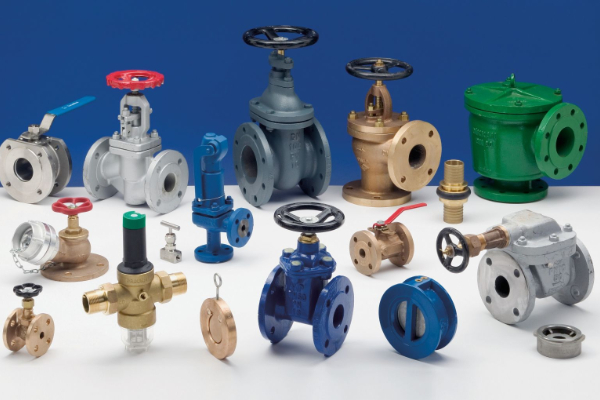
Applications and roles of industrial valves
- Flow control: Valves help control and regulate fluids in the pipeline system, from opening/closing to adjusting the amount of fluid through the pipeline.
- System protection: Industrial valves can stop or allow flow, protecting other equipment in the system from dangerous situations such as overpressure or excess compressed air.
- Filtering impurities: Industrial valves also have the function of filtering impurities, helping to maintain the performance of the system throughout the period of use.
JIS standards applied to industrial valves
Many industrial valve products today are manufactured according to JIS standards (Japan Industrial Standard). Each valve device is processed based on a specific pressure standard, making it easy for users to choose the right product for their system. For example:
- JIS 10K gate valve: Gate valve devices are used in systems with a maximum pressure of 10kg/cm².
- JIS 20K globe valve: Globe valve equipment is used in systems with a maximum pressure of 20kg/cm².
The larger the value after the JIS symbol, the higher the load-bearing capacity of the equipment, helping users choose industrial valves with durability and performance suitable for their needs.
Industrial valve parameters and selection
Each industrial valve equipment will have specific technical parameters regarding:
Connection: The valve connection standard helps ensure compatibility with the existing piping system.
Rated size: These parameters allow the selection of valves with the appropriate size for the system, ensuring convenient installation and long-term operation.
Reading and understanding these parameters is very important to choose the right product. Only when the industrial valve parameters are compatible with the system requirements, will the installation and use process become efficient and durable.
Popular types of industrial valves
Industrial valves are currently manufactured with many different designs, suitable for many environments and types of fluids such as compressed air, hot steam, water, chemicals, gasoline, etc. Some popular types of valves include:
- Gate valve
- Globe valve
- Ball valve
- Butterfly valve
- Strainer valve
- Check valve
- Safety valve
- Pressure reducing valve
- Pump basket
- Float valve
Each type of valve has its own application and features, helping to meet diverse needs in industrial and civil systems.
2. Pipes
In pipeline systems, pipes play an essential and indispensable role. They are the main components for transporting fluids and products in industrial and civil applications. Current types of pipes are manufactured from many different materials such as steel, stainless steel, cast iron, plastic, with many designs and diverse origins. Whether manufactured by famous brands such as Hoa Phat (Vietnam), SeAH (Korea) or Cangzhou (China), all pipe products must comply with strict industrial standards, ensuring quality and compatibility with the piping system.
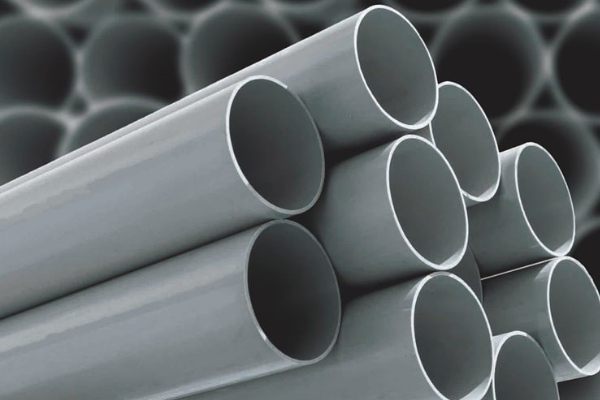
Industrial Pipe Standards
Pipes are manufactured according to industrial standards, making it easy for users to choose the right product for their system. One of the most reliable and popular standards is the JIS industrial standard. This standard specifies a series of important factors such as:
-
Weight
-
Chemical composition
-
Inner and outer diameter
-
Length
-
Thickness
-
Pressure level
When the pipe product fully complies with the regulations in the JIS standard, users can easily look up technical specifications and choose products with high precision, helping to ensure easy and effective installation
Benefits of using industrial standard pipes
Industrial standards, especially JIS standards, are important factors in evaluating product quality, while supporting businesses in the production and export process.
This standard not only helps determine the quality of pipes but also helps ensure that all products can be easily integrated into the same system. This is an important factor in optimizing the performance of piping systems in all industries.
Application and selection of suitable pipes
Pipelines are used in many different applications, from piping systems in industry, construction, to water supply and drainage systems. Choosing the right type of pipe, meeting industrial standards, will ensure high performance, safety and long-term durability for the system.
Using standard pipes not only makes installation easy but also protects the system from unexpected incidents, thereby saving costs and ensuring the production process is efficient and stable.
3. Pipe fittings
In piping systems, pipe fittings play an extremely important role. They are used to connect pipe sections together, forming a complete, seamless system. These fittings help transport fluids to distant locations, adjust the direction of the system or branch accurately, and can effectively regulate flow.
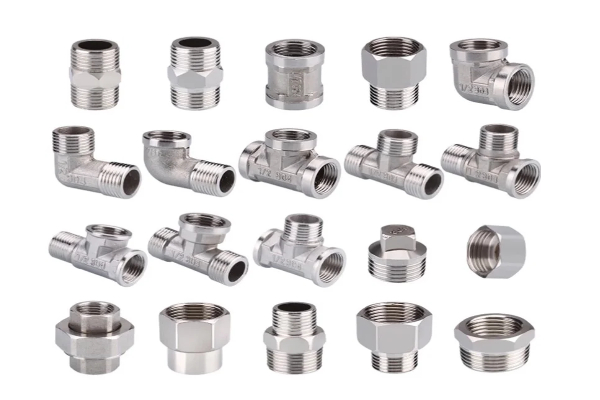
Popular types of pipe fittings
Currently, there are many types of pipe fittings commonly used on the market, including:
-
Equal elbow: Helps change the direction of the pipe.
-
Low elbow: Used to connect pipe sections of different sizes.
-
Side elbow: Used to change direction at an inclined angle.
-
Equal tee: Used to branch the pipe system.
-
Reducing tee: Used when the pipe size needs to be reduced.
-
Ball: Helps change the size of the pipe.
-
Descender: Connects three pipe branches.
-
Sleeve: Used to connect pipes without using complicated accessories.
-
Socket: Used to connect pipes together through flanges.
These fittings are connected by many different methods such as threaded, flanged or sealed, depending on the technical requirements and properties of the system.
JIS Industrial Standards for Pipe Fittings
To ensure high quality and reliability during installation, pipe fittings are often manufactured according to JIS industrial standards. This standard specifies in detail:
-
Material composition: Ensures durability and resistance to environmental factors.
-
Diameter: Provides accurate dimensions to fit the piping system.
-
Thickness: Ensures pressure resistance and prolongs the life of the fitting.
-
Connection method: Ensures tightness and safety during installation.
Using JIS standard pipe fittings will help the piping system operate effectively, minimize problems with leakage or damage, and ensure safety for both the operation and the user.
In general, JIS standards play an important role in improving product quality, improving production efficiency and enhancing business competitiveness. JIS-compliant products and systems not only ensure safety and efficiency, but also help businesses expand their opportunities for sustainable development in the global industrial environment.
