


What is MCB? Compare the difference between MCB and MCCB
01-10-2025 95
MCB (Miniature Circuit Breaker) is an important electrical device, commonly used in civil and industrial use to replace traditional fuses. This device has the ability to automatically disconnect the circuit when an overload or short circuit occurs, helping to protect the safety of the electrical panel and other electrical equipment.
So how does MCB work? What types are there? Let's explore the details with Intech Group in the following article.
What is MCB?
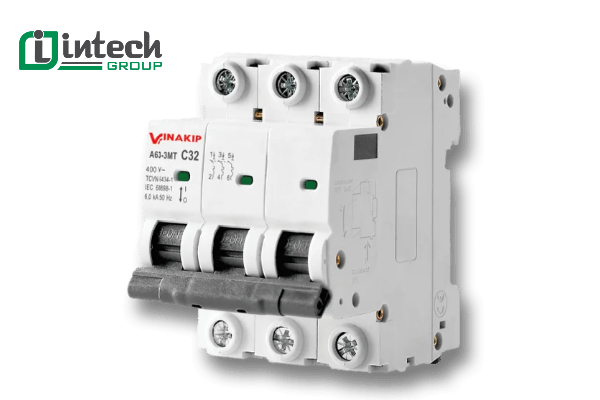
MCB (Miniature Circuit Breaker) is a miniature circuit breaker, also known as a miniature circuit breaker or miniature circuit breaker. This device is designed to protect the circuit from overload or short circuit, helping to ensure the safety of electrical systems in homes, civil works and in industry.
Structure of MCB
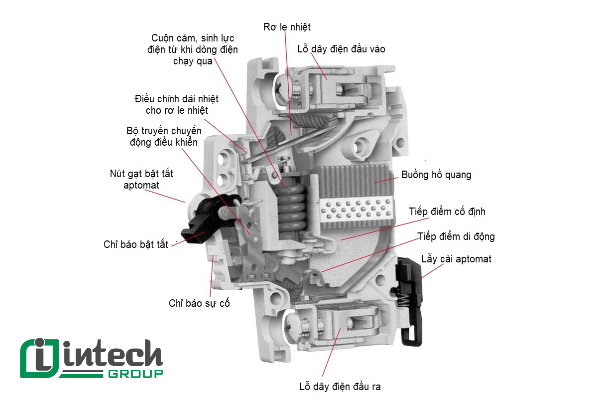
MCB includes the main parts:
-
Contacts: Where the current is turned on/off when there is a problem.
-
Arc extinguishing box: The task of extinguishing the electric arc generated when the contacts open.
-
Circuit cutting drive mechanism: Supports the closing/breaking of the circuit when there is an impact of electric current or mechanical force.
-
Electromagnetic coil (breaker coil): Reacts to short circuit current to activate the circuit breaker.
-
Protective hook: Helps ensure stable operation of the device, automatically shuts off when a problem is detected.
The shell of the MCB is usually made of insulating plastic, heat-resistant and highly impact-resistant, helping to protect the safety of users as well as the device.
What are the features of MCB circuit breakers?
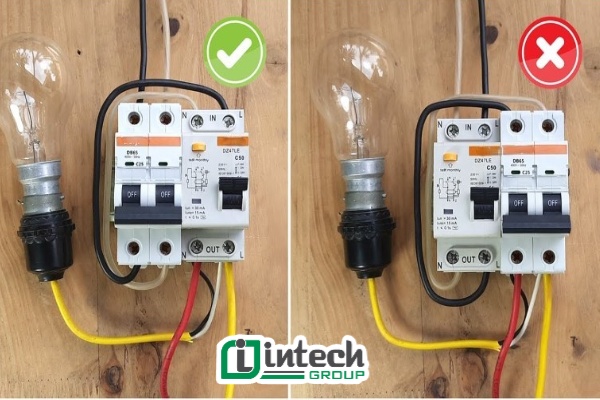
When the current exceeds the allowable threshold due to overload or short circuit, MCB will immediately automatically cut off the circuit, preventing fire and damage to the equipment. MCB helps to reasonably distribute the current load between devices, thereby reducing local overload, saving energy and prolonging the life of the electrical system.
Some high-end MCB circuit breakers have the ability to display or indicate error status, helping users easily control, diagnose and handle electrical problems quickly. In addition, MCB integrates lightning protection, helping to protect electrical equipment from surge currents caused by indirect lightning strikes.
With good insulation material, high heat resistance and the ability to operate manually when necessary, MCB brings flexibility and safety to users.
Operating principle of MCB circuit breakers
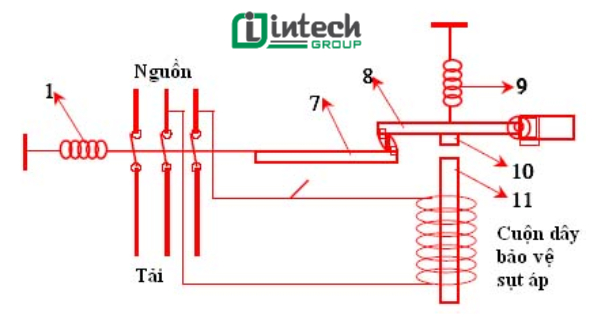
MCB operates based on two mechanisms: heat and electromagnetic. When the current exceeds the limit for a long time, the bimetallic strip in the MCB will heat up and bend, pushing the mechanical latch to separate the contact, thereby breaking the circuit. When a short circuit occurs, the sudden increase in current will create a strong suction force on the solenoid coil, activating the latch release mechanism and opening the contact immediately. After the MCB is cut off, the user can manually turn the device back on to restore operation only when the problem has been safely resolved.
MCB Aptomat Classification
MCB (Miniature Circuit Breaker) is not only diverse in capacity and brand, but also classified by the number of poles (phases) and protection characteristic curve. Understanding each type will help users choose the right device suitable for their needs and operating environment.
1. Classification of MCBs by number of poles (Number of phases)
| Type of MCB | Protection configuration | Practical application |
| MCB 1P | 1 phase wire (L) | Used in 1-phase power grid to protect hot wire, popular in lighting, sockets |
| MCB 2P | 1 phase wire (L) + 1 neutral wire (N) | Protects the entire 1-phase circuit, installed in civil and office electrical cabinets |
| MCB 3P | 3 phase wires (L1, L2, L3) | Used in 3-phase power systems, protects large loads in industry |
| MCB 4P | 3 phase wires (L1, L2, L3) + 1 neutral wire (N) | Comprehensive protection of 3-phase systems with neutral, commonly used in factories and workshops |
2. Classification of MCBs by characteristic curve (Current characteristics)
| Loại MCB | Action threshold (So with rated current) | Features & Applications |
| Type B | 3–5 times | Suitable for resistive loads or low-pulse loads (home, office, basic equipment) |
| Type C | 5–10 times | For loads with inductive characteristics such as small motors, fluorescent lamps, civil air conditioners |
| Loại D | 10–25 times | Used for large capacity loads such as industrial motors, welding machines, transformers |
| Type MA | About 12 times | Protect motors with high starting current, specialized in industrial environments |
| Type K | 8–12 times | Suitable for inductive loads and motors with high starting current such as pumps, industrial fans |
| TypeZ | 2–3 times | Very sensitive to short circuits, often used to protect sophisticated electronic and semiconductor devices |
Distinguishing MCB and MCCB
In the electrical system, MCB (Miniature Circuit Breaker) and MCCB (Molded Case Circuit Breaker) are both important protection devices, but are designed for different purposes and usage environments.
| Criteria | MCB (Miniature Circuit Breaker) | MCCB (Molded Case Circuit Breaker) |
| Rated current | Maximum 100A | Can be up to 1000A or more |
| Breaking current adjustment | Not adjustable | Breaking current can be flexibly adjusted |
| Breaking capacity | Maximum about 6–10kA | Can be up to 100kA, suitable for industrial environments |
| Size | Compact, suitable for civil use | Larger, suitable for industrial electrical cabinets |
| Usage environment | Family, office, small-scale production | Factory, large production workshop, 3-phase electrical system |
| Cost | Lower | Higher, due to stronger capacity and features |
| Error/signal system | No or very limited | Can integrate warning system modern surveillance |
Notes when choosing MCB for the electrical system
Choosing the right MCB (automatic circuit breaker) not only helps protect the electrical system effectively but also ensures safety for users and electrical equipment. Below are important factors you need to consider when choosing this device:
1. Rated current (In)
This is the maximum current value that the MCB can withstand under normal operating conditions. The MCB must have a rated current higher than or equal to the largest load current in the system but not exceeding the load capacity of the conductor. Normally, the MCB rated current should be selected at about 125% of the actual load current to ensure that the device is not prematurely affected by a slight overload.
2. Breaking Capacity
The breaking capacity (Icu) is the maximum short-circuit current that the MCB can safely interrupt without damage. In a civil electrical system, an MCB with a breaking capacity of 6kA is suitable. In industrial environments where fault currents are more likely to occur, you should choose an MCB with a tripping capacity of 10kA or more.
3. Trip curve
Each type of MCB will have a different trip curve to suit each type of load:
- Type B: suitable for resistive loads such as lamps and sockets.
- Type C: used for small motors and office equipment
- Type D: for loads with high starting currents such as large motors and transformers.
Choosing the right curve will help the MCB react accurately, avoiding unnecessary tripping.

Above is the information about MCB in the electrical system provided by Intech Group. To have MCB suitable for your needs, financial capacity as well as peace of mind about quality, please contact us for advice and support.Tham khảo:
