


Automation in Logistics: Opportunities and Challenges
02-08-2025 405
Automation in logistics is becoming an inevitable trend in the context of constantly fluctuating global supply chains and placing more stringent requirements on speed, accuracy and adaptability.
So what are the benefits of automation in logistics? What are the common barriers that are hindering businesses on this journey? Intech Group will help you learn from opportunities, challenges to practical solutions to effectively apply automation in the modern logistics sector.
What is logistics automation?
Automation in logistics is the process of applying technology, software and automated equipment to optimize supply chain operations such as storage, packaging, sorting, transportation and warehouse management.
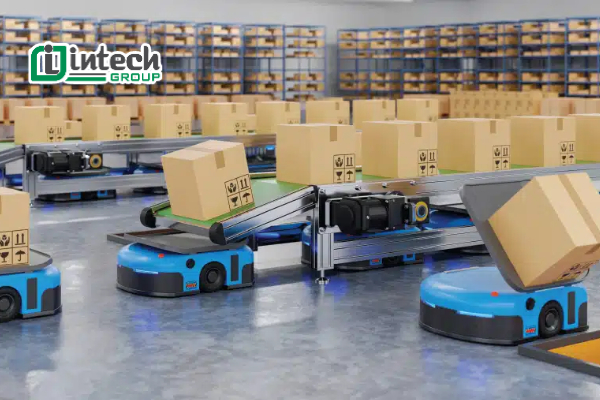
In practice, logistics automation is often deployed in distribution centers, warehouses or factories, where technologies such as WMS warehouse management systems, AGV autonomous robots, smart conveyors, automatic goods sorting systems and ERP enterprise resource planning software can be integrated. All are connected and coordinated by modern digital platforms, helping businesses to have comprehensive control and respond quickly to any market fluctuations.

Why is automation needed in logistics?
In the context of a rapidly growing digital economy, automation in logistics helps businesses improve operational capacity, meet customer expectations and adapt to a volatile market. Reasons why automation has become an important solution in the logistics industry today:
E-commerce boom
According to statistics, global e-commerce retail sales reached 4.28 trillion USD in 2020 and are expected to increase to 5.4 trillion USD in 2022. With the characteristics of small orders but large quantities, high transaction frequency, diverse items and wide delivery range, businesses are forced to optimize order processing, transportation and storage processes using technology.
Technological Advancement
Industrial Revolution 4.0 approaches advanced technologies such as artificial intelligence (AI), Internet of Things (IoT), autonomous robots (AGV), smart sorting systems and warehouse management software (WMS/ERP). In the logistics industry, there are a series of closely linked processes that are automated, which is the key for businesses to avoid overload, reduce dependence on manual processes, and improve the efficiency of the entire system.
Customers are increasingly expecting higher
Nowadays, users not only need good products but also require fast, accurate and transparent delivery services. Consumers want to track orders in real time, receive goods on time and have a good after-sales experience. To meet this demand, logistics businesses need to continuously optimize operations.
Solving the problem of labor shortage
With the shortage of labor, especially in manual operations such as loading, sorting, and picking. High-pressure environments and labor market fluctuations make it difficult to recruit and retain employees. Automation plays a role in helping businesses reduce their dependence on human resources, ensure continuous operations, and improve work efficiency and accuracy.
Benefits of automation in logistics
In the context of an increasingly competitive market, rising operating costs and constantly changing customer needs, automation in logistics is opening up great opportunities for businesses to transform strongly and develop sustainably.
Reducing operating costs
Solutions such as warehouse loading and unloading robots, autonomous vehicles (AGV), unmanned vehicles or technology delivery platforms (Grab, Uber Logistics...) have helped businesses save on labor costs, transportation costs and optimize resources throughout the chain, increasing efficiency many times over the traditional operating model.
Increasing competitiveness and service quality
Automation helps improve communication systems, manage information throughout, thereby shortening response time and order processing. For logistics businesses, especially third-party logistics service companies (3PL), technological potential is the key factor to affirm their position in the market.
Optimize according to actual demand, reduce excess inventory
Thanks to automation and smart management software, businesses can closely monitor market demand, flexibly adjust the amount of goods in real time. This helps minimize the risk of overproduction or shortage, while improving the efficiency of resource use.
Efficient data storage and analysis
The transition from manual recording to digital storage systems allows businesses to easily collect, analyze and forecast market trends. From there, administrators can make more accurate decisions in strategic planning, distribution and investment.
Đồng bộ hóa thông tin và quản lý theo thời gian thực
Tự động hóa cho phép doanh nghiệp đồng bộ hóa dữ liệu giữa các bộ phận, cập nhật trạng thái hàng hóa theo thời gian thực, giảm sai lệch thông tin, nâng cao khả năng kiểm soát, hiệu quả nội bộ và gia tăng sự hài lòng từ phía khách hàng.
Challenges in logistics automation
Modern technology such as loading and unloading robots, automatic sorting systems, or smart warehouse management software are contributing to creating remarkable changes. However, along with opportunities are challenges that businesses need to proactively identify and overcome as follows:
Unsynchronized infrastructure and intermediary networks
The biggest barrier to implementing automation in logistics in Vietnam is limited transportation and warehousing infrastructure. Automation requires the supply chain to be shortened and streamlined in intermediary steps. However, the warehouse system and traffic connecting regions have not yet met the requirements for modern technology development.
High initial investment costs
The implementation of comprehensive automation systems such as transport robots, automated warehouse management systems (AS/RS), or smart sorting stations can cost from 5 to 25 million USD. For many small and medium-sized enterprises, this is a large investment, requiring careful calculation and long-term strategy.
Labor and personnel conversion problems
In some common labor positions such as warehouse picking, packaging, internal transportation, etc., robots will replace them. Instead, workers need to be trained to move to higher value-added positions such as system operation, technical supervision or data analysis.
Shortage of high-quality human resources
According to statistics, more than 50% of Vietnamese logistics enterprises have difficulty recruiting personnel with technological skills. This directly affects the conversion process and successful application of automation solutions.

Which parts of the logistics chain can be automated?
Automation in logistics is becoming the key to helping businesses improve performance, reduce operating costs and increase competitiveness. Below are the parts of the logistics chain that can be automated:
Automation in trucking
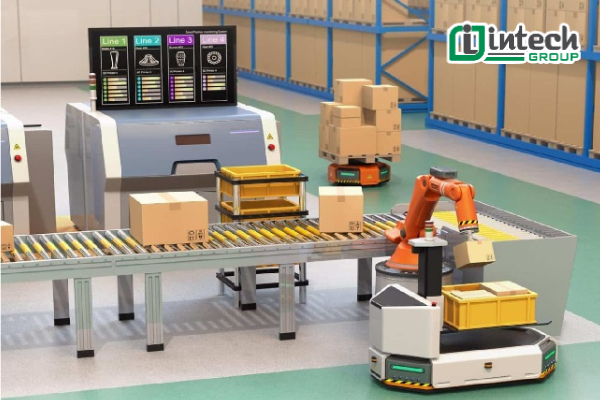
Technology is changing the traditional way of operating the transportation industry. Autonomous mobile robots (AMRs) have been widely used to support picking, delivering goods to packing staff or moving to the delivery area, reducing warehouse manpower by up to 50%.
At the same time, smart routing software using artificial intelligence (AI) and machine learning (ML) is helping businesses optimize delivery routes, significantly reducing fuel costs and transportation times.
Warehouse Automation
In the warehouse, a series of automated devices such as robotic forklifts or automated storage and retrieval systems (ASRS) are helping to speed up order processing while minimizing errors.In addition, the combination of warehouse management systems (WMS), barcodes and radio frequency identification (RFID) technology is creating fully automated smart warehouses.

Last-mile delivery automation
To deliver goods safely, many countries have deployed smart lockers such as China with more than 406,000 lockers installed in major cities since 2019.In addition, Amazon and DHL have tested delivery drones, shortening the shipping time from warehouse to customer in just 30 minutes at a cost of only about 1 USD.
Automate organization and operations
Logistics data is stored and synchronized on a cloud platform, combined with management software such as WMS, allowing employees to work flexibly and efficiently, especially during periods of social distancing or labor shortages.
Some technologies applied to automation in logistics
Automation in logistics does not stop at cutting costs or increasing productivity, but also opens up a smart operating ecosystem - where all processes are optimized by technology. From the warehouse to the last mile of delivery, a series of modern solutions have been and are being invested in strongly by logistics businesses, notably including:
Track management software (TMS)
This is a specialized management solution for freight transport activities, from container coordination to vehicle tracking. TMS helps businesses optimize delivery routes and schedules, manage transportation costs more effectively, display real-time supply chains (Supply Chain Visibility), improve service quality and customer experience.
Warehouse Robots (AGV & AMR)
- AGV (Automated Guided Vehicle): Moves along lines, wires or magnets - suitable for fixed routes.
- AMR (Autonomous Mobile Robot): Moves automatically using LIDAR sensors and digital maps, with flexible obstacle avoidance capabilities.
Outstanding benefits of the above 2 types of robots:
-
Reduce dependence on manual labor, limit work accidents
-
Increase order processing speed, especially during peak e-commerce season
-
Flexibly expand warehouse scale by simply adding robots, without expanding the area
.jpg)
Automatic sorting line
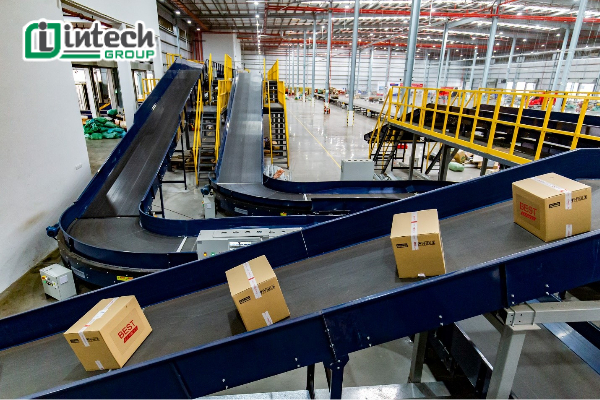
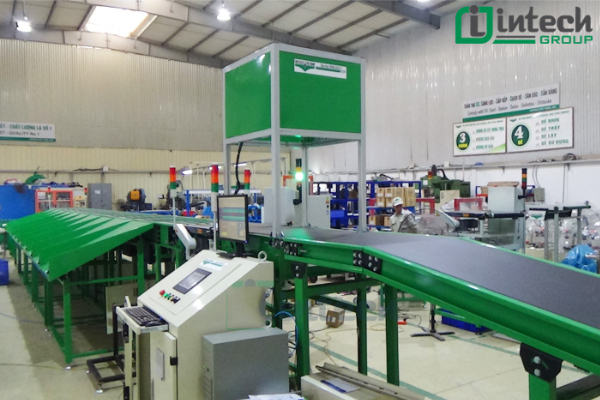
The conveyor system combined with barcode scanning camera and automatic lever arm will help classify goods by size and destination accurately, increase processing speed to tens of thousands of orders/hour, optimize loading space on the vehicle, shorten order closing time, allowing customers to place orders later.
Autonomous Trucking
These vehicles operate independently, humans only play a supervisory role. According to OTTO founder Lior Ron, this technology can save up to 40% of transportation costs/km, minimizing traffic accidents due to human factors.
Augmented Reality (AR)
DHL has deployed AR glasses for warehouse staff and achieved impressive results such as increasing the speed of picking by up to 30%, reducing operational errors, saving costs and training time for new employees. AR technology is a solution to maximize resources, costs and time and improve accuracy.

Internet of Things (IoT)
IoT allows real-time recording and transmission of operational data to help monitor the status of goods and machinery. In addition, combining AI to plan optimal transportation, early warning of incidents or deviations in the industrial production process.
Cloud Computing
Cloud computing helps logistics businesses analyze Big Data to predict demand, coordinate intelligently, access the system anytime, anywhere, connect seamlessly between partners in the supply chain, minimize risks, and increase adaptability to fluctuations.
Automation in logistics is not only an option, but is becoming a vital factor in upgrading the supply chain. Grasping and promptly applying the above technologies will help businesses not only operate effectively but also stand firm against all market fluctuations.
