


Smart City: Modern Urban Technology Trends
09-10-2025 547
With the rapid development of technology, cities of the future will constantly change to meet the increasing needs of people. Innovation and creativity play a key role in this process, creating solutions to help urban development become more sustainable.
With the rapid development of technology, cities in the future will constantly change to meet the increasing needs of people. Innovation and creativity play a key role in this process, creating solutions to help cities develop more sustainably.
About 10,000 years ago, people began to learn how to select seeds, practice agriculture and grow crops, opening up an era of stable living without having to constantly move to find food sources. This was the beginning of the formation of fixed residential communities, the premise for the development of cities.
However, it was not until the Industrial Revolution that modern cities truly took shape. Technology was deployed on a large scale, helping society develop rapidly with modern utilities and infrastructure.
Innovation has always been a vital factor to improve the quality of life and avoid community decline. A smart city not only needs a modern sanitation system and well-planned housing, but also needs safe and sustainable public transport. This is an important task that urban managers and smart city builders need to focus on to move towards a sustainable future.

1. What is a future city?
A future city is a concept that refers to the sustainable and smart development of cities, where people and technology work together to face challenges such as scarce resources and growing populations. The future of cities depends on what they have done and are doing in the present to create a better living environment.
Currently, many cities in the world have been moving towards the smart city model through the application of smart transportation solutions and circular economy. These efforts not only reduce carbon emissions, but also eliminate the use of toxic chemicals, manage waste efficiently, and promote resource reuse. By optimizing the design of materials, products, and systems, future cities are creating safer, more modern, and more sustainable living environments.
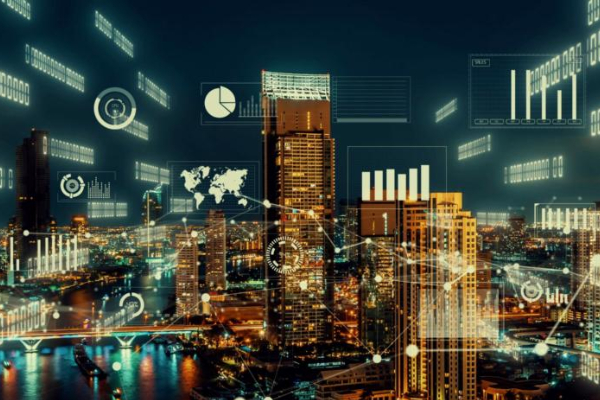
2. Trends shaping future cities
In the digital age, data security and privacy are indispensable factors. Future cities are building strong cybersecurity strategies, protecting personal data from cyber threats. At the same time, public education on safe network usage is also focused on ensuring a trustworthy and safe online space.
Smart Buildings and Infrastructure
Future cities aim to build smart infrastructure, applying advanced technologies such as energy management systems, traffic, and smart security monitoring. These improvements not only bring convenience to residents but also contribute significantly to sustainable development, creating a modern appearance suitable for the 4.0 industrial era.
3. How can future cities become smart?
The future city does not have a single template, because each city is shaped by its people, culture, and living environment. Therefore, although facing the same problem, the solution applied in each city can be different. This is a big challenge for planners when developing smart cities.
Smart cities are not simply applying modern technology, but also focusing on researching the needs and habits of people, thereby providing the most appropriate solutions to overcome the problem. Below are some important factors that shape future cities:
Smart Mobility
Traffic is the top issue affecting urban development. The main factors shaping smart transportation include:
Shared mobility: The trend of sharing vehicles such as motorbikes, cars, and bicycles is increasingly popular, replacing the ownership of personal vehicles. This helps reduce traffic pressure and encourages the use of public transportation.
Electric vehicles: Electric cars are becoming more popular, but to promote widespread use, the number of charging stations and power grid upgrades need to be improved. This is a problem that future cities need to solve.
Smart traffic management: Systems such as traffic control centers and monitoring software using AI technology are being deployed to reduce congestion and improve traffic safety. For example, the iTMON system uses AI to effectively detect and handle traffic violations.
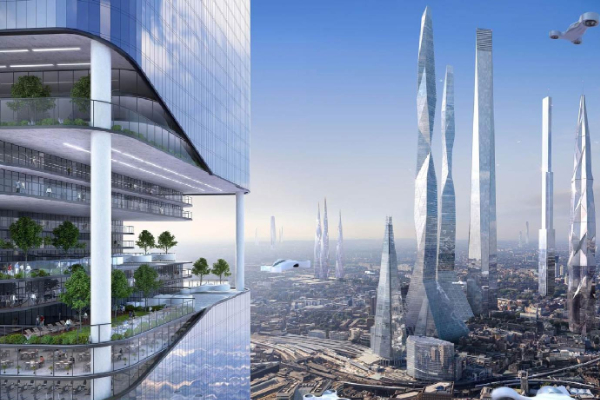
Improving Cybersecurity and Privacy
In the digital age, data security and privacy are indispensable factors. Future cities are building strong cybersecurity strategies, protecting personal data from cyber threats. At the same time, public education on safe network usage is also focused on ensuring a trustworthy and safe online space.
Smart buildings and infrastructure
Future cities aim to build smart infrastructure, applying advanced technologies such as energy management systems, traffic, and smart security monitoring. These improvements not only bring convenience to residents but also contribute significantly to sustainable development, creating a modern appearance suitable for the 4.0 industrial era.
3. How can future cities become smart?
The future city does not have a single template, because each city is shaped by its people, culture, and living environment. Therefore, although facing the same problem, the solution applied in each city can be different. This is a big challenge for planners when developing smart cities.
Smart cities are not simply applying modern technology, but also focusing on researching the needs and habits of people, thereby providing the most appropriate solutions to overcome the problem. Below are some important factors that shape future cities:
Smart Mobility
Traffic is the top issue affecting urban development. The main factors shaping smart transportation include:
- Shared mobility: The trend of sharing vehicles such as motorbikes, cars, and bicycles is increasingly popular, replacing the ownership of personal vehicles. This helps reduce traffic pressure and encourages the use of public transportation.
- Electric vehicles: Electric cars are becoming more popular, but to promote widespread use, the number of charging stations and power grid upgrades need to be improved. This is a problem that future cities need to solve.
- Smart traffic management: Systems such as traffic control centers and monitoring software using AI technology are being deployed to reduce congestion and improve traffic safety. For example, the iTMON system uses AI to effectively detect and handle traffic violations.
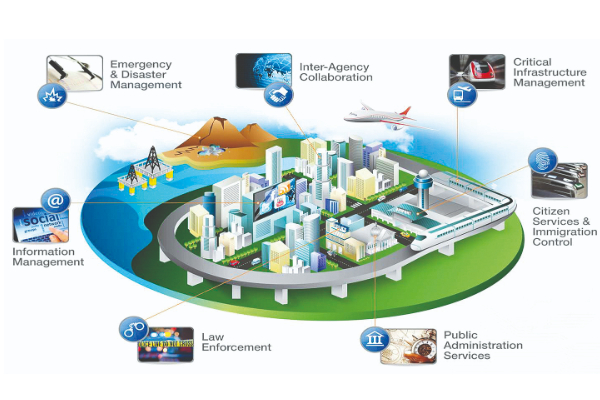
Smart Buildings
The rapid growth of urban populations requires solutions for housing, learning and working. Smart buildings are becoming an important factor, meeting the following criteria:
Sustainability: Using renewable energy and recyclable materials, reducing CO2 emissions.
Security: Access control and fire protection systems help protect people and property.
Cost savings: Sensor and automation technology helps reduce energy consumption, maintenance and operating costs.
IoT – The foundation for building smart cities
Internet of Things (IoT) technology plays a core role, collecting and analyzing data from sensors to support decision-making. IoT devices are constantly connected, helping the city operate more efficiently.
Sustainability is a core goal in developing future cities, with solutions focusing on:
Waste management: Using sensors to measure the fullness of trash bins, optimizing collection routes.
Energy: Using renewable energy sources such as wind turbines, solar panels, and even integrated energy walls, helping cities produce more energy than they consume.
Smart cities in the future not only apply technology but also aim to optimize resources, protect the environment, and improve the quality of life for people. This is the foundation for building a sustainable and modern future.
4. “Future” cities in the world today
Around the world, some cities are pioneering in building smart, sustainable urban models. These are typical examples that help to better visualize how our cities can develop in the future.
Smart Forest City – Mexico
Italian architect Stefano Boeri has unveiled plans for a Smart Forest City near Cancún, a 557-hectare smart city with 7.5 million trees capable of absorbing carbon.
The city is designed for around 130,000 residents, with affordable homes covered in trees, creating sustainable and eco-friendly living spaces. Data collection is a key element of the project, but is guaranteed to be used to improve governance and benefit the community.
Telosa, United States
Telosa is a futuristic urban project initiated by billionaire Marc Lore, aiming to “set a global standard for urban living.” The city is 100% renewable, with a focus on green living spaces and on-site water recycling.
Residents can easily travel between home, work and other amenities in just 15 minutes. Fossil fuel vehicles are banned, replaced by electric vehicles, self-driving cars and pedestrian walkways. Buildings are designed with solar roofs and aeroponic farms. Telosa also features a social model based on equity, where residents are involved in decision-making, budget allocation and shared land ownership. The project aims to welcome 5 million residents by 2050.
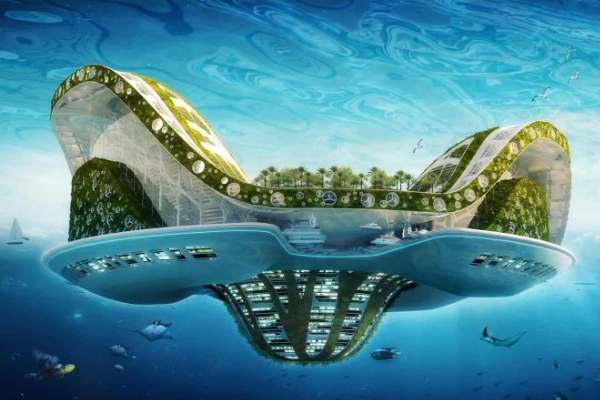
The Line, Saudi Arabia
The Line project is a 170km linear city part of the $500 billion NEOM mega-project. With an investment of $100 to $200 billion, The Line is designed to be car- and emissions-free, and run entirely on renewable energy.
The city is 500m high and is covered in a mirrored exterior, which optimizes natural light. Thanks to the high-speed rail system, residents can travel the entire length of the city in just 20 minutes. The Line is expected to be completed by 2030, becoming a home to 9 million people.
Smart Cities in Vietnam
In Vietnam, smart cities are still quite far from these future models. However, the government, businesses and organizations are making efforts to research and deploy solutions to improve the quality of life and protect the environment, laying the foundation for sustainable urban development.
The above projects and cities are not only visions but also inspirations, motivating other countries towards a smarter, more sustainable urban future.
5. What is the smart factory model?
In addition to the concept of smart cities, the smart factory model is gradually becoming a more familiar trend for manufacturing enterprises in Vietnam. This is a concept in the context of the 4.0 Industrial Revolution, describing an advanced production system that applies modern technologies such as the Internet of Things (IoT), artificial intelligence (AI), automation, big data and complex software.
The main goal of this model is to create an optimized, flexible and smart production environment, helping businesses quickly adapt to market changes. Equipment and production processes in smart factories are tightly connected via networks, exchanging data in real time to automatically adjust and optimize operations.
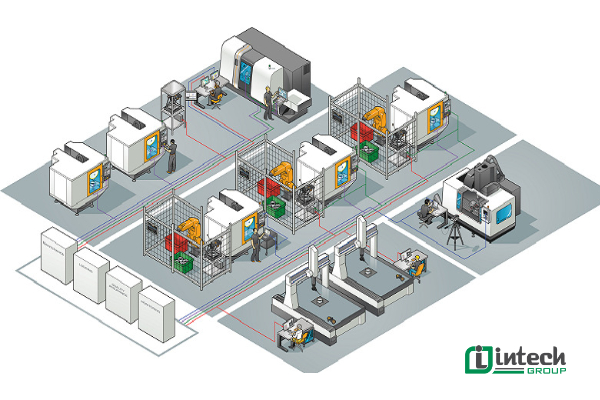
Features of the Smart Factory model
The smart factory model offers outstanding features, helping to create an optimal, modern and efficient production environment:
5.1 Combining information technology (IT) and operational technology (OT)
This model integrates two core areas in production:
- IT: Responsible for data processing and information analysis.
- OT: Related to control systems and automation of production processes.
The combination of IT and OT creates a more intelligent, flexible and efficient operating ecosystem in production.
5.2 Machine automation
Automation plays an important role in controlling and managing production processes. Equipment and machines are capable of:
- Automatically operating, flexibly adjusting.
- Making decisions based on established data and rules.
This helps improve productivity, ensure quality and optimize operational efficiency.
5.3 Intelligence
Smart factories use modern technologies such as:
- Artificial Intelligence (AI).
- Machine Learning.
- Data Analytics.
Systems can learn and adapt to the environment, thereby making predictive decisions and improving production over time.
5.4 Comprehensive Connectivity
Smart factories connect all devices, processes and machines via the Internet of Things (IoT). High connectivity allows:
- Continuous exchange of data and information.
- Monitoring and interaction between components in real time.
5.5 Real-time Operation
This model operates in real time, allowing:
- Monitoring and reacting immediately to changes in the production process.
- Make predictions and optimize based on the latest updated data.
5.6 Data visualization
Production information and data are displayed in the form of intuitive, easy-to-understand charts and images. This helps managers and employees monitor the process clearly and quickly make appropriate decisions.
5.7 Comprehensive digitalization
The smart factory model focuses on digitalizing the production process:
Converting data and information into digital form for effective analysis and management.
Digitalized production processes help optimize and automate the entire system.
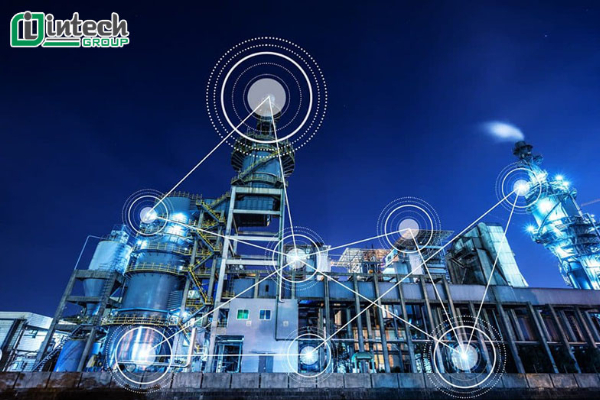
6. Popular technologies in the smart factory model
The smart factory model is built on the combination of many modern technologies. Below are typical technologies:
Sensors
Sensors are devices that collect data from the surrounding environment, including light, sound, temperature, pressure, and vibration. In a smart factory, sensors help:
- Collect accurate data from production processes.
- Monitor the working environment, ensure performance and safety.
Cloud Computing
Cloud computing provides a platform to:
- Store large amounts of data from production equipment.
- Process information with flexible scalability.
- Save costs on server system operations.
Big Data Analytics
Big Data Analytics helps:
- Process and analyze massive amounts of data from sensors and other sources.
- Discover patterns, trends, and useful information.
- Enhance the ability to predict and optimize production performance.
Virtual Reality (VR) and Augmented Reality (AR)
- Virtual Reality (VR): Creates simulated environments for employees to test and optimize production processes.
- Augmented Reality (AR): Supports employee training and guidance by displaying live data on real-world objects.
Digital Twins
- Digital Twins are digital versions of manufacturing equipment or systems that help:
- Monitor and simulate real-world operations in a virtual environment.
- Predict failures and improve production performance.
-
![Những công nghệ phổ biến trong mô hình nhà máy thông minh]()
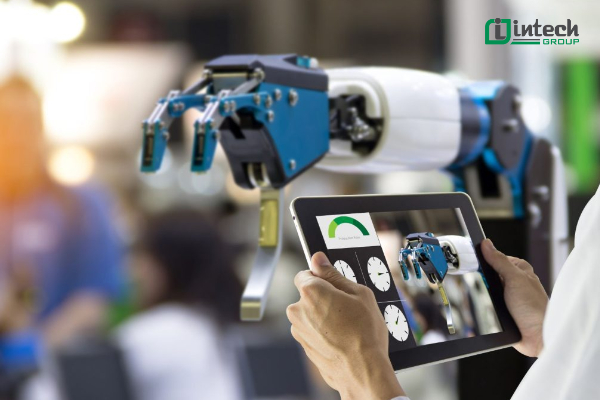
IoT – Internet vạn vật (Internet of Things)
IoT kết nối các thiết bị, máy móc và cảm biến trong một mạng lưới thống nhất. Công nghệ này hỗ trợ:
-
Theo dõi và điều khiển từ xa các quy trình sản xuất.
-
Đảm bảo tính liên tục và tương tác giữa các thành phần trong nhà máy.
Trí tuệ nhân tạo (AI)
AI được ứng dụng để:
-
Phân tích dữ liệu, phát hiện mô hình và đưa ra quyết định thông minh.
-
Dự đoán sự cố, cải thiện quy trình và tối ưu hóa hiệu suất sản xuất.
RPA – Tự động hóa quy trình bằng rô-bốt (Robotic Process Automation)
RPA sử dụng phần mềm rô-bốt để:
-
Tự động hóa các nhiệm vụ lặp đi lặp lại trong sản xuất.
-
Đảm bảo độ chính xác cao và tăng năng suất lao động.
Digital Twins
Đây là một phiên bản số hóa hoàn chỉnh của thiết bị hoặc hệ thống sản xuất, được sử dụng để:
-
Mô phỏng các hoạt động thực tế trong môi trường ảo.
-
Tối ưu hóa quy trình và đưa ra các quyết định thông minh dựa trên dữ liệu thực.
Kết luận
Thành phố thông minh và nhà máy thông minh không chỉ là xu hướng tất yếu trong thời đại công nghệ 4.0 mà còn mang lại những lợi ích vượt trội như tối ưu hóa hiệu suất, tiết kiệm chi phí và nâng cao chất lượng sống. Để doanh nghiệp của bạn bắt kịp xu thế và đạt được lợi thế cạnh tranh, hãy liên hệ ngay với Intech Group. Chúng tôi tự hào mang đến những giải pháp tự động hóa và nhà máy thông minh tối ưu, phù hợp với mọi nhu cầu phát triển của bạn.
