


What is Big Data? Industries that are applying Big Data you need to know
09-10-2025 41
Big Data, also known as big data, appears as an inevitable trend in the era of the 4.0 technology revolution and the remarkable development of the Internet. Big Data plays an important role in supporting businesses in analyzing and exploiting customer insights.
What is Big Data?
For example, companies such as Shopee, Tiki, YouTube, Spotify have applied Big Data to collect and analyze user behavior. Thanks to that, businesses increase the rate of closing orders and improve revenue effectively.

Big Data is characterized by 3 main "V"s:
- Volume: Big Data contains a huge amount of data, often exceeding the processing and storage capabilities of traditional systems. With the emergence of platforms such as Data Lake, data storage and processing has become more convenient than ever.
- Velocity: Big Data is continuously generated and collected at high speed, requiring the system to process data in real time.
- Variety: Big Data includes many different types of data such as: text, images, videos, audio, sensor data, and system logs, etc.
In addition, Big Data is also supplemented with three other important "V"s:
- Veracity: Due to its large volume and diversity, Big Data is often messy and error-prone, making it difficult to control the quality and accuracy of the data.
- Variability: Data in Big Data tends to change continuously, leading to inconsistencies over time. This requires businesses to adapt to changes in context, interpretation, and data collection methods.
- Value: Big data is only meaningful when it brings real value, helping businesses make informed decisions, improve operational efficiency and create competitive advantages in the market.
What are the types of Big Data?
- Structured data: Structured data is the easiest type of data to manage and retrieve. They are stored in fixed formats, which can be easily processed with tools such as MySQL, Oracle, or SQL Server. This type of data includes clearly organized information such as customer information, transaction data, and financial data
- Semi-structured data: Semi-structured data has some structure but does not follow a fixed format. To process this type of data, traditional tools are needed after performing preliminary processing. Typical examples include HTML emails, XML files, and JSON data.
- Unstructured data: This type of data does not have a fixed format and is difficult to process using traditional tools. However, unstructured data accounts for the majority of Big Data volume, including files such as emails, messages, images, videos, audio, sensor data, and system logs.
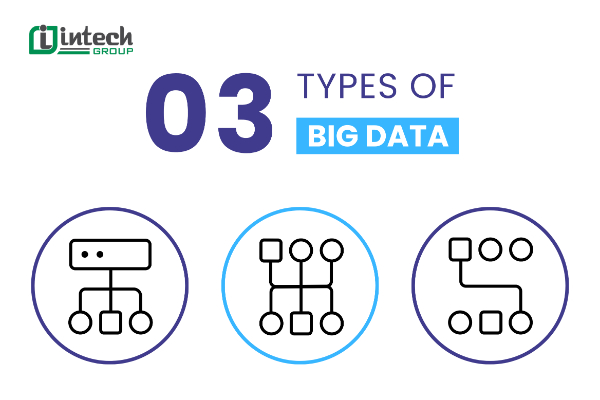
In addition to these three main types, there are three other specialized types of data:
- Geospatial Data: This is a huge dataset containing information about the location and attributes of objects on Earth. Typical examples include maps, satellite imagery, sensor data, traffic data, and population information.
- Machine/Operational Logging Data: Machine logging data is generated from the operations of computer systems or applications, without human intervention. Examples include call detail records and application activity logs.
The Main Task of Big Data
Step 1: Data Collection
- Traditional sources:
Database systems: Data from internal systems such as CRM, ERP, accounting systems, etc.
Reports: Includes data from business, financial, and sales reports.
Customer surveys: Collect information from surveys to understand customer needs and preferences.
- Online sources:
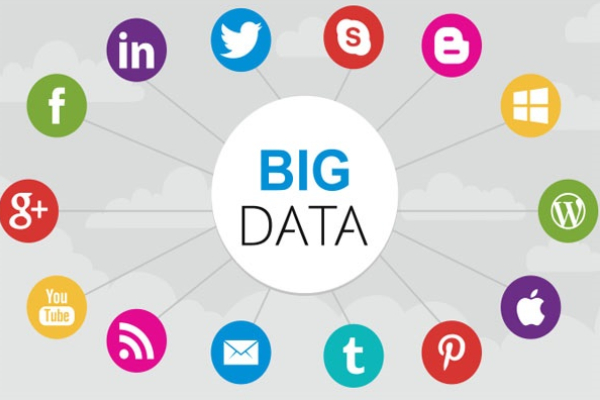
Social media: Data from Facebook, Twitter, Instagram, and other platforms.
Website: Includes traffic data, user behavior, and online shopping.
Mobile apps: Data from usage behavior, purchase transactions, or in-app interactions.

Step 2: Data Processing
- Data Cleaning: Removing errors, duplicates, and incomplete data.
- Data Transformation: Reformatting data to make it suitable for analysis tools.
- Data Integration: Combining data from different sources to create a comprehensive and comprehensive dataset.
Step 3: Data Analysis
- Extracting valuable information.
- Supporting businesses in making informed decisions.
- Increasing operational efficiency and creating competitive advantage.
Step 4: Data Visualization
- Communicate information effectively.
- Support businesses to make quick and accurate decisions.
The Role of Big Data in Business
Big Data plays a key role in promoting the development and success of businesses in the digital age. Below are the prominent roles that Big Data brings:
Making timely and accurate decisions
Big Data helps businesses make decisions based on specific data instead of emotions. Through data analysis, businesses can better understand what has happened in the past, present and predict future trends.
Increasing business efficiency
Big Data helps businesses analyze business activities in detail, from the number of new customers, the rate of returning customers, to inventory and feedback. This analysis provides a comprehensive view, helping to improve employee performance, organize more scientific operating processes and optimize resources.

Creating a competitive advantage
Developing new business models
Industries that are applying Big Data you need to know
In the banking industry
- Banks use clustering techniques to analyze customer needs and decide to open new branches in potential areas. This not only increases the opportunity to reach customers but also helps save operating costs.
- Based on historical data, banks accurately predict the amount of cash needed at each branch at specific times of the year, helping to ensure the circulation of money without wasting resources.
- Big Data combined with technologies such as machine learning and artificial intelligence (AI) helps banks detect unusual transactions, warn of fraud risks, and protect customers' assets.
- Every day, the banking system generates a large amount of data from transactions, accounts, and other activities. Big Data supports the processing, storage, and analysis of this data, ensuring smooth system operation and enhancing information security.
- A digital banking platform based on data science allows financial institutions to optimize processes, personalize customer experiences, and deploy smart services such as customer support chatbots, analyze consumer trends, and develop new financial products.
Many large banks in Vietnam have actively applied Big Data to their operations, such as ACB, VPBank, and MSB. These organizations not only improve business performance but also create sustainable value through intelligent analysis and use of data.

In the healthcare industry
Big Data is gradually asserting its important role in improving human health, not only supporting the determination of treatment directions but also improving the efficiency of healthcare. Here are some prominent ways in which the healthcare industry applies Big Data:
- Big Data helps healthcare managers predict the number of doctors and medical staff needed at specific times, especially during peak seasons or when there is an epidemic. This helps optimize resources and minimize overload at healthcare facilities.
- Big Data systems help store and analyze patients' electronic health records, thereby supporting doctors in monitoring treatment progress, medical history and detecting abnormal changes in health.
- Smart wearable devices such as health watches and medical sensors continuously collect data on heart rate, blood pressure, blood sugar, etc. The Big Data system processes this data and sends notifications to doctors if abnormalities are detected, helping to intervene promptly.
- Big Data supports symptom analysis and comparison with a huge medical database to diagnose diseases at an early stage. This is especially useful for dangerous diseases such as cancer, helping to increase the chance of successful treatment.
- Big Data provides an effective storage solution for large amounts of sensitive medical data, while ensuring high security, helping to protect patients' personal information from cyberattacks.
- Big Data has the ability to analyze environmental, weather, and epidemiological data to predict areas at risk of disease outbreaks such as dengue fever and malaria. This helps health authorities take effective preventive measures to protect public health.

In E-commerce
Big Data is an important tool that helps e-commerce businesses create a competitive advantage by providing insights and reporting on consumer trends. Here are some ways that Big Data is applied in the e-commerce industry:
- Big Data can collect data from customers even before they start a transaction. This data helps businesses better understand customer needs and behaviors, thereby creating appropriate marketing strategies and increasing the ability to convert orders.
- With Big Data, e-commerce managers can analyze customer behavior and trends to create effective marketing models. This not only helps optimize advertising strategies but also helps increase revenue by targeting the right potential customers.
- Big Data helps identify the most viewed products, thereby optimizing the display time of these products on the website. This helps businesses focus on products with high potential, improving sales efficiency.
- One of the important applications of Big Data in e-commerce is to analyze customer behavior to suggest similar products that they may be interested in. This increases the likelihood of sales and generates higher revenue, while improving user experience.
- If a product is added to a customer's cart but not purchased, Big Data can automatically send a promotional code to that customer to encourage them to complete the transaction. This is an effective strategy in reducing cart abandonment rates and maximizing revenue.
- Big Data applications can generate customized reports based on criteria such as age, gender, location of visitors, etc. This helps businesses better understand their customer segments and adjust their sales strategies accordingly.
- Big Data helps businesses analyze customer behavior, interests, and track their trends. From there, businesses can develop products and services that better suit the actual needs of customers.
- Another application of Big Data in e-commerce is to improve product quality at lower costs. Analyzing customer data helps businesses optimize production processes and provide better products while maintaining reasonable costs.
- Big Data helps businesses collect information about customer behavior and design customized marketing models for each specific target group. This increases sales and creates more flexible and effective marketing strategies.
- Big Data allows businesses to find similarities between customers and their needs, making it easier for businesses to target advertising campaigns. This not only saves costs but also makes advertising campaigns more effective.

In the retail industry
Through the collection and analysis of diverse data, Big Data not only helps determine the customer journey, shopping trends and satisfaction levels, but also supports the optimization of sales performance. Retail businesses can improve business strategies and increase revenue growth thanks to the detailed information from the collected data.
- Big Data helps managers build spending models of each customer, thereby understanding their habits and needs. This allows businesses to develop accurate marketing strategies and improve services and products to better meet customer requirements.
- With the support of predictive analytics, the retail industry can compare supply and demand ratios and avoid continuing to launch products that are not popular with customers. This helps save costs and optimize resources, while ensuring that the products provided meet the needs of the market.
- Big Data also helps determine the placement of products on shelves based on customers' shopping habits and needs. Retail businesses can come up with new business strategies to improve sales efficiency, thereby increasing customer reach and boosting revenue.
- By combining data analysis on timing, transaction data, data from social media and weather forecasts, Big Data helps identify the right products and ensure they are always available to customers. This helps businesses maintain flexibility and respond promptly to changing market needs.

In Digital Marketing
Digital Marketing is now becoming an important factor helping businesses thrive in the digital age. Big Data plays an important role in promoting Digital Marketing, helping businesses implement successful advertising strategies and optimize marketing processes.
- Big Data helps businesses analyze the market and competitors, thereby evaluating business goals more clearly. This analysis helps businesses identify good opportunities to continue implementing business plans and develop in the future.
- Big Data helps identify users on social media platforms and target them based on demographic factors such as gender, income, age and interests. This helps businesses optimize advertising strategies, reach the right audience and increase conversion rates.
- After each advertising campaign, Big Data helps generate detailed reports on performance, audience engagement, and possible actions to achieve better results in future campaigns. These reports help businesses evaluate their current marketing strategy and adjust their plans for the future.
- Data science is used to target and nurture the customer cycle, from the acquisition stage to the loyalty stage. This helps businesses maintain long-term relationships with customers and maximize customer lifetime value.
- Big Data helps identify high-search topics and advises business owners on implementing them on their content strategy to improve their website rankings on Google (SEO). This helps businesses attract higher traffic and increase revenue from organic search.
- Using existing audience databases, Big Data helps create lookalike audiences to target new customers with similar characteristics and behaviors. This helps businesses find and reach potential customers more effectively, increase sales opportunities and maximize profits.

Technologies for Big Data
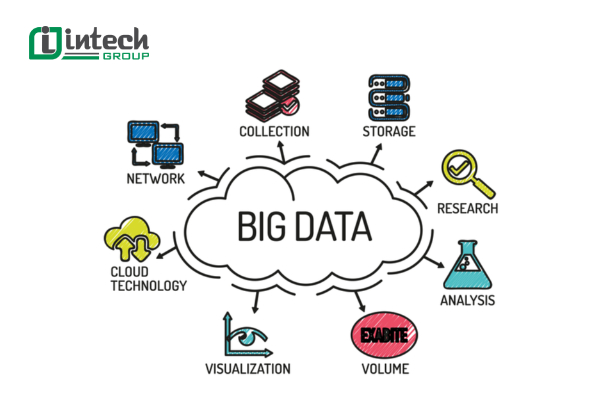
Data Storage
Apache Hadoop: Apache Hadoop is a popular open source software platform used to store and process big data in a distributed computing environment. This technology allows processing of huge data sets on clusters of hardware, helping to reduce costs and increase processing efficiency.
MongoDB: MongoDB is a NoSQL database management system, which is especially effective in storing large volumes of data. This database uses a key-value pair structure, which helps classify documents into collections, making it suitable for applications that require high scalability and unstructured data processing.
Data Mining
RapidMiner: RapidMiner is a powerful data mining tool that helps build predictive machine learning and deep learning models. It supports businesses in analyzing data to make decisions based on insights and predictive models.
Presto: Presto is an open-source data query technology developed by Facebook. It was initially used to run analytical queries on large Facebook data sets. Currently, Presto has been widely applied in many fields to analyze data from different sources.
Data Analytics
Big data analytics involves cleaning and transforming data into valuable information. Technologies like Apache Spark and Splunk support this process by using algorithms, models, and predictive analytics.
Apache Spark: Apache Spark is a powerful tool for big data analytics, featuring faster processing speeds than Hadoop thanks to its use of random access memory (RAM). Spark enables real-time data analytics and efficient processing of large-scale data.
Splunk: Splunk is an in-depth data analytics tool that collects, analyzes, and generates reports from large data sets. In addition, Splunk also integrates artificial intelligence (AI) to enhance analytics and predictions, creating intuitive charts, reports, and dashboards.
Data Visualization
Data visualization helps turn large data sets into easy-to-understand images, helping managers present information and make decisions. Two popular tools in this field are Tableau and Looker.
Tableau: Tableau is a data visualization tool with an easy-to-use drag-and-drop interface that helps create pie charts, bar charts, box plots, and Gantt charts. Tableau allows users to share dashboards online in real time, helping teams work more efficiently.
Looker: Looker is a cloud-based data analytics and business intelligence (BI) platform that helps businesses explore and visualize data easily. This tool helps share insights from data with stakeholders and make accurate business decisions.
Big Data technologies, from storage and mining to analytics and visualization, play a key role in harnessing the power of big data. These technologies help businesses not only manage data effectively but also create value from data, serve strategic decisions and optimize business processes. Applying these technologies is the key for organizations to exploit the full potential of Big Data in today's digital age.
Use Cases of Big Data Applications in Practice
Big Data has been bringing many benefits in practical activities, especially in improving customer experience and analysis. Here are some prominent examples of Big Data applications:
New Product Development
Businesses use Big Data to develop new products that suit customer needs. Analyzing data on search trends, customer needs and market factors helps manufacturers innovate and develop products that meet consumer tastes. For example, large companies such as Netflix and P&G apply Big Data to predict customer needs, thereby developing new products/services.
Price Optimization
Retailers take advantage of Big Data to optimize product prices. Data on market demand, production costs and competitors' prices help determine the most reasonable price, thereby maximizing profits. For example, Walmart uses Big Data to adjust product prices based on region and time, ensuring competitiveness and meeting customer needs.
Customer behavior analysis
Big Data allows retailers to analyze customer shopping behavior, including the products they buy, when they buy, payment methods and transaction values. This analysis helps businesses understand customer needs, thereby implementing more effective marketing and sales strategies. Amazon is a typical example of using Big Data to recommend products based on customers' shopping history.
Fraud Detection
Big Data helps financial companies analyze transactions and detect signs of fraud. Through the analysis of financial data, suspicious transactions can be identified and handled promptly. MasterCard uses Big Data to detect fraudulent credit card transactions, protecting users from financial risks.
Predicting equipment failures
Manufacturers use Big Data to analyze equipment performance, thereby predicting when the equipment may have problems. This helps to perform preventive maintenance, minimizing disruptions in the production process. General Electric (GE) is a prominent example of using Big Data to predict problems in aircraft engines, helping to increase reliability and reduce maintenance costs.
Optimizing production processes
Analyzing data on production performance, downtime and other factors helps manufacturers optimize production processes, detect and fix bottlenecks in the system. Thus, Big Data not only brings benefits in improving products, services and optimizing processes, but also helps businesses detect problems early, minimize risks and optimize costs. These applications are making a big step forward in industries, from retail to manufacturing and finance.
Knowing how to take advantage of Big Data, businesses will not only receive unlimited value but also optimize production processes thanks to automation technologies, such as AGV robots and automatic production lines. These technologies help improve operational efficiency and minimize errors, thereby increasing productivity and competitiveness of businesses. If you are wondering how to maximize the potential of data and apply automation solutions to production activities, please leave your information here so that Intech Group's team of experts can contact and advise in detail.
See also:
