

What is QCD method? Components of QCD method
14-10-2025 1696
QCD (Quality, Cost, Delivery) is a production management method originating from the British automotive industry. QCD plays an important role in comprehensively evaluating different components of the production process, helping businesses accurately grasp performance and improve production efficiency.
What is QCD?
Based on three main factors including quality, cost, and delivery time, QCD provides important data related to 4M (Man, Machine, Material, Method), thereby supporting managers to make smart and effective decisions. Not only is QCD a tool to evaluate current performance, it also allows to predict and prioritize future goals thanks to the collected and analyzed data.
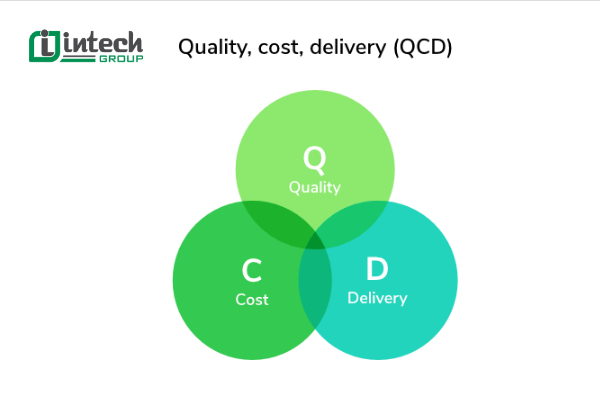
The QCD method is considered a “three-dimensional” system, in which quality, cost, and delivery time all play an important role and must be maintained equally. When a problem occurs in one of the three factors, QCD requires not to sacrifice any factor to protect the others, but to consider and adjust comprehensively to ensure stability and efficiency in production and supply. This helps businesses build production management strategies based on accurate and comprehensive data, while maintaining a sustainable competitive advantage.
Components of the QCD method
The QCD method is built on three core elements: Quality, Cost, and Delivery. Each of these elements plays an important role in production management, helping businesses maintain balance and optimize operational performance.
.jpg)
Quality
Quality represents the perfection of a product or service, and is the leading determinant in the QCD method. The main goal of quality is to ensure that a product or service meets the requirements and expectations of customers. Maintaining and improving quality helps businesses strengthen their reputation and customer trust, thereby creating a solid foundation for sustainable development.
Cost
Cost in QCD refers to optimizing production costs while ensuring product quality. This includes using raw materials effectively, managing labor performance and optimizing processes to minimize waste. Effective cost management helps businesses maintain profits, improve productivity and enhance competitiveness in the market.
Delivery
The delivery factor is related to the ability of a business to provide products or services on time, in the right quantity and quality as required by customers. Ensuring delivery time is a key factor in maintaining customer trust and satisfaction. A flexible supply chain and efficient production process help ensure that products reach customers on time, quickly meeting market demand.
The QCD method not only helps businesses balance quality, cost and delivery time, but also builds a flexible and efficient working environment. QCD helps businesses meet the increasing demands of the market, while ensuring sustainable and long-term development, creating a strong competitive advantage in the manufacturing and supply industry.
Advantages and disadvantages of QCD in production
Advantages of the QCD method
The QCD (Quality, Cost, Delivery) method brings many practical benefits, helping businesses improve production efficiency, improve service and product quality, and increase competitiveness. Here are the outstanding advantages of this method:
-
Improve product or service quality: Applying quality improvement measures not only creates a positive impression on customers but also builds sustainable relationships. High quality products or services will not only attract new customers but also retain existing customers, creating long-term trust and satisfaction.
-
Reduce production and operating costs: The QCD method helps businesses reduce production and operating costs by optimizing processes and resources. Cost savings not only improve overall performance but also help businesses maintain competitive prices and increase profits, maintaining their position in the market.
-
Increase delivery speed and flexibility: QCD helps businesses optimize the delivery process, ensuring that products or services reach customers quickly and flexibly. This helps meet market needs promptly, improving customer satisfaction and loyalty.
-
Enhance customer reputation and trust: When a product or service not only meets but also exceeds customer expectations, trust in the business will increase. This trust is an important foundation for maintaining long-term relationships, strengthening the reputation and brand of the business in the market.
-
Create a competitive advantage in the market: Providing high-quality products or services, reasonable prices and the ability to quickly respond to customer needs helps businesses gain a competitive advantage. This is the key to capturing the market and asserting its position, especially in a challenging business environment. The QCD method not only helps businesses improve performance but also brings many sustainable benefits, helping businesses grow and develop in a competitive market.

Disadvantages of QCD
-
Although QCD (Quality, Cost, Delivery) brings many benefits in improving production quality and efficiency, it also has some disadvantages and challenges in the implementation process, especially for businesses that are new to this method.
-
High initial investment requirements: Implementing QCD requires a large initial investment, including the cost of training employees, upgrading equipment systems, purchasing high-quality raw materials, and setting up quality control and evaluation systems. These costs can put financial pressure, especially for small and medium-sized businesses, forcing them to carefully consider the financial capacity and long-term benefits of applying QCD.
-
Difficult to maintain a balance between the three factors: QCD is a “three-dimensional” method, requiring a constant balance between quality, cost, and delivery time. If a business fails to maintain this balance, one factor may be significantly affected. For example, if there is an excessive focus on cost reduction, product quality may be compromised or delivery times may be delayed. This requires flexibility and good management capabilities from the business to avoid potential risks.
-
Dependent on management and control systems: QCD requires businesses to build and maintain a strict management and control system. This includes closely monitoring quality indicators, optimizing costs and ensuring on-time delivery processes. If the management system is not strong enough or lacks the ability to adjust quickly, the effectiveness of the QCD method may be reduced, affecting the entire production process and customer satisfaction.
-
Requires a lot of time and resources: To implement QCD effectively, businesses need to invest time and resources in improving processes and improving the capacity of staff. This can disrupt the current production process and requires coordination between many departments in the business, from production, quality control to logistics. Businesses need to ensure close cooperation between departments to avoid disruption or waste of resources.
-
The QCD method brings many practical benefits, however, businesses need to be aware of the disadvantages and carefully prepare finances, human resources and management systems to effectively apply QCD.
The Relationship Between QCD and Lean Manufacturing
Lean Manufacturing is a production management method that focuses on eliminating waste and optimizing the production process to improve efficiency. QCD (Quality, Cost, Delivery), with three main factors: Quality, Cost and Delivery, plays an important role in evaluating and improving the production process. The relationship between QCD and Lean Manufacturing is very close because both methods aim at the common goal of optimizing the process and improving efficiency in the business.
.jpg)
Improve Quality
Both Lean Manufacturing and QCD focus on improving the quality of a product or service. Lean Manufacturing eliminates waste and inefficiencies in the production process, thereby improving product quality. QCD ensures that quality is considered a key factor in all manufacturing and service decisions. By combining the two methods, businesses can create high-quality products more efficiently, reduce errors, and increase customer satisfaction.
Reduce Costs
Both Lean Manufacturing and QCD aim to optimize costs in manufacturing operations. Lean Manufacturing focuses on eliminating unnecessary activities, thereby reducing costs and increasing efficiency. QCD contributes to cost reduction by optimizing processes and using resources efficiently. By combining the two methods, businesses can minimize production costs, increase profits, and stay competitive in the market.
Improving Delivery Process
Lean Manufacturing focuses on optimizing the manufacturing process to ensure product availability and on-time delivery. QCD expands on this by not only ensuring on-time delivery but also meeting customer requirements in terms of quality and quantity. The combination of Lean Manufacturing and QCD helps businesses create a flexible supply chain, reduce lead times and optimize delivery processes, thereby improving customer satisfaction.
The relationship between QCD and Lean Manufacturing is very close, as both aim to optimize the manufacturing process, reduce costs and improve product quality, while improving on-time delivery. When these methods are combined, businesses will have a comprehensive and effective production management system, thereby maintaining competitiveness and sustainable development in today's challenging business environment.
The above article has given you a clearer understanding of what QCD is, you can be sure that QCD is an extremely useful management method, however, to apply it successfully, it requires the commitment and effort of every employee in the business. In addition, to achieve optimal efficiency, businesses need to deploy a production management system in a systematic and clear way, contact Intech Group immediately to receive advice and support from a team of experienced experts via Hotline 0966.966.032 - 0986.448.456.
Reference:
