


What types of automatic production lines are there? Learn about their features and applications
23-09-2025 256
Automatic production lines are increasingly widely used in factories to improve productivity, reduce costs and optimize product quality. However, how many types of automatic production lines are there and which production models are each suitable for? The following article will help you understand the popular types of automatic production lines today, the characteristics of each type and how to choose the right system for your actual needs.
What is a production line?
A production line is a modern production organization system in which machines, equipment and technology are linked together in sequence to perform each stage, from input materials to finished products.
Production lines are commonly used in many industries such as automobiles, electronics, food, pharmaceuticals, consumer goods, etc.
What is an automatic production line?
An automatic production line (Production Automation Line) is a set of machines connected together through an electronic transmission and control system operated and controlled by humans. Each station is responsible for a specific stage in the process and the products will be processed in turn according to a pre-programmed production sequence.
When learning about the types of automated production lines, you need to understand that automation in production is often divided into three main types: Fixed Automation, Flexible Automation, Programmable Automation.
.jpg)
Outstanding features of automated production lines
Below are the outstanding features of modern automated production lines:
- High automation: Equipment, machines and control systems in the line are integrated, connected and programmed to operate automatically, thereby helping businesses improve operating efficiency.
- Outstanding production speed: With the ability to operate continuously, automated production lines help increase output compared to traditional manual methods.
- High accuracy: Every stage in the line is controlled and controlled by software, ensuring product accuracy and uniformity, minimizing the rate of errors in production.
- High economic efficiency: Automation helps reduce labor costs, shorten production time and optimize processes, thereby increasing business profits.
- Flexibility in production: Some types of automatic production lines can be programmed to adapt to many different types of products, easily changing designs without restructuring the entire system.
What are the popular types of automatic production lines today?
Below are typical types of automatic production lines widely used in modern industry:
Automatic assembly line (Assembly Automation Line)
Automatic assembly line is a system that integrates machines to assemble components and product details without the need for manual operations. This type of line is especially popular in the electrical, electronic, automotive engineering industries, etc.
Automatic welding line in mechanical engineering
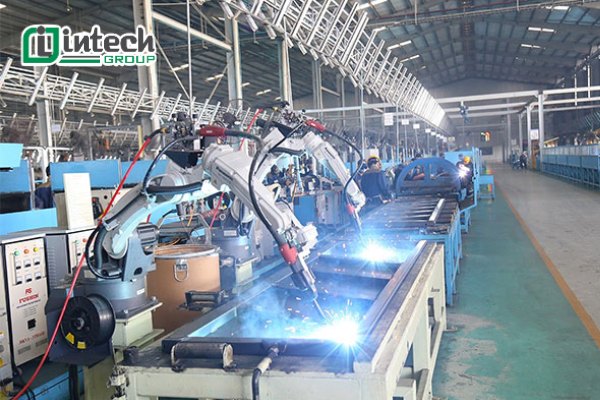
Automatic welding lines are used to connect metal parts together, from common materials to non-ferrous metals or alloys. Automatic welding technology not only improves productivity but also supports the restoration and repair of precise parts, ensuring durability and aesthetics.
Automatic filling line
This is a system used in cosmetic and food production lines that handles the process of filling solutions into bottles/jars/boxes with high precision. The system is intelligently installed, easy to operate and helps businesses optimize production costs.
Automatic packaging line
Automatic packaging lines help complete the final stage of the production process. The equipment used in this line includes: carton packing machines, labeling machines, roller conveyors, etc., which are integrated to completely replace manual operations.
In which industries are automated production lines applied?
In addition to learning about the types of automated production lines, businesses also need to pay attention to their applicability in production practices. Below are the areas of application of automated lines:
1. Automobile production lines
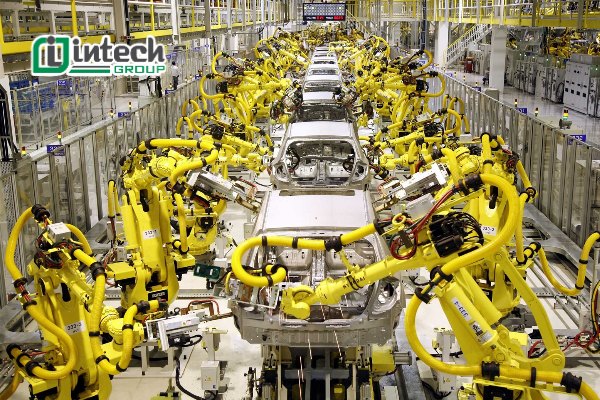
In modern factories, the automobile production line is a system closely linked between work stations, performing a series of stages from receiving components to when the vehicle is completed.
-
Receiving and controlling components: Parts such as engines, chassis, electrical systems... are imported into the warehouse and checked for quality before being put into production.
-
Part processing: Perform steps such as welding the chassis, precision machining, metal forming...
-
Assembly: Combine parts to form a complete system, from the body, interior to the engine.
-
Painting and surface finishing: Anti-rust paint, color paint and protective coating.
-
Quality inspection: The entire vehicle is tested according to safety, operation and durability standards.
- Custom finishing: Add accessories, personalization features depending on each vehicle model and market.
2. Food production line
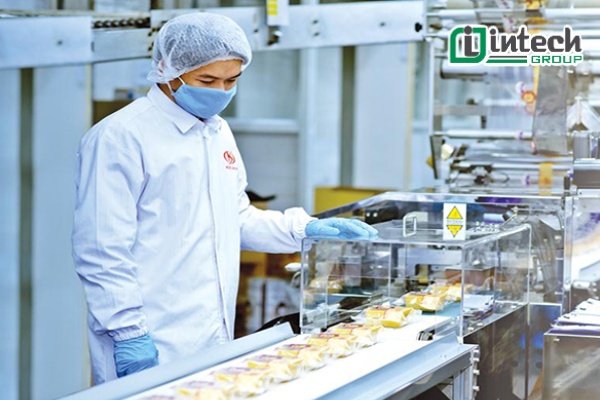
This system integrates modern handling, processing and packaging equipment to ensure consistent quality, cost savings and strict control at each stage.
Steps in the food production line:
-
Selection and cleaning of raw materials: Raw materials are classified and carefully inspected to ensure they meet input standards.
-
Food processing and handling: Including grinding, mixing, cutting, shaping, extruding, drying... depending on each specific product.
-
Food preservation: Applying heat preservation technology (heating, sterilization), cold storage or irradiation methods to extend shelf life.
-
Product packaging: After processing, food is packaged in bottles, cans, bags or boxes for easy storage, distribution and consumption.
3. Production lines in the medical industry
Among the types of automatic production lines today, the medical industry is the field with the highest requirements for safety standards and quality control. Products such as drugs, medical supplies, medical equipment and especially intravenous products must be produced in a sterile environment, according to strict standardized processes.
Highlights of the medical production line:
-
Closed and highly automated process: From mixing, filling, sterilization to packaging are all performed automatically, minimizing human contact with the product.
-
Strict quality control: The system integrates quality testing equipment, automatically detects errors and eliminates substandard products.
-
Absolute hygiene and safety standards: Ensure the production environment meets sterile standards, regularly cleans equipment and periodically conducts microbiological tests.
4. Production lines in the garment industry
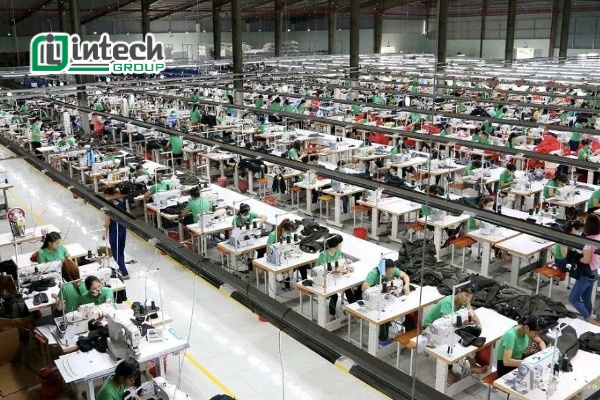
The production lines in this industry are standardized and flexibly designed to suit mass production or individual orders.
Steps in the garment production line:
-
Product design: Including sample sketching, technical design, pattern making and corner diagram to prepare for cutting.
-
Selecting and checking raw materials: Input materials such as fabric, thread, accessories are carefully selected, removing substandard components such as defective fabric, mold, etc.
-
Automatic fabric cutting: Fabric is fed into the automatic cutting machine according to the designed diagram, ensuring accuracy and saving raw materials.
-
Finished product sewing: Parts are sewn together in sequence, combining manual sewing and industrial sewing machines to ensure speed and quality.
-
Quality control (QC): Each finished product is carefully inspected for seams, style, and size before being packaged.
-
Packaging and shipping: After meeting standards, the products are packaged and transferred to the warehouse or distributed directly to customers.
Equipment used in the automatic production line
Below are common groups of equipment commonly used in the automatic production line:
Automatic production machinery and equipment
Automatic or semi-automatic machinery plays a central role in the line. They undertake many stages such as: Mechanical processing (cutting, turning, milling ...); welding, painting, assembling components, packaging products.
Automatic control system
The control system is the "brain" of the entire line. Common control technologies include: PLC (Programmable Logic Controller), SCADA, sensors and control software. Thanks to the control system, the entire line can operate synchronously and accurately.
Conveyors and automated transport systems
Automatic transport equipment such as: Conveyors, pallet loading robots, AGV self-propelled vehicles help save time, limit collisions and increase accuracy in material circulation.
Quality control system
An indispensable part of the automated production line is the quality monitoring system. Including: Cameras applying artificial intelligence, optical sensors, barcode scanners, weight inspection equipment, product data analysis software.
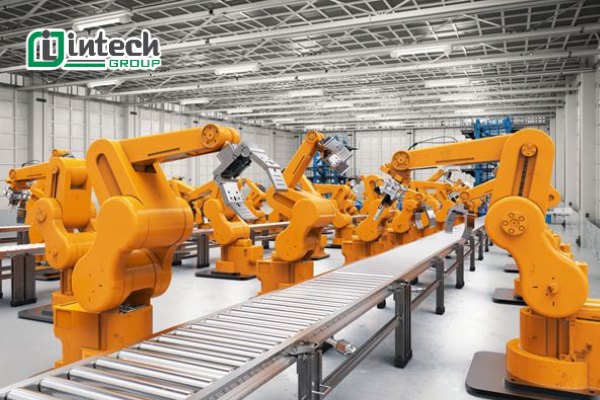
Intech Group is a supplier of automated production lines and comprehensive automation solutions
INTECH is a pioneer in designing and manufacturing automated production lines synchronized with modern technology, applicable in many industries. We are committed to providing the most optimal and effective automation solutions suitable for each enterprise's production model. Contact us now to get advice and support from our team of experts to provide automation solutions suitable for the smart factory model for your business.
