


Machines cannot completely replace humans at work.
08-10-2025 670
Can Artificial Intelligence (AI) replace humans? This is a hotly debated question and has become one of the hottest issues today. However, instead of worrying about a dark future, leaders, governments, businesses and educational institutions need to work together to minimize the disadvantages that AI can bring to humans.
Competition or cooperation between humans and machines?
Many people believe that AI could be a threat to humans. The genius physicist Stephen Hawking once warned about the uncontrolled development of AI, saying that this could lead to "the end of humanity." However, other experts believe that these concerns are exaggerated and that AI will bring unimaginable opportunities for humans. Mehdi Miremadi, an AI consultant at McKinsey, believes that cooperation between humans and machines, not competition, will shape the future.
Currently, large companies such as Airbus and Nissan have applied robots in production. Robots perform work stably, accurately and tirelessly, while humans still play the role of operating and handling complex tasks. According to researchers, the combination of humans and machines in factories will bring outstanding efficiency, exploiting the maximum capabilities of both.
Throughout history, technological revolutions have led to major changes in employment and occupational structures. Some simple, repetitive jobs may be replaced by automation, but at the same time, many new, more modern jobs will appear. Areas such as data collection and processing are the most susceptible to automation. However, AI does not just replace, but also complements and enhances human work.
Analysts predict that artificial intelligence will become the main driver of economic growth in the next decade. According to Gartner, AI tools could create up to $2.9 trillion in business value by 2021. PwC even predicts that by 2030, AI will contribute an estimated $15.7 trillion to the global economy. In addition to cost savings, AI automation drives innovation, improves predictions, optimizes operations, and enhances customer service.
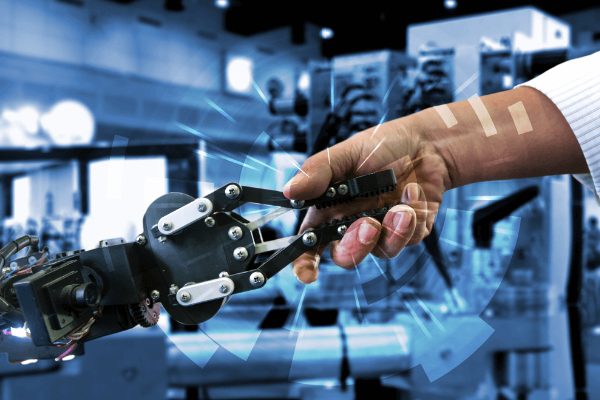
Can Machines Replace Humans?
In the process of technological transformation, the human factor always plays a core role. No matter how smart machines and artificial intelligence (AI) become, there are still unique capabilities that only humans can perform. Machines cannot dream, set goals, or plan long-term. Qualities such as creativity, curiosity, and emotional intelligence are unique strengths of humans. Even when provided with huge sources of data, machines only learn from the past and cannot imagine the future.
In an era of rapidly changing technology, human ingenuity, kindness, and creativity are the power that helps us go further. If we know how to exploit these values, AI will become a useful support tool, freeing people from dangerous, repetitive tasks, and improving the quality of life. Instead of pitting machines against humans, the world would benefit more if AI took on jobs that humans are not good at, and vice versa – as Eric Schmidt, former CEO of Google, once asserted.
To minimize the negative impacts of AI, leaders from government, industry to education need to plan carefully. Training the young generation with superior skills suitable for the AI era is an urgent task, along with ensuring the workforce is ready to adapt to new requirements.
AI should not be seen as a threat but as an opportunity for humans to develop. By clearly recognizing our strengths – capabilities that machines will never possess – we can turn challenges into advantages. This is how humanity can not only live with AI but also maximize its potential, creating a more balanced and prosperous world.
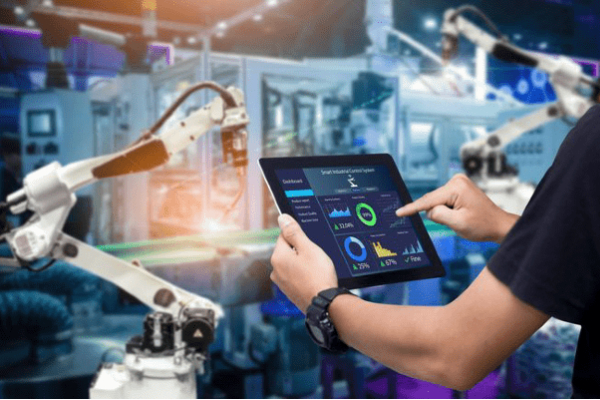
>>> Reference: Automation solutions to replace low-quality workforce in factories in the section Automation solutions
7 Reasons Why Machines Can't Replace Humans
The rapid development of artificial intelligence (AI) like ChatGPT has attracted a lot of attention, especially the ability to write, solve math problems and perform many other tasks. However, with the explosion of AI technology, many people are starting to worry that AI products can replace humans at work. However, there are the following 7 reasons that show that AI cannot completely replace humans in the workplace:
1 - AI lacks emotional intelligence (EQ)
Emotional intelligence is an important factor that helps people connect and communicate effectively, especially in the working environment and dealing with customers. AI can mimic some behaviors, but it cannot replace empathy, understanding of human emotions and experiences. Leaders and businesses all recognize the importance of building emotional relationships with employees and customers. AI cannot achieve this level of deep connection.
2 - AI only works with input data
AI can only work based on the data that has been provided. When encountering new situations or incomplete data, AI will have difficulty making accurate decisions. On the contrary, humans can flexibly handle unexpected situations and create new solutions, which AI cannot do.
3 - AI's creativity is limited
AI is limited by the data it receives, which limits its creativity. Humans have the ability to think outside the box and create new solutions from different sources of information, which AI cannot copy. Creativity is the foundation of innovation and development, which is an element that AI cannot replace.
4 - AI lacks soft skills
Soft skills such as communication, teamwork, and critical thinking are essential factors for success in the working environment. AI cannot develop these skills, as they require an understanding of people and the ability to interact in complex social situations. Soft skills help people adapt and thrive in their jobs, something AI cannot do.
5 - Humans are the creators of AI
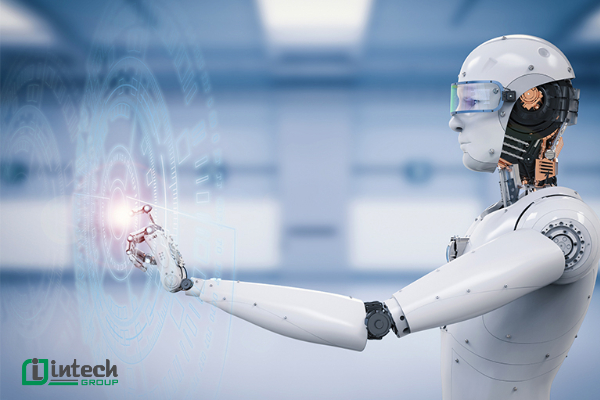
AI cannot exist without humans. Humans are the ones who design and program AI, provide data, and use AI systems. Therefore, humans cannot be replaced by the tools they create, because AI cannot develop on its own without human intervention and guidance.
6 - AI is a support tool, not a competitor with humans
AI is not a competitor with humans, but a support tool that helps improve work performance. The jobs that AI can perform are mainly repetitive tasks and do not require too much creativity. Humans still play an important role in using AI to achieve higher productivity and create new value for businesses.
7 - AI needs fact-checking
A big problem with AI is that it cannot control the accuracy of information itself. Although AI has the ability to learn and develop, it lacks the ability to reason and judge like humans. This requires humans to check and review the results from AI, an important job that AI cannot do alone.
Instead of worrying about being replaced by AI, you should take advantage of AI tools to improve your own capacity and skills. Updating knowledge, improving skills and innovating will help you maintain an important role in the workspace, combining the power of humans and AI to achieve the highest efficiency.
Machines and artificial intelligence cannot completely replace humans but will become powerful support tools, improve work efficiency and create outstanding economic values. Collaboration between humans and AI is not only an inevitable trend but also the key to entering a more creative and sustainable future.
See more:
