

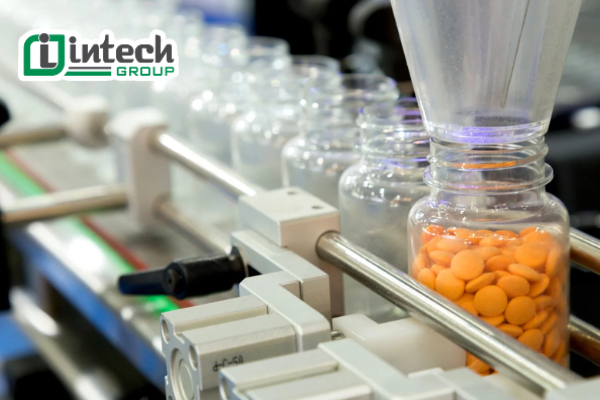
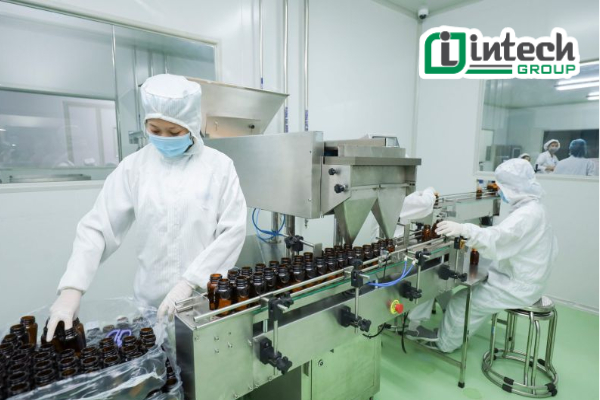
Pharmaceutical production line for pharmaceutical industry
30-09-2025 597
Pharmaceutical production lines play a pivotal role in the pharmaceutical industry, where high precision, hygiene and strict adherence to quality standards are required.
This line is divided into two main stages: production of active ingredients (API) and production of finished products (the stage of preparing and packaging drugs into tablets, liquids, powders, etc.). The application of automation technology in the line helps to improve efficiency, ensure accuracy, and comply with GMP, WHO, or FDA standards.
Overview of the drug production line
The drug production line is a system of equipment and processes specifically designed to serve the production of pharmaceuticals such as tablets, capsules, solutions, injections, etc. This system can be operated in fully automatic or semi-automatic form, depending on the scale and production requirements.
A standard drug production line must strictly comply with international regulations such as GMP (Good Manufacturing Practice), European standards (EU-GMP), or the US FDA. This helps to ensure that the drug product is safe, of good quality, and does not have a negative impact on the environment or the health of consumers.
The production process includes main stages such as mixing, shaping, drying, blistering, packaging and labeling. Thanks to the application of automation technology, modern production lines not only improve productivity but also optimize costs, increasing competitiveness for businesses in the pharmaceutical industry.
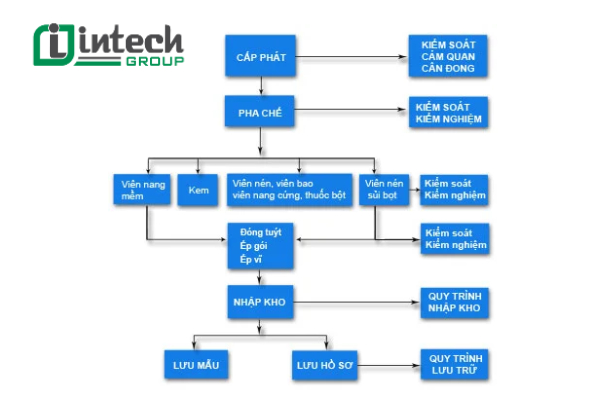
Pharmaceutical production line operation process
The pharmaceutical production line is a complex system consisting of many strict stages, designed to ensure the creation of pharmaceutical products that meet quality standards, are safe and effective. Below are the basic steps in the operation process of a modern pharmaceutical production line:
Step 1: Import raw materials
Raw materials are the core element in pharmaceutical production. All input materials must have a clear origin, ensure purity, and not contain toxic chemicals, pesticides or impurities that affect the quality of the drug. Controlling quality from the beginning helps optimize the efficiency of the entire pharmaceutical production line.
Step 2: Check the quality of input materials
All raw materials must be sampled and tested according to the quality control process (QA/QC). If they do not meet the standards, the raw materials will be eliminated, ensuring that they are not included in the production process and affect the finished product.
Step 3: Weighing and dividing raw materials
After being inspected and meeting standards, the raw materials will be weighed accurately and divided into small batches, according to the formulation. This process is carried out in a sterile environment with the support of a specialized machinery system, ensuring absolute accuracy.
Step 4: Mixing and granulating (if necessary)
At this stage, the raw materials are put into a mixer or granulation system. The machine will control the humidity, particle size and rotation speed to create raw materials in suitable dosage forms such as tablets, capsules or solutions.
Step 5: Tableting or bottling
Depending on the product form, the raw materials after processing will be compressed into tablets (round, oval or special shape) or packed into bottles/tubes with the exact dosage. This entire process takes place on an automatic drug production line system, with periodic checks on mass, hardness, solubility and tablet size.
Step 6: Finished product packaging
The finished product after being stamped or bottled will be transferred to the packaging stage. The packaging is designed according to standards, with full information about the product, production date, expiry date, instructions for use, etc., making it easy for consumers to look up.
Step 7: Final product testing
Before being distributed to the market, all batches of drugs must undergo a final quality test. This is a mandatory step to ensure that the product meets safety standards, is effective in treatment, and is free of errors.
Step 8: Warehousing and distribution
After completing the testing, the drug will be warehoused and stored under appropriate storage conditions. Production records are fully archived to serve the inspection and traceability work later. Finally, the product will be distributed to agents, hospitals, or pharmacies according to the proposed plan.
Equipment in the drug/pharmaceutical production line
A modern drug production line cannot lack a synchronous and GMP-standard machinery and equipment system. Below are the important equipment in the drug/pharmaceutical production line:
1. Raw material mixer
The mixer is the initial equipment in the drug production line, with the task of mixing raw materials to create a homogeneous mixture. The machine has the ability to precisely control factors such as: Volume, mixing speed, humidity and mixing time.
Mixing raw materials evenly is a key factor in helping the drug achieve stable treatment effects and avoid deviations in the active ingredient content in each dose.
2. Fluidized bed dryer granulator
This equipment is used to dry and granulate raw materials, operating on the principle of heat exchange between hot air and product particles. The fluidized bed dryer granulator helps to create granules quickly, the tablets are uniform in size and easy to check the quality even during operation, especially when producing compressed drugs.
3. Tablet press machine
As an important equipment in the tablet production line, the tablet press machine has the function of compressing powder or granules into tablets with a certain shape (round, oval, rectangular ...).
Thanks to its strong pushing ability, the machine will create tablets with high hardness, beautiful gloss and minimize errors in mass. The manufacturing material is usually high-grade stainless steel, ensuring hygiene and pharmaceutical safety standards.
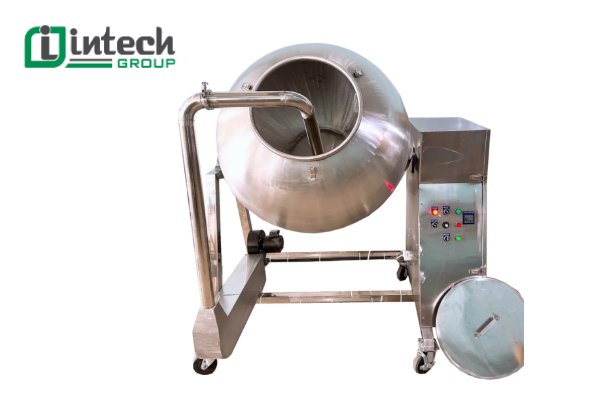
4. Tablet Film Coating Machine
A fully automatic film coating machine is used to coat a thin layer of raw material (film coating) on the tablet to protect the active ingredient inside from environmental impact, reduce unpleasant taste and improve the aesthetics of the tablet.
5. Drug bottle sealing machine
For products in the form of solutions, syrups, or soft capsules, the bottle sealing machine is an indispensable device. The drug bottle sealing machine helps to accurately measure the dosage, tighten the cap, prevent infectious agents during the packaging process, and meet the high requirements of the pharmaceutical industry.
6. Blister press machine
For tablets or capsules, the blister press machine helps to pack the product in a convenient blister packaging (blister), easy to carry and easy to control the dosage.
The machine can simultaneously perform functions such as: creating molds from polymer plastic, laminating protective aluminum layers, cutting blisters into retail units
7. Conveyor belt
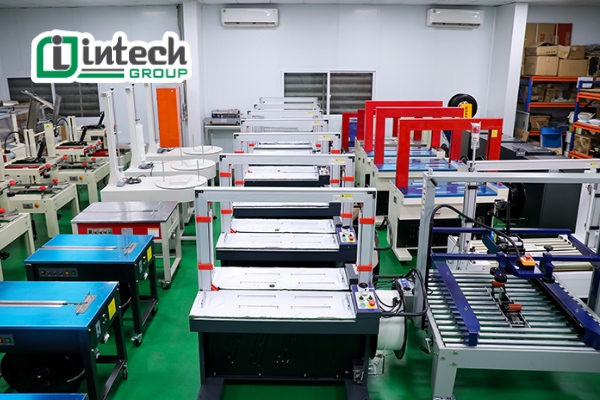
The conveyor belt automates the process of transporting raw materials and products between stages in the pharmaceutical production line. The conveyor belt helps bring products to different operating positions, saving time, reducing labor costs and optimizing the production operation process.
8. Packaging machine
The finished product packaging machine is the final step in the pharmaceutical production line. The packaging machine will help box the products, label, affix stamps, barcodes, and then pack them in boxes for transport to medical facilities, pharmacies, etc. The steps in the packaging process must ensure technical standards and support easy traceability.
What are the benefits of applying automation solutions in the pharmaceutical production line?
Integrating automation technology into the pharmaceutical production line is becoming an inevitable trend in the modern pharmaceutical industry. Below are the outstanding benefits that businesses can achieve:
Increased production productivity
Automation helps shorten the time of each stage thanks to pre-programmed operating programs. Personnel only need to monitor through the central control system when the equipment operates continuously and accurately, minimizing waiting time.
Improved product quality
The pharmaceutical production line uses modern machinery to ensure high accuracy and uniform quality for each pill and each production batch. At dangerous stages, automatic equipment can replace humans, both improving safety and ensuring the production process is not interrupted.
Optimize operations and reduce costs
Stable operation of machinery with high capacity helps minimize incidents, saving time and human resources. Problems such as staff shortages will be easily solved, thereby saving businesses on recruitment, training and operating costs.
Enhance competitive advantage
Automation helps businesses reduce product costs by saving production costs. At the same time, stable quality and good supply capacity help enhance reputation, creating strong competitiveness in the pharmaceutical market.
Popular types of drug production lines today
Three popular types of drug production lines are widely used today:
1. Tablet production line
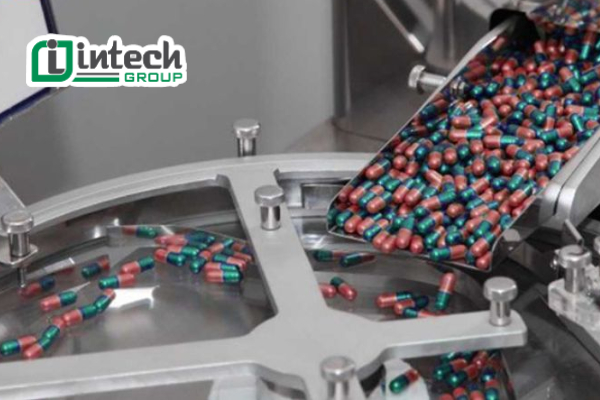
This is a type of line commonly used in the pharmaceutical industry. This type of line requires high precision to ensure the exact active ingredient content in each tablet, while meeting the standards for hardness, disintegration and solubility of tablets.
2. Injection production line
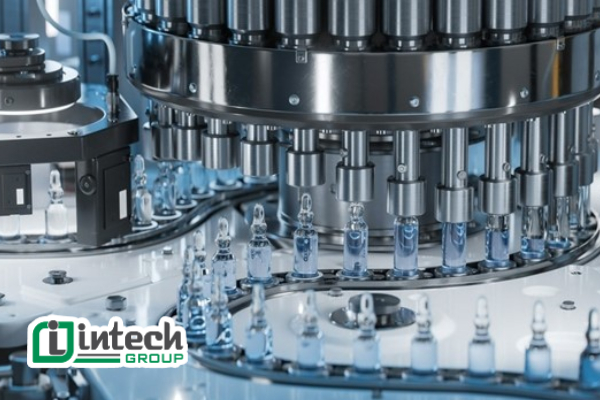
Injections require absolute sterile standards, so the injection production line is designed in a clean environment that meets GMP standards. The production process includes: solution preparation, filtration, filling, capping, tube closure and sterilization.
3. Liquid medicine production line
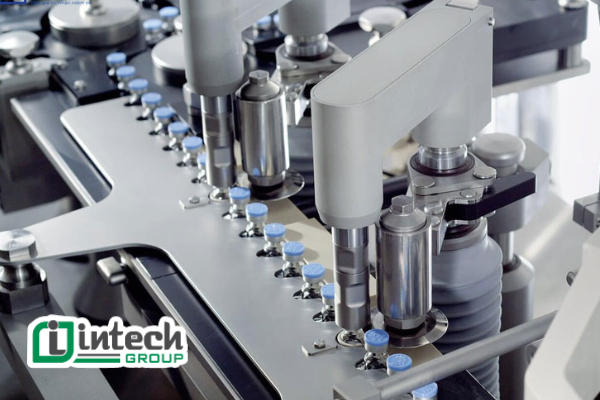
The liquid medicine production line includes steps such as dissolving raw materials, filtering the solution, filling into bottles, capping and labeling. This process requires good control of the uniformity and stability of the solution to ensure effective use.
>>> Reference: Automation line in pharmaceutical factories
Intech Group specializes in providing modern conveyor lines that meet strict standards in the drug production process. With optimal design solutions, high precision and stable operation, Intech helps businesses improve production efficiency, save costs and ensure product quality. Contact Intech Group now to get advice on the most suitable solution for your production line!
Refer to the lines:
