


What are the core components of an AI system?
18-10-2025 1847
To understand the core components of an AI system, we need to explore essential elements such as data, algorithms, and deep learning models. These components determine the system’s ability to learn, analyze, and make decisions. Understanding these elements will help us realize the potential applications of AI in many fields, from healthcare to finance and manufacturing.
What does AI stand for?
AI (Artificial Intelligence) is an abbreviation for "Artificial Intelligence", translated into Vietnamese as "Artificial Intelligence". In which, "Artificial" means artificial - not natural, and "Intelligence" means intelligence, the ability to think and learn. In short, Artificial Intelligence (AI) refers to the ability of machines to simulate human intelligence through algorithms and computer programs.
What is AI - Artificial Intelligence system?
Artificial Intelligence (AI) is a field of computer science that focuses on solving cognitive problems typically related to human intelligence, such as learning, creativity, and image recognition. Organizations today collect large amounts of data from a variety of sources, including smart sensors, human-generated content, monitoring tools, and system logs. The goal of AI systems is to develop systems that can learn for themselves to make sense of data. AI then uses that knowledge to solve new problems in a human-like way.

Advantages and disadvantages of AI – Artificial Intelligence
Artificial Intelligence (AI) is becoming an indispensable part of many fields, from manufacturing, finance to education and healthcare. With the ability to process data quickly and automate strongly, AI brings many outstanding benefits. However, this technology also comes with challenges that need to be considered.
1. Advantages of AI
Increase productivity and work efficiency
AI can automate repetitive tasks, minimize human intervention and speed up work processing. Thanks to the ability to analyze and process data quickly, AI helps businesses save time, optimize production processes and operate continuously 24/7 without rest.
High accuracy, limited errors
AI operates based on algorithms and data, minimizing human errors. Industries such as finance, healthcare, and technology all leverage AI to analyze complex information, make better decisions, and optimize risk management processes.
Creativity and Innovation
AI not only supports analytics but also drives creativity in art, design, music, and content production. Thanks to this technology, many unique ideas have been created, helping industries develop more strongly.
Personalizing user experience
AI helps businesses provide services tailored to each individual, based on customer behavior and preferences. E-commerce platforms, music streaming services, and online video use AI to recommend relevant content, enhancing user experience.
Supporting global issues
Artificial intelligence plays an important role in healthcare, the environment, and energy, helping people predict epidemics, optimize energy use, and improve quality of life. AI also supports scientific research and the development of new technologies to solve complex global problems.
2. Disadvantages of AI
Risk of job loss
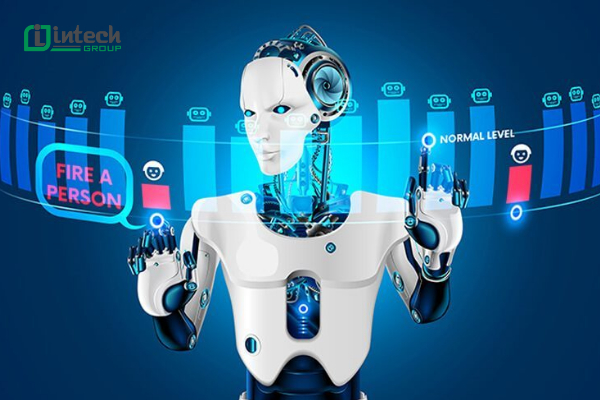
AI can replace humans in many fields, especially repetitive jobs such as manufacturing, customer service and accounting. This can lead to increased unemployment, requiring workers to upgrade their skills to adapt to the new working environment.
Lack of objectivity and algorithmic bias
AI works based on input data. If this data is biased or lacks objectivity, AI can make unfair decisions that affect vulnerable groups. This is especially worrying in areas such as recruitment, finance and legal.
Ethical and privacy issues
The use of AI raises many ethical questions, especially when this technology is applied to surveillance, analysis of personal data or the development of autonomous weapons. In addition, the threat of cybercrime is also increasing as AI can be exploited to carry out sophisticated cyberattacks.
High investment costs
Although AI brings many benefits, the cost of developing, deploying and maintaining AI systems is not small. Businesses need to invest heavily in technology infrastructure, system maintenance and staff training, which can become a barrier for small businesses.
What are the practical applications of an AI system?
Artificial intelligence (AI) has many practical applications, from document management to business analytics. Here are some notable examples of AI systems being used in different industries:
Intelligent Document Processing (IDP)
IDP converts unstructured documents such as emails, images, and PDFs into structured data. It uses natural language processing (NLP), deep learning, and computer vision to extract, classify, and authenticate information.
For example, HM Land Registry in the UK uses AI to automatically compare complex legal documents, cutting the time it takes to approve property transactions by 50%.
Application Performance Monitoring (APM)
APM uses tools and telemetry to monitor the performance of applications. AI-based APM tools help predict and fix problems before they occur, keeping applications running smoothly.
For example, Atlassian uses AI to continuously monitor application performance and prioritize critical issues, helping development teams respond quickly and optimize performance.
Predictive Maintenance
AI predictive maintenance uses big data to identify potential problems in equipment or systems early, reducing downtime and preventing disruptions.
For example, healthcare company Baxter uses AI for predictive maintenance to detect abnormalities in industrial equipment, minimizing downtime.
Medical Research
AI helps automate repetitive processes and process large amounts of data in medical research, helping to accelerate drug discovery and development.
For example, C2i Genomics uses AI for large-scale genomic analysis to develop new treatments and reduce resource demands.
Business Analytics
AI in business analytics helps collect and process complex data, support forecasting, find root causes and optimize business processes.
What are the core components of an AI system?
The AI application architecture consists of four core layers, each of which plays a specific role through specialized technologies:
Layer 1: Data Layer
This is the foundation of the AI system, focusing on preparing data for applications. AI technologies such as machine learning, natural language processing, and image recognition are all based on the data layer. Algorithms, especially deep learning algorithms, require large computational resources, so this layer includes supporting hardware and infrastructure from third-party cloud services to train AI models.
Layer 2: Machine learning (ML) framework and algorithm layer
This layer includes ML frameworks such as TensorFlow, PyTorch, and scikit-learn, which are developed by engineers and data scientists to suit specific business requirements. These frameworks make it easy for developers to build and train AI models using pre-built functions and layers.
Layer 3: Model Layer
This is where AI models are deployed and trained using data and algorithms. The model layer plays a decisive role in the decision-making ability of an AI system. The main components include:
- Model structure: Defines the capabilities of the model, including layers, neurons, and activation functions. Common structures are feedforward neural networks, convolutional neural networks (CNN).
- Model parameters and functions: Includes learning values such as weights and biases, along with a loss function that helps evaluate and minimize errors.
- Optimizer: Adjusts parameters to minimize the loss function, such as gradient descent or Adaptive Gradient Algorithm (Adagrad).
Layer 4: Application Layer
The final layer is the user-facing part, where AI systems complete tasks, provide information, and make data-driven decisions. The application layer facilitates end-users to interact and exploit the benefits of AI.
Areas of life affected by artificial intelligence AI systems
Transportation
Despite many challenges to perfect, autonomous vehicles are gradually becoming an important part of the modern transportation system. They not only bring convenience but also promise to improve the safety of our future travel.
Manufacturing
AI-enabled robots are working closely with humans, efficiently performing tasks such as assembly and stacking. In addition, predictive analytics sensors help optimize production processes, ensuring machines operate continuously and smoothly.
Healthcare
Artificial intelligence is revolutionizing the healthcare industry, enabling faster and more accurate diagnoses than ever before. Virtual nursing assistants not only monitor patient health, but also use big data analytics to personalize the care experience.

Education
AI systems are transforming the education sector by digitizing textbooks and providing virtual tutors, making knowledge more accessible to students. Sentiment analysis technology also helps teachers monitor and adjust teaching methods, ensuring they are suitable for each student.
Media
The journalism industry is being significantly improved thanks to AI systems. Bloomberg applies Cyborg technology to quickly analyze complex financial reports, while the Associated Press uses AI's natural language capabilities to produce thousands of articles each year, accelerating the speed and scale of communication.
Customer Service
Google has developed an AI assistant that can make calls, schedule appointments, and understand the context of communication, providing a customer service experience as close and effective as talking to a human.
Conclusion
With rapid progress, artificial intelligence is predicted to reach new heights in the next 5 to 10 years. Let's wait for the breakthrough achievements that this technology will bring to our lives. Intech Group is a place to share detailed and clear knowledge about automation systems to users. Contact today Hotline 0966.966.032
References: What is CAD/CAM/CNC technology?, Guidance technology for AGV autonomous vehicles
