


What is a warehouse layout? 3 popular warehouse layouts you need to know
13-10-2025 728
When it comes to warehouse management, one of the key factors that determines operational efficiency is the layout and organization of space. A suitable warehouse layout not only optimizes the usable area but also minimizes order processing time, ensures safety and increases profits for the business.
What is a warehouse layout?
A warehouse layout is not simply a way to arrange goods in a warehouse, but also an important strategy to help optimize the operating process. So specifically, how is a warehouse layout understood?
A warehouse layout is a way to arrange and arrange goods in a warehouse space to ensure compliance with the operating needs of each business. A smartly designed layout not only optimizes storage space but also helps manage goods effectively, minimizes the risk of damage, loss and saves time.
Choosing the right layout will improve warehouse efficiency, speed up order processing, protect goods and increase business efficiency and profits.

Main areas in a warehouse floor plan
A complete warehouse floor plan is often divided into main areas, ensuring efficient operation and space optimization. Here are the basic areas:
1. Operation Area
This is where the main activities such as receiving, picking and packing take place. This area is usually located near the entrance to facilitate the quick import and export of goods.
2. Storage Area
Designed with storage shelves, this area needs to optimize the available space, while ensuring the convenience of arranging and retrieving goods. This is the core part of any warehouse.
3. Empty Space
In modern warehouses, empty space is an indispensable factor. They help forklifts, trolleys and employees to easily move, access and handle goods effectively.

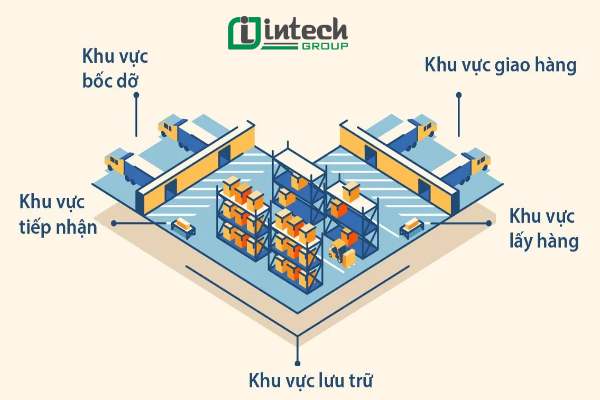
In addition, to achieve maximum efficiency, the warehouse floor is often divided in more detail with 5 areas corresponding to specific tasks:
- Loading & Unloading area: Receiving and transporting goods.
- Reception area: Checking and processing imported goods.
- Storage area: Preserving goods.
- Picking area: Packing and preparing goods.
- Shipping area: Exporting goods to delivery points.
Principles of warehouse layout
No matter how the warehouse layout is designed, it still needs to meet the following 5 requirements:
- Optimize available space.
- Simplify the goods handling process.
- Easy access to stored products.
- Ensure the highest possible goods turnover rate.
- Manage and control inventory quantities accurately.
Warehouse supporting elements
- Receiving area: Need enough space to handle the flow of goods.
- Machinery area: Store and preserve machinery and equipment such as forklifts.
- Ventilation and lighting doors: Ensure fresh air and even lighting.
- Lift or ladder: Support moving goods at height.
- Fire extinguisher equipment: Ensure fire safety.
- Emergency exit: Always clear and unobstructed to ensure safety in emergency situations.
Warehouse diagram drawing process
Designing a scientific warehouse diagram not only helps optimize space but also improves operational efficiency. Below are simple and effective steps to draw a warehouse diagram.
Step 1: Prepare a warehouse floor plan
A carefully prepared warehouse floor plan will help you avoid future problems, such as wasting time searching, accessing and handling goods.
- In case of renting warehouse space: Ask the landlord to provide an available floor plan.
- If there is no layout: Proactively go to the warehouse to measure the actual space and make a detailed drawing of the size and area.
Note, a smart warehouse floor plan needs to maximize the floor space and ensure convenience in storing and importing and exporting goods.
Step 2: Choose a warehouse floor plan method
The warehouse floor plan method will depend on the scale, storage strategy and budget of the business. You can consider the following methods:
- Draw a warehouse floor plan in Excel: This is a free, easy-to-use tool that allows you to arrange areas as desired.
- Hire an architect: Suitable for large warehouses that store many types of goods. A professional team will help you design an optimal and aesthetic layout.
- Use Online tools: These tools integrate many features, provide suggestions for basic areas, helping you easily create a professional warehouse layout.
Step 3: Arrange warehouse areas
After having a floor plan, the next step is to allocate and arrange the main areas. Investors need to clearly identify each area such as storage, loading and unloading, receiving, packing, and shipping. At the same time, divide the space to suit specific activities.
3 Popular Warehouse Floor Plan Drawing Methods
Drawing on Excel: Suitable for small and medium warehouses, easy to manipulate and edit.
- Hire an architect: Ideal for large warehouses, requiring high professionalism.
- Use Online tools: Tools such as SmartDraw, Lucidchart support creating diagrams with flexible and fast features.
- A well-designed warehouse diagram will ensure smooth import and export operations, save time, and improve the overall performance of the business.
3 Popular Warehouse Layouts You Need to Know
1. U-shaped Warehouse Layout
Designing a U-shaped warehouse is one of the optimal options, helping to save space and increase work efficiency. Here are the important factors when designing a warehouse according to this model:
- Loading and delivery area: Place the loading and delivery area close together at the front of the U-shape to optimize the loading and unloading process, reducing travel time.
- Receiving counter: The receiving area is located after the loading and unloading area, where goods are checked, classified and arranged in the warehouse.
- Storage area: Arrange the storage area at the back of the warehouse, divided into two parts:
- Dynamic storage: For fast-selling goods or goods that need to be taken out frequently. A shelf system is required for easy retrieval.
- Static storage: For goods that move less or have a longer life cycle, applying the FIFO (First In, First Out) principle for long-term storage.
- Warehouse management: This design ensures the movement of goods quickly and conveniently, using forklifts or ladders to ensure safety.

2. I-shaped warehouse layout
The I-shaped warehouse model is suitable for long and narrow spaces, suitable for businesses that need a longer area:
- Loading and unloading area: Placed at one end of the warehouse for easy receiving and exporting of goods.
- Storage area: Arrange shelves and storage systems along the length of the warehouse to maximize the area.
- Reception and inspection counter: If necessary, the reception counter can be placed between the loading and unloading area and the storage area to check and classify goods before storage.
- Lighting and ventilation system: Ensure the warehouse is always bright and airy, creating a safe working environment.
- Use of lifts or ladders: For long and high warehouses, lifts or ladders are needed to easily manage goods on high shelves.
- Safety and exits: Provide safety measures and clear exit instructions.

3. L-shaped warehouse layout
L-shaped design is less common, requires a large area but is very effective in optimizing storage space:
- Receiving area: Arranged in one part of the warehouse for easy receiving of goods.
- Dispatch area: Placed in the rest of the warehouse, making it easy to dispatch goods and reducing travel time.
- Area arrangement: L-shaped layout requires more area and requires reasonable allocation between receiving, storage and dispatch areas.
Some notes when designing warehouse layout
- Detailed plan: Warehouse design requires careful calculation to avoid errors, minimize wasted time and costs.
- Initial investment: Good warehouse layout may require large investments in machinery and equipment such as forklifts and shelves.
- Ability to change: Once the warehouse design is completed, changes will be quite complicated and expensive.
- Not suitable for all types of goods: Each type of goods and workflow requires different warehouse models.
- Professional knowledge: To design an effective warehouse, you need knowledge of supply chain and warehousing management, or consult an expert.
Each warehouse layout model needs to be customized according to the specific needs of the business to ensure efficiency in storage and operation.
Conclusion
The above is a guide article on classifying and designing warehouse layouts from Intech Group. We hope that this article will bring useful information to you. If you are interested or want to find a supplier of smart warehouse solutions and automation solutions, please contact our experts immediately for support and advice in the shortest time.
See more:
