


What is mass production? Learn about its characteristics and operating principles
04-10-2025 686
Mass Production is a large-scale production method that produces large quantities of identical products through assembly lines or automation technology.
This method helps increase productivity, reduce production costs and ensure consistent product quality throughout the production process. So what are the characteristics of mass production? How does it work? Let's find out more details with Intech Group in the article below!
1. What is Mass Production?
Mass production - English name: Mass Production is an industrial production method in which a large number of standard products are continuously produced through assembly lines or automation technology. This method helps optimize performance, reduce production costs and ensure consistency in product quality over a long period of time.
Mass production is also known by other names such as line production, repetitive production or serial production.
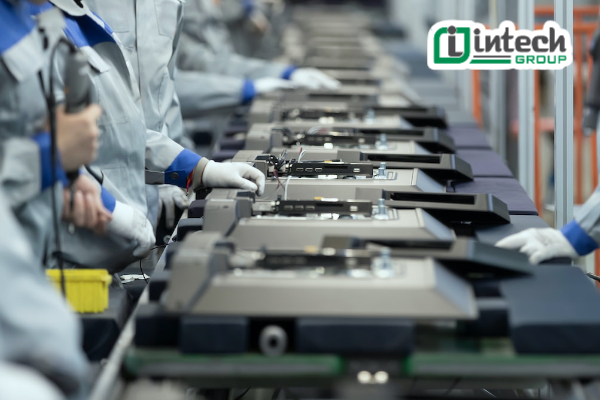
2. Characteristics of mass production lines
Mass production brings many benefits thanks to uniformity, automation and optimized labor productivity. However, to implement effectively, businesses need to invest heavily in modern machinery and technology systems.
Uniformity and automation
One of the important characteristics of mass production is to ensure uniformity in product quality and shape. This helps businesses maintain high standards in each product, while improving customer experience.
In addition, automation plays a core role in mass production. Thanks to smart machines and automated lines, the production process takes place quickly, accurately and reduces dependence on manual labor. This not only helps increase productivity but also limits errors and improves operational efficiency.
Machinery and equipment determine production efficiency
It can be said that machinery and equipment are the heart of the mass production process. Using assembly robots, automatic quality control systems and advanced technologies helps businesses: Increase production speed, strictly control quality and minimize errors and material waste
High labor productivity thanks to process optimization
Mass production does not mean completely replacing humans with machines, but is a combination of human labor and technology to achieve the highest efficiency. Workers only participate in important stages, while machines undertake repetitive tasks, helping to increase production output, reduce work pressure for workers, and ensure safety in the factory.
High investment costs but long-term benefits
To deploy mass production lines, businesses need to invest heavily in machinery, equipment and technology. However, this is a worthy investment, bringing long-term benefits, including: increased productivity, reduced operating costs, improved competitiveness in the market, and maintaining stability in production and supply.
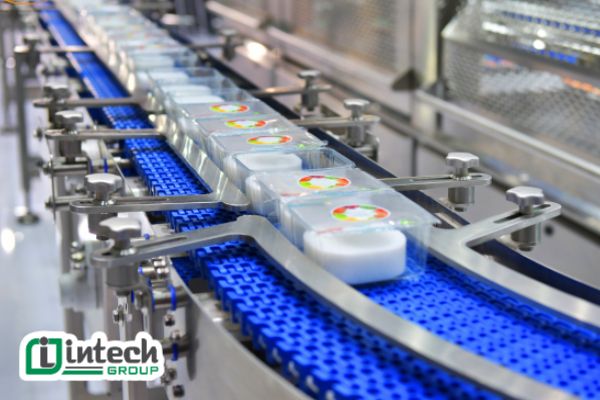
3. How Mass Production Works
Mass production operates on an assembly line, where multiple production stages are performed simultaneously to optimize productivity and costs.
Assembly lines and automated production processes
In mass production, products are manufactured in a repetitive process, ensuring uniformity in quality and shape. This is achieved through:
- The combination of human and machine: Workers undertake specialized tasks, while automated machines perform repetitive operations on each batch of products.
- Continuous production line: The stages are organized in a series, allowing the product to move seamlessly from one stage to another.
Optimizing the process through specialization and standardization
To improve efficiency, companies apply three important principles in mass production:
- Specialization: Each worker or equipment only undertakes a specific step, helping to increase speed and accuracy.
- Standardization: Products are manufactured according to a fixed standard, ensuring consistent quality.
- Differentiation: Depending on each product, businesses can adjust the design and production techniques to meet market demand.
Applying advanced technology to improve productivity
The development of modern manufacturing technology makes the mass production process simpler and more efficient. Applying precision machining equipment, automated robots, and AI in production management helps:
- Increase productivity and production speed
- Reduce labor costs and optimize resources
- Ensure high precision, limit product errors
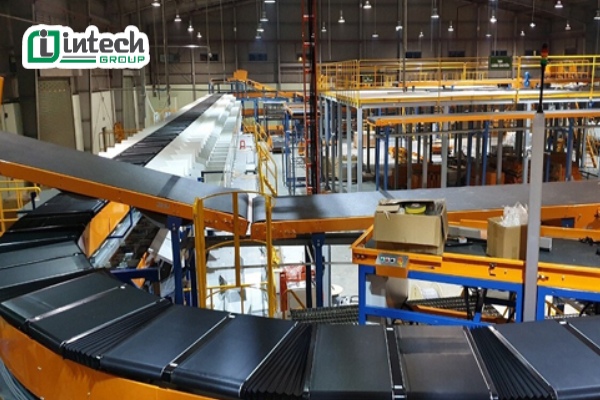
4. Advantages of Mass Production
Mass Production brings many advantages to businesses thanks to the ability to optimize costs and increase productivity.
High accuracy
Mass production ensures uniformity and accuracy in each product thanks to the automatic machinery system with pre-set parameters. When the process is closely monitored, the error rate is significantly reduced, helping businesses maintain stable product quality.
Reduce production costs
Mass Production helps eliminate redundant steps, optimize resources and reduce dependence on manual labor. This not only saves labor costs but also reduces product prices, creating a competitive advantage in the market.
Improve efficiency and production speed
The automatic production line system allows high-speed production, helping businesses respond to market demand quickly. From there, products can be brought to market in a shorter time, bringing higher profits to businesses.
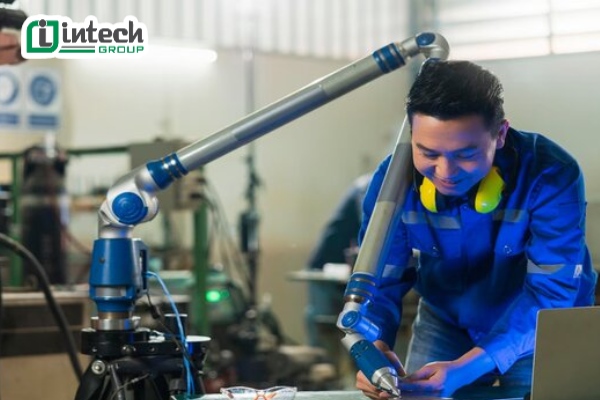
5. Disadvantages of Mass Production
Despite its many benefits, mass production also has some limitations, especially related to capital investment, flexibility and impact on human resources.
Requires large capital investment
Setting up a mass production line requires a significant investment in machinery, technology and system maintenance. This can be a barrier for small businesses or companies that do not have enough financial resources.
Requires constant upgrading to keep up with technology
Mass production requires constant innovation and upgrading to keep up with technology and meet new standards. For example, in the pharmaceutical industry, when regulations change, businesses have to adjust production processes, which is time-consuming and costly.
Effects employee morale
Due to the repetitive nature of the work, mass production can lead to boredom and reduced employee morale. This increases the rate of labor turnover, making it difficult for businesses to maintain a stable workforce.
rewrite SEO standards mentioning keywords conveyor system, conveyor belt, automation line, industrial robot
Examples of mass production
Mass production is a popular method in many fields thanks to conveyor systems, conveyor belts, automation lines and industrial robots. These technologies help optimize the production process, increase production speed and ensure consistent product quality. Here are some typical industries applying mass production:
- Food and beverage industry
- Supporting industry
- Automotive production line
- Electronic components
- Pharmaceutical products
- Cosmetic production line
- Confectionery production line
INTECH is proud to be the leading provider of automation solutions in mass production lines today. For more information, please contact hotline: 0966.966.103 / 0966 966 032 for 24/7 support and advice.Tham khảo thêm các dây chuyền sản xuất hiện đại khác:
