


What is voice recognition? Advantages and disadvantages of voice recognition technology
09-10-2025 857
Speech recognition technology began to be researched in 1936. However, it was only in the last 30 years that it was integrated into personal computing devices and became popular.
Thanks to the advancement of the digital age, this technology is constantly improving, bringing many conveniences to people. From controlling smart homes by voice to supporting users on self-driving vehicles, voice recognition is gradually becoming an essential part of daily life.
Let's explore more about the advantages and disadvantages of voice recognition technology to better understand its potential and challenges.
What is voice recognition?
Speech recognition is a technology that allows machines and computer programs to analyze and understand human language, then convert speech into text or execute specific commands.
Initially, voice recognition software could only recognize a limited vocabulary, requiring users to pronounce clearly. However, thanks to the development of artificial intelligence (AI) and machine learning algorithms, current technology is capable of processing natural speech, including many different accents and languages, helping to improve accuracy and efficiency.
Speech recognition technology is widely applied in many fields such as smart homes, autonomous vehicles, customer care services, and virtual assistants. In addition, it is also integrated in computer science research, linguistics, and computer engineering, bringing many practical benefits to modern life.
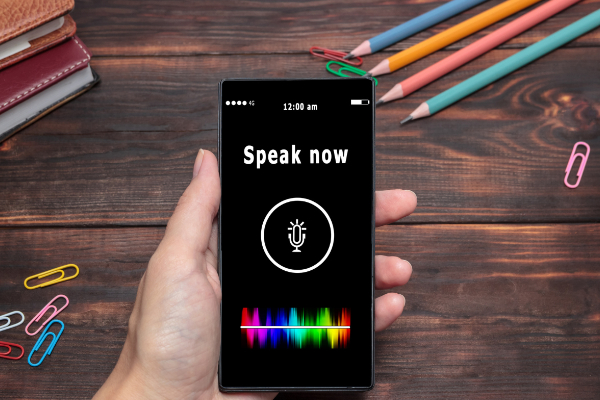
Distinguishing Speech Recognition and Voice Recognition
Voice recognition is often divided into two main concepts:
Speech Recognition
- Technology that recognizes content in speech and converts it into computer language.
- Common applications in text editing, voice search, and smart device control.
Voice Recognition
- Biometric technology that identifies an individual's voice, often used to authenticate identity.
- Applications in security, such as unlocking devices or accessing important systems.

>>> See warehouse management technology: Smart warehouse management software
How does voice recognition work?
Voice recognition systems work based on advanced computer algorithms to process, interpret sounds and convert them into text or commands that computers and humans can understand. This process is done through the following basic steps:
Analyze input audio:
- The system receives audio from a microphone or other recording device.
- This audio is analyzed to determine factors such as pitch, intensity, and pronunciation time.
Divide audio into many parts:
- Input audio is broken down into short segments or processing units, usually milliseconds.
- Each of these audio parts will be associated with a specific phoneme in the language.
Digitize audio
- Audio is converted into digital format so that the computer can process it.
- This process uses technologies such as signal encoding and sound wave recognition.
Use algorithms to convert audio into text and return the output to the user
Machine learning and artificial intelligence (AI) algorithms analyze audio segments and compare them with language databases.
- Corresponding text or commands are generated and returned as output to the user.
Challenges in Speech Processing
Speech recognition software faces many challenges, such as:
- Voice diversity: Human accents, dialects, and speaking styles vary greatly.
- Background noise: The system needs to separate speech from ambient noise.
- Speech context: Understanding the meaning in specific situations to ensure high accuracy.
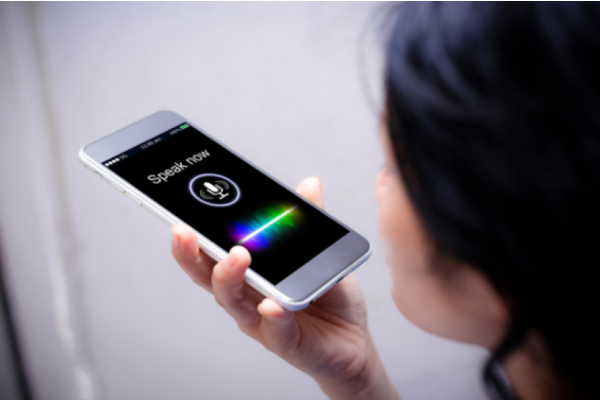
Models supporting speech recognition
Speech recognition systems use two main types of models:
Acoustic Models:
This model determines the relationship between linguistic units (syllables, words) and the audio signal.
For example, a word pronounced differently in regional accents can still be recognized.
Language Models:
This model matches audio sequences with appropriate words in the language to handle homonyms or complex phrases.
For example, it helps distinguish the words "eye" and "cool" based on context.
Underpinning technology supporting speech recognition
To operate effectively, speech recognition systems use modern technologies such as:
- Artificial Intelligence (AI): Increases the ability to learn and adapt to users.
- Deep Learning: Analyzes and simulates complex linguistic data.
- Natural Language Processing (NLP): Understand the context and meaning of speech.
Thanks to advanced technologies, speech recognition is becoming more and more accurate and useful, opening up great potential in supporting human life.
Advantages and disadvantages of voice recognition technology
Voice recognition technology is becoming more and more popular and widely applied in many fields, from smart homes to virtual assistants. Below is a specific analysis of the advantages and disadvantages of this technology:
1. Advantages of voice recognition technology
Increasing accessibility for people with disabilities
- Voice recognition helps people with disabilities, especially those who cannot use a mouse or keyboard, enter data and control devices easily.
- This technology opens up great opportunities in improving the quality of life for special groups.
Check and correct spelling errors
- Voice recognition software integrates editing tools, similar to a standard word processing software.
- Although it cannot achieve 100% accuracy, it helps identify and handle most spelling and grammar errors, minimizing manual editing work.
Fast processing speed
- Compared to keyboard input, this technology can convert voice to text significantly faster.
- This helps users save time, especially in situations where data needs to be processed immediately.

2. Disadvantages of Voice Recognition Technology
Complicated Setup
- Voice recognition systems require “learning” time to get used to the user’s voice, speaking speed, and intonation.
- Some software requires users to repeat themselves many times or cannot be recognized accurately, causing inconvenience during the initial setup process.
Low stability
- During use, the system may encounter errors when the sound is interrupted or when the user changes the tone of voice.
- This causes interruptions and reduces the user experience, especially in tasks that require continuous use such as text editing.
Limited vocabulary
- The software may have difficulty processing new words, specialized words, or words that are not in its database.
- Although the technology is improving, this limitation still affects the accuracy and efficiency of voice recognition.
Incomplete language support
- Popular virtual assistants such as Google Assistant, Amazon Alexa, or Apple Siri often support popular languages such as English well.
- However, the recognition and processing of Vietnamese is still limited, leading to an uneven experience for Vietnamese users.
Voice recognition technology brings many outstanding benefits, from improving working speed to increasing accessibility for special users. However, to achieve the optimal experience, users need to consider the current disadvantages, and at the same time choose the software and equipment suitable for their needs. With the continuous development of artificial intelligence, voice recognition promises to continue to be improved and applied more widely in the future.
Outstanding features of speech recognition systems
An effective speech recognition system does not simply convert audio to text, but also provides flexible features to meet the diverse needs of users. Here are typical features:
1. Language weighting
Algorithm optimization: Speech recognition systems are able to prioritize specific words or phrases, especially those that are frequently used or related to a specialized topic.
Practical applications: For example, in a corporate environment, the software can be set up to recognize specialized terms or product names more accurately.
2. Audio training
Audio adaptation: The software can filter out ambient noise and focus on voice sounds, even in noisy environments.
Flexible processing: The system recognizes differences in speaking style, speed and volume, ensuring high accuracy when converting speech to text.
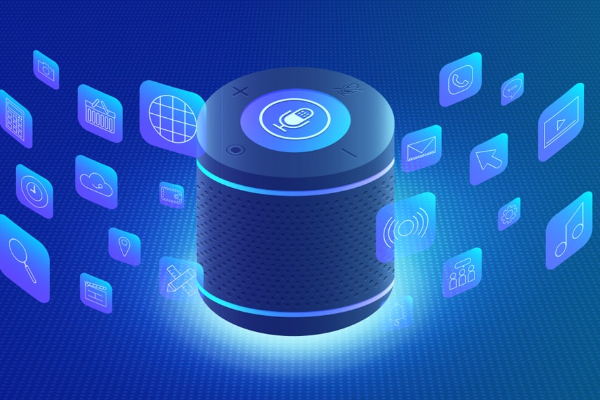
3. Speaker Labeling
- Individual Recognition: This feature allows the system to identify and label each participant in a conversation.
- Practical application: For example, in a meeting or conference, the software can distinguish each person's voice to create an accurate transcript.
4. Profanity Filtering
- Content Control: The speech recognition system is integrated with an inappropriate language filtering feature, ensuring clean and professional output content.
- Application: Especially useful in public environments, education or applications that require strict language control.
Practical applications of voice recognition technology
Voice recognition technology has become an indispensable part of many areas of life and work. Here are some typical applications:
1. On mobile devices
- Voice control function: Smartphones integrate this technology to route calls, convert voice to text, dial, or search for information.
- Real-life examples:
- Apple's iPhone integrates a voice recognition keyboard and virtual assistant Siri, helping users control the device without looking at or touching the screen.
- Microsoft Word provides a dictation feature, allowing users to dictate words to convert them into text.
2. In education
Support language learning:
- Voice recognition software helps learners improve their pronunciation. Users can speak directly so that the software can listen and give detailed feedback.
- This is an effective tool for foreign language teaching, especially when learners need to practice speaking with high accuracy.

3. In sales and customer service
Call center support:
- Voice recognition systems help record thousands of conversations between customers and employees, thereby analyzing and finding common problems.
- AI Chatbots: Chatbots using artificial intelligence can communicate via voice, answer common questions or handle basic requests without the intervention of direct staff.
4. In healthcare
Note taking and information management: Doctors can use voice recognition software to take notes directly on patient records, reducing manual processing time and increasing accuracy.
5. Emotion recognition
Psychological analysis:
- Voice recognition technology is capable of detecting emotions through voice characteristics such as tone, speaking speed and intensity.
- Practical application: Salespeople can use this technology to understand customers' emotions when they interact with a product or service.
6. Hands-free communication
Driver support:
- Voice recognition is integrated into the car system, allowing drivers to free their hands when making calls, controlling the radio or GPS navigation system.
- This increases safety and convenience while driving.
Voice recognition technology is opening up new opportunities in many fields, from daily communication, education, healthcare to sales and customer care. With continuous development, this technology not only improves work efficiency but also brings outstanding convenience to modern life.
Algorithms used in speech recognition
Algorithms used in speech recognition
Speech recognition technology is one of the most complex areas of computer science, requiring a combination of linguistics, mathematics and statistics. The core goal of speech recognition systems is to minimize the word error rate (WER), ensuring high accuracy and fast processing speed.
Here are the common algorithms and techniques in speech recognition:
1. Natural Language Processing (NLP)
- Role: NLP is not required for speech recognition but is an important support when interacting between humans and machines through language.
- Practical applications: Mobile devices such as Siri on iPhone take advantage of NLP to search for information or perform hands-free tasks, making it easy for users to give voice commands.
2. Hidden Markov Model (HMM)
- Concept: HMM is a statistical model based on Markov process, in which the current state depends only on the state immediately before.
- Application:
- HMM is used to recognize patterns in speech, assigning labels to units such as words, syllables, or sentences.
- This system creates a mapping between the input and the most appropriate label sequence, helping to improve the ability to transcribe accurately.
3. N-gram
- Definition: Speaker labeling algorithm is a process of identifying and assigning speech segments to the corresponding speaker. An N-gram is a consecutive sequence of N words.
- Role:
- Using probability and grammar to predict the next word in the sequence, helping to improve the accuracy of speech recognition.
- For example, N-grams support better recognition of unique or frequently repeated phrases.
4. Artificial Neural Networks
Function:
- Artificial neural networks process training data by imitating the connectivity of the human brain through layers of nodes.
- These layers include: Input, weight, bias (threshold), and output.
Advantages:
- Increased accuracy and the ability to handle large amounts of training data.
- Supervised learning helps the system adjust better through the loss function.
Disadvantages:
Training time is longer than traditional language models, requiring high hardware performance.
5. Speaker Diarization (SD)
Definition: This is an algorithm that identifies and labels the speech of each individual in a conversation.
Applications: Often used in call centers to differentiate between employees and customers, making the system more efficient.
These algorithms help improve the accuracy, adaptability and practical applications of voice recognition technology. From hands-free device control to medical and educational support, voice recognition is becoming a technology trend that is likely to grow strongly in the future.
Conclusion
References:
